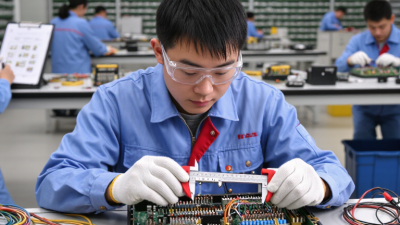
Top Wire Harness Manufacturers for Global Buyers

Choosing a wire harness supplier is a practical decision with consequences on the production line. A harness may look simple on a drawing, yet it connects circuits, sensors, and controls through carefully routed wires and terminals. A loose crimp or poorly protected branch can create costly rework. Small details matter.

Manufacturing pioneer Taiichi Ohno is often quoted as saying, “Where there is no standard, there can be no improvement.” That principle fits wire harness manufacturing: buyers should ask how suppliers document processes, inspect crimps, and test completed assemblies. They should also examine traceability, engineering support, production capacity, and experience with the required application. A polished website is not proof of consistent quality.

This guide introduces manufacturers for global buyers and outlines practical points for comparing them. Look beyond headline capacity. Ask about sample approval, material sourcing, change control, and how production teams handle defects. Check whether communication stays clear across time zones. It can be uneven. That deserves attention, not dismissal.

No supplier suits every project. Product complexity, order volume, delivery expectations, and technical requirements all affect fit. The comparisons ahead aim to help procurement teams ask sharper questions and verify claims before committing. Treat rankings as a starting point, not a substitute for direct evaluation. A factory visit or a detailed technical review may reveal gaps that brochures miss.
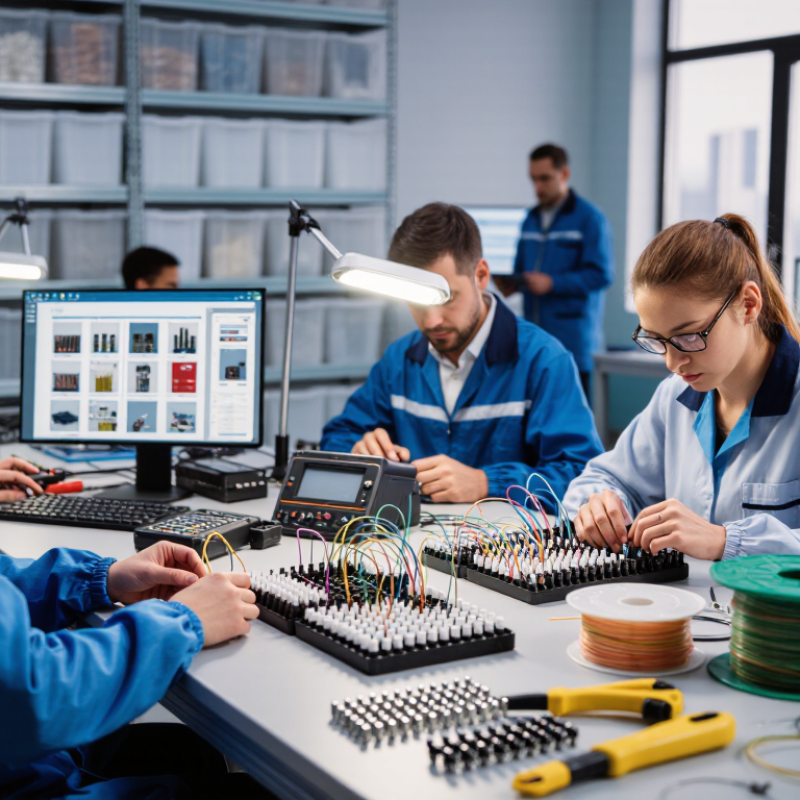
Top Wire Harness Manufacturers for Global Buyers

Wire Harness Manufacturing and Its Role in Global Industries

Wire harnesses carry power and signals through vehicles, factory equipment, aircraft, and medical devices. A finished assembly may contain color-coded wires, sealed connectors, clips, and protective sleeves routed through tight spaces. Each branch must match its installation point; a connector that fits poorly can delay assembly or complicate maintenance. Not glamorous. Essential, though.

Global vehicle production shows the scale of one major application. OICA reported about 93.5 million vehicles produced worldwide in 2023, up roughly 10% from 2022. The International Energy Agency’s Global EV Outlook 2024 reported nearly 14 million electric-car sales in 2023. These figures do not measure harness demand directly, but they illustrate the volume and technical change facing suppliers. Electric platforms often require careful management of high-voltage cables alongside low-voltage control wiring.

Reliable production depends on more than cutting and bundling wire. Manufacturers must control crimp quality, continuity, labeling, and routing, while adapting designs to customer specifications. In practice, even a small change in cable length can affect fit and installation time. Global buyers should review traceability, test records, and capacity for engineering changes—not just unit price. There is a trade-off: tighter customization can improve fit, but it may also make sourcing and inventory harder to manage.

How Global Buyers Evaluate Wire Harness Suppliers

A reliable wire harness supplier should make technical decisions visible. Ask how engineers interpret your drawings, connector specifications, and operating conditions. A useful review may flag a tight bend radius or a terminal that needs clearer retention criteria. Small questions matter. They reveal whether the supplier checks the design or simply prices it.

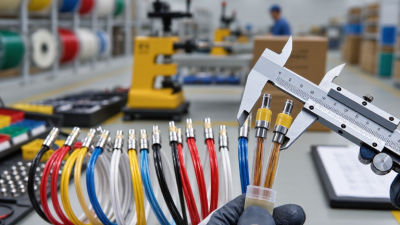
Quality evidence should match the harness and its intended use. Buyers can review inspection plans, sample test records, material traceability, and procedures for handling engineering changes. For a production sample, examine crimp consistency, labels, branch lengths, and protection around abrasion points. A polished presentation is not proof. Request records tied to the actual build, and clarify how defects are contained before shipment.

Capacity and communication deserve equal attention. Ask how production is scheduled, what happens when a component is delayed, and who approves substitutions. A factory visit or remote production review can show whether work instructions are available at the bench and whether operators can identify the current revision. Still, no checklist catches everything. I would also compare the supplier’s answers over time; vague updates during a sample build may become expensive silence during a launch. Good suppliers are not flawless, but they explain problems, document corrective action, and keep commitments grounded in real capacity.

Leading Wire Harness Manufacturers Serving International Markets

Leading Wire Harness Manufacturers Serving International Markets

International buyers need more than a low unit price. They need consistent crimp quality, clear traceability, and production that can adapt across regions. OICA’s 2023 production statistics recorded 93.5 million motor vehicles worldwide, a 10% increase from 2022. That scale makes dependable capacity important, but output alone does not prove a supplier can meet a buyer’s specifications. Ask how manufacturers validate terminals, control wire lengths, and document changes between production sites. Small details matter. A loose crimp can become a costly field failure.

Electrification adds another layer. The International Energy Agency’s Global EV Outlook 2024 reports nearly 14 million electric car sales in 2023, about 18% of total car sales. Buyers should check whether suppliers can handle changing voltage requirements, shielding, and tighter packaging while maintaining repeatable inspection. Request sample inspection records and ask how nonconforming parts are isolated. Also review lead times for tooling, materials, and cross-border shipments. These measures reveal more than a polished capability sheet. Still, no audit removes every risk; a supplier’s performance on one program may not transfer neatly to another. Keep evaluating.

Top Wire Harness Manufacturers for Global Buyers — Leading Wire Harness Manufacturers Serving International Markets

Evaluation Area What Global Buyers Should Verify Relevant Standard or Requirement International Buyer Consideration
Quality management Documented quality processes, corrective-action procedures, and production traceability. ISO 9001 is a general quality management system standard. IATF 16949 applies to automotive quality management systems in the automotive supply chain. Confirm the scope and current status of any certification; certification does not automatically cover every facility or product.
Assembly workmanship Inspection criteria for crimping, soldering, cable preparation, routing, and finished assemblies. IPC/WHMA-A-620 provides requirements and acceptance criteria for cable and wire harness assemblies. Agree on the applicable revision, product class, and acceptance criteria in the purchase specification.
Environmental compliance Material declarations and supporting documentation for restricted substances in supplied products. EU RoHS Directive 2011/65/EU restricts specified hazardous substances in covered electrical and electronic equipment. REACH is the EU regulation concerning chemicals and their safe use. Applicability depends on product type, destination market, exemptions, and the role of each party in the supply chain.
Automotive wire selection Wire type, conductor size, insulation, temperature rating, and suitability for the intended vehicle application. ISO 6722 specifies dimensions and requirements for single-core automotive cables within its defined scope. Specify the required cable standard and operating conditions; do not assume one cable type suits every vehicle or market.
Electrical design and testing Continuity, insulation resistance, high-potential testing where applicable, and test records tied to production lots. Test methods and limits should be defined by the product drawing, customer specification, and applicable safety requirements. Request the test plan, acceptance limits, equipment calibration records, and sample reports before production approval.
Customization and engineering Ability to work from drawings, bills of materials, connector specifications, prototypes, and engineering changes. Controlled configuration management and documented change approval are common quality-system practices. Clarify ownership of drawings and tooling, revision control, sample approval, and notification requirements for changes.
Export readiness Export documentation, packaging specifications, product identification, and shipment tracking. Documentation requirements vary by destination, product classification, transport mode, and contractual terms. Confirm the agreed Incoterms® rule, country-of-origin documentation, packaging needs, and responsibility for customs clearance.
Supply continuity Capacity planning, component sourcing controls, lead-time management, and business-continuity arrangements. Supplier risk management and contingency planning are typically addressed through customer-specific quality and purchasing requirements. Review component lifecycle risks, approved alternates, capacity commitments, and escalation procedures for supply disruptions.

Standards and regulatory references are provided for buyer evaluation purposes. Requirements vary by product and destination market; confirm the applicable editions and legal obligations for each project.

Comparing Supplier Capabilities, Certifications, and Production Regions

Global wire harness sourcing is a comparison of processes, not just quoted prices. OICA reported 93.5 million motor vehicles produced worldwide in 2023, while the IEA recorded nearly 14 million electric-car sales that year. These volumes increase pressure on suppliers to manage changing designs, stable output, and traceable components. Ask how each factory controls crimp height, splice quality, and test records. A sample can look perfect.

Certifications help narrow the field, but they need context. Check that an IATF 16949 or ISO 9001 certificate covers the actual production site and product scope. For workmanship, ask whether processes follow IPC/WHMA-A-620 and how defects are recorded. Request evidence of continuity and pull-force testing, plus a clear process for engineering changes. A certificate alone is not proof of consistent shifts.

Production regions bring different trade-offs. East Asian clusters often offer broad component ecosystems; Mexico and Central Europe may support shorter delivery routes for nearby plants. The best fit depends on tooling, labor, customs exposure, and backup capacity—not geography alone. Review the supplier’s second-source plan and sample lead times. I would still be cautious: a polished audit can miss a weak night shift. Industry reports indicate scale, but they cannot verify a factory’s daily discipline.

Key Considerations for Global Wire Harness Sourcing

Global wire harness sourcing starts with a clear technical package, not a low quote.

Share current drawings, connector specifications, wire gauges, insulation requirements, and test criteria. Small differences matter. A missing tolerance or vague label can cause costly rework after samples arrive. Ask manufacturers how they control crimp height, pull-force checks, continuity, and traceability. Request sample records and a process review.

Samples are not enough. Confirm production capacity against your forecast and seasonal peaks. A supplier may quote quickly, yet struggle when volumes rise. Compare total landed cost, including tooling, packaging, freight, duties, and inspection time. Clarify who owns tooling and how design changes are approved.

Check lead times for terminals and connectors, since one unavailable component can stop an entire build. Discuss backup sourcing and buffer stock for critical parts. Visits can reveal practical details: organized bins, labeled work orders, and protected test equipment.

If travel is difficult, request a live video walkthrough and recent quality data. Be candid about weaknesses. A perfect audit score does not guarantee smooth communication, and an overlooked handoff can still delay launch.

Agree on response times, escalation contacts, and corrective-action evidence before placing recurring orders. Keep specifications controlled, but review them when field feedback shows an assembly is hard to install or service.