China Best Wire Harness Manufacturing Companies?

China has become a critical sourcing base for wire harness manufacturing, supported by its large automotive, electronics, and new-energy vehicle sectors. The China Association of Automobile Manufacturers reported approximately 30.16 million vehicle sales in China during 2023. This production scale creates sustained demand for reliable harness assemblies, connectors, terminals, and testing systems.

The opportunity is substantial. Grand View Research estimates that the global automotive wiring harness market will continue expanding through the decade, driven by vehicle electrification, advanced driver-assistance systems, and increasing electronic content. Yet market size estimates differ. Definitions are not always consistent. Some reports include high-voltage battery cables, while others exclude them.

Quality matters more than factory size.

A credible Chinese supplier should demonstrate compliance with IPC/WHMA-A-620 requirements, controlled crimp-force monitoring, traceable materials, and documented electrical testing. ISO 9001 and IATF 16949 certifications can strengthen confidence, but certificates alone do not prove daily process discipline. Buyers should inspect sample records, terminal pull-force results, continuity tests, and change-control procedures.

This guide examines leading China-based wire harness manufacturing companies through practical criteria, including engineering capability, production capacity, sector experience, quality systems, customization, and export reliability. Company rankings remain subjective. A supplier serving medical equipment may not fit an electric vehicle program. The best choice depends on voltage, application, annual volume, validation needs, and delivery expectations. On-site audits still reveal what brochures hide.
China Best Wire Harness Manufacturing Companies?

What Makes a Wire Harness Manufacturer Stand Out in China?

A wire harness manufacturer in China stands out through disciplined engineering, not attractive promises. Experienced teams review drawings, connector specifications, wire gauges, and operating temperatures before production begins. They should explain design risks clearly, even when the customer’s file appears complete. A small mismatch in terminal size can cause heat, signal loss, or early failure. Practical communication matters.

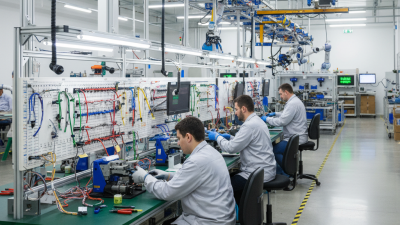
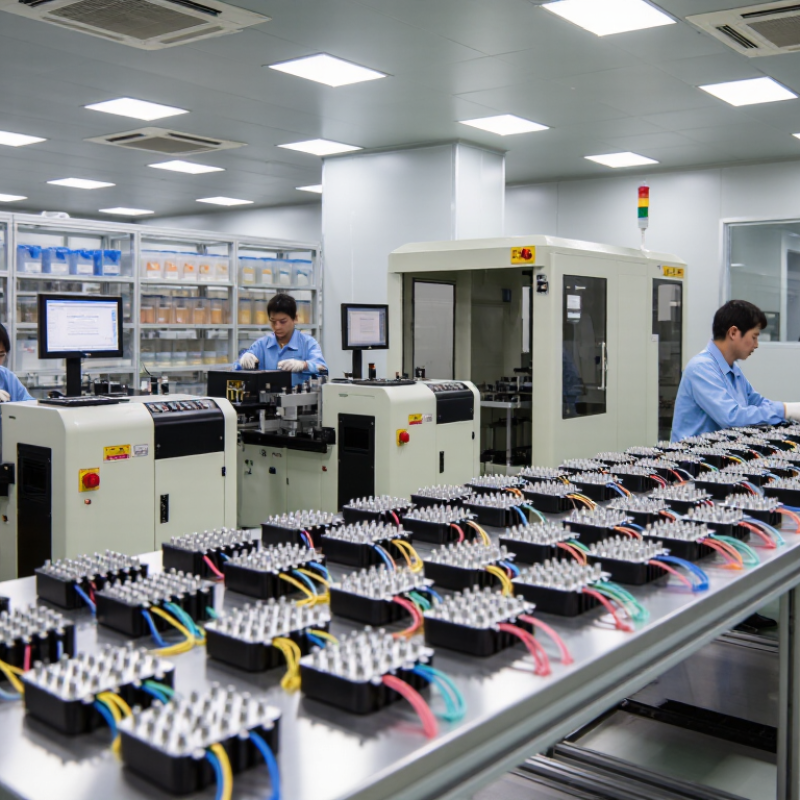
Reliable factories control each stage with visible procedures. Operators check wire cutting, stripping, crimp height, sealing, and connector assembly. Pull-force tests and electrical continuity tests provide measurable evidence. A strong manufacturer can share inspection records, material certificates, and batch traceability without hesitation. Production areas should be organized, clean, and suitable for handling sensitive components. Standards such as ISO 9001 and IPC/WHMA-A-620 can support consistent workmanship, but certificates alone prove little.

Look closer.

Technical support after sampling is equally important. Engineers should compare first-article results with approved drawings and correct recurring defects instead of hiding them. No factory is flawless. What matters is how quickly it identifies a loose terminal, damaged insulation, or labeling error. Some suppliers still depend too heavily on manual inspection, which can create uneven results during busy periods. Honest reporting, realistic lead times, and documented corrective actions reveal a manufacturer’s true reliability. Visiting the facility, reviewing test methods, and requesting production samples can expose differences that a sales presentation never shows.

Key Types of Wire Harnesses Produced by Chinese Manufacturers

China Best Wire Harness Manufacturing Companies?

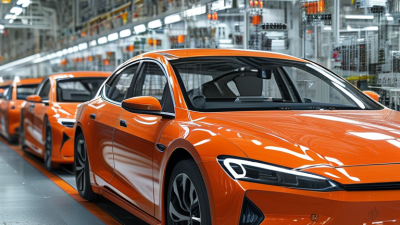
Chinese manufacturers produce several wire harness types, each shaped by its working environment. Automotive harnesses route power and signals through engine bays, doors, dashboards, and safety systems. Electric-vehicle harnesses add high-voltage cables, orange insulation, shielding, and battery connections. MarketsandMarkets projects the global automotive wiring harness market to reach about USD 59.7 billion by 2028, showing strong demand for these assemblies.

Industrial control harnesses connect sensors, motors, PLC cabinets, and robotic equipment. They often require numbered wires, ferrules, braided protection, and clear circuit identification. Appliance harnesses are usually smaller, but heat, vibration, and repeated movement still matter. Medical harnesses demand clean assembly, stable connectors, and strict traceability. The details can look minor. They are not.

Telecom and data harnesses use twisted pairs, coaxial cables, or fiber-related assemblies to reduce signal loss. Aerospace harnesses require lightweight materials, controlled routing, and extensive inspection, although production qualification is more demanding. According to Grand View Research, the global wire harness market is expected to grow steadily through 2030, supported by vehicles, industrial automation, and electronics. Chinese factories commonly apply continuity tests, pull-force checks, insulation tests, and visual inspection. Yet a polished sample does not prove reliable mass production. Buyers should verify process records, material certificates, crimp-height data, and compliance with IPC/WHMA-A-620 requirements. Mistakes still happen. Good suppliers expose them early.

How to Evaluate China’s Wire Harness Manufacturing Companies

Evaluating China’s wire harness manufacturing companies requires more than comparing quoted prices. A capable supplier should explain conductor selection, terminal compatibility, insulation ratings, and testing methods clearly. Ask for process records, not polished promises. During an audit, inspect crimp-height samples, cutaway terminals, labels, and storage conditions. A clean floor helps, but it does not prove stable production.

Request samples built from your drawings and revision notes. Check wire length, pull force, pin position, bend protection, and connector locking. Ask how operators prevent mixed lots and incorrect insertion.

Reliable factories use incoming inspection, first-article approval, in-process checks, and final continuity testing. For higher-risk assemblies, insulation resistance and hipot testing may be suitable when specifications require them.

Verify calibration dates on test equipment. This small detail often exposes weak control.

Supply-chain evidence also matters. Review material traceability, approved component lists, change-control procedures, and production capacity during peak months. Confirm whether engineering staff can resolve drawing conflicts before mass production. Fast communication is useful, but documented answers are stronger. Request a pilot run and measure defect data across several batches. One good sample can mislead. A factory may pass an audit yet struggle with late engineering changes. Leave room for that possibility, then use inspection plans and corrective-action records to manage it.

Major Industries Served by Chinese Wire Harness Suppliers

China’s wire harness suppliers serve far more than vehicle manufacturers. The automotive sector remains the largest customer base, covering passenger cars, commercial vehicles, charging equipment, and battery systems. The China Association of Automobile Manufacturers reported 30.16 million vehicles produced in China during 2023. The IEA also noted that China represented more than 60% of global electric car sales that year. These figures explain the demand for high-voltage cables, sealed connectors, thermal protection, and traceable assembly processes.

Industrial automation is another major field. Chinese harness factories support robots, machine tools, sensors, control cabinets, and warehouse equipment. Their work often requires flexible cable routing and resistance to oil, vibration, and repeated movement. Consumer electronics and telecommunications create a different challenge. Smaller assemblies need precise stripping, compact terminals, and stable signal performance. Grand View Research identifies electronics and automotive applications as important growth areas in the global wire harness market, although market estimates vary between reports.

Medical equipment, renewable energy, rail systems, and aerospace programs also purchase specialized harnesses. Medical assemblies may require clean production areas and strict inspection records. Solar inverters and energy-storage systems need heat-resistant insulation and dependable power connections. A capable supplier should demonstrate ISO 9001 controls, IATF 16949 experience where relevant, and testing aligned with IPC/WHMA-A-620. Certifications help, but they do not replace sample validation. In practice, drawings can contain unclear tolerances. That is where supplier engineering feedback matters. Cheap pricing can hide rework, weak documentation, or difficult after-sales communication.

China Best Wire Harness Manufacturing Companies? - Major Industries Served by Chinese Wire Harness Suppliers

Industry Served Typical Applications Common Harness Types Typical Electrical Range Key Materials Important Requirements Commonly Referenced Standards Production Characteristics
Automotive and Commercial Vehicles Body electronics, lighting, instrument panels, doors, seats, engine compartments, and chassis systems Engine harnesses, body harnesses, dashboard harnesses, sensor leads, battery cables, and control-unit assemblies Generally 12 V or 24 V low-voltage vehicle systems Copper conductors, cross-linked automotive wire, abrasion-resistant tubing, seals, clips, and protective conduit Vibration resistance, temperature cycling, water and oil resistance, electromagnetic compatibility, and traceability ISO 6722, LV 112, IATF 16949, and IPC/WHMA-A-620 practices High-volume production with automated cutting, crimp-force monitoring, electrical testing, and poka-yoke assembly
Electric Vehicles and Charging Equipment Battery packs, electric drive systems, charging units, power distribution, and thermal-management systems High-voltage cables, battery interconnects, busbar assemblies, signal harnesses, and charging harnesses Low-voltage control circuits and high-voltage systems commonly ranging from approximately 200 V to 1,000 V DC Shielded high-voltage cable, orange insulation, copper or aluminum conductors, busbars, HV interlocks, and high-temperature plastics Insulation integrity, creepage and clearance, shielding, touch protection, thermal endurance, and high-voltage safety testing ISO 19642, ISO 17409, LV 216, IEC 60664, and applicable vehicle safety requirements Automated crimping and testing are combined with controlled assembly for high-current and safety-critical connections
Industrial Automation and Robotics Control cabinets, robotic arms, servo motors, sensors, conveyors, packaging machines, and factory equipment Control-panel wiring, servo cables, encoder cables, drag-chain harnesses, sensor cables, and terminal assemblies Typically 24 V control circuits, with higher-voltage motor and power circuits depending on the machine Flexible copper cable, shielded twisted pairs, industrial Ethernet cable, PUR or PVC jackets, ferrules, and terminal blocks Flex-life, oil resistance, bending performance, signal integrity, noise suppression, and clear wire identification IEC 60204-1, IEC 60332, UL 508A practices, and IPC/WHMA-A-620 workmanship criteria Medium-volume, high-mix production with custom lengths, labels, documentation, and application-specific routing
Consumer and Household Appliances Washing machines, refrigerators, ovens, air conditioners, kitchen equipment, and small electrical appliances Internal appliance harnesses, motor leads, heater wiring, display-panel harnesses, and door or hinge assemblies Commonly low-voltage control circuits and mains-rated wiring up to approximately 250 V or 600 V, depending on the market PVC or silicone-insulated wire, heat-resistant sleeving, copper terminals, locking connectors, and flame-retardant plastics Heat resistance, moisture protection, flame retardancy, cost control, compact routing, and consistent terminal retention IEC 60335, IEC 60695, RoHS, REACH, and applicable national electrical safety requirements Large-volume production using semi-automated cutting, crimping, insertion, continuity testing, and visual inspection
Renewable Energy and Power Storage Solar inverters, photovoltaic junction systems, energy-storage cabinets, battery racks, and power-conversion equipment DC power cables, battery-rack harnesses, monitoring harnesses, inverter wiring, and grounding assemblies Low-voltage control circuits and DC power systems that may reach 1,000 V or more in larger installations UV-resistant cable, flexible copper conductors, high-temperature insulation, busbars, glands, and sealed connectors Outdoor durability, moisture resistance, thermal cycling, insulation resistance, current capacity, and fire performance IEC 62930, IEC 62477-1, IEC 60502, IEC 60332, and relevant photovoltaic or storage-system requirements Project-based and batch production with emphasis on customized lengths, labeling, documentation, and electrical verification
Telecommunications and Data Equipment Network cabinets, base-station equipment, servers, storage systems, routers, and optical-communication equipment Power distribution harnesses, high-speed data cables, fiber-optic assemblies, backplane wiring, and grounding leads Low-voltage DC power, commonly 12 V, 24 V, 48 V, or 54 V in communications and data systems Twisted-pair copper, coaxial cable, optical fiber, low-smoke materials, shielding foil, and precision-molded connectors Signal integrity, impedance control, low crosstalk, bend-radius compliance, thermal management, and reliable retention TIA-568, IEC 11801, IEC 61754, RoHS, REACH, and applicable flammability requirements High-mix production with controlled cable preparation, optical inspection, network testing, and detailed serialization
Medical and Laboratory Equipment Patient monitors, diagnostic devices, laboratory analyzers, imaging accessories, and treatment equipment Patient-interface cables, sensor leads, internal equipment harnesses, power cords, and custom molded cable assemblies Extra-low-voltage signal circuits and equipment power circuits selected according to the device design Biocompatible or medical-grade insulation, flexible copper cable, shielding, silicone, TPU, and sterilization-compatible materials Low leakage, cleanability, biocompatibility where applicable, EMC performance, strain relief, and complete lot traceability IEC 60601-1, IEC 60601-1-2, ISO 10993 where applicable, ISO 13485, and IPC/WHMA-A-620 practices Lower-volume, highly controlled production with documented inspection, continuity testing, and change-management procedures
Aerospace, Railway, and Defense Equipment Avionics equipment, rail vehicles, control systems, navigation units, communication systems, and ruggedized electronics Lightweight harnesses, shielded signal assemblies, coaxial cables, power harnesses, and environmentally sealed assemblies System-specific low-voltage and power circuits, with voltage and current defined by the equipment design Lightweight copper or plated conductors, fluoropolymer insulation, braided shields, high-temperature sleeving, and locking contacts Low weight, vibration resistance, fire and smoke performance, EMI shielding, environmental sealing, and strict configuration control AS9100, EN 45545, DO-160, MIL-DTL specifications, and IPC/WHMA-A-620 criteria where applicable Low- to medium-volume production with specialized tooling, first-article inspection, detailed records, and operator certification
Construction, Agricultural, and Off-Highway Machinery Excavators, loaders, tractors, lifting equipment, mining machinery, and outdoor hydraulic systems Main machine harnesses, cab harnesses, sensor wiring, valve wiring, battery cables, and articulated-section harnesses Commonly 12 V or 24 V vehicle electrical systems, with separate high-current starter and power circuits Heavy-duty copper cable, abrasion-resistant conduit, sealed connectors, braided sleeving, and flexible protective tubing Resistance to mud, water, oil, vibration, abrasion, temperature variation, and repeated flexing at moving joints ISO 16750, ISO 6722, IEC 60529, and IPC/WHMA-A-620 workmanship practices Medium-volume and customized production with robust routing fixtures, sealing checks, continuity testing, and field-service considerations

Note: Electrical ranges, materials, and standards vary by product design, destination market, certification scope, and customer specification. The information above summarizes common requirements for wire harness projects supplied from China.

Quality Standards and Production Processes in China’s Wire Harness Industry

China’s Wire Harness Manufacturing Companies: Quality Standards and Production Processes

China’s wire harness industry serves vehicles, industrial equipment, medical devices, and consumer electronics. Reliable production begins with controlled materials, clear drawings, and traceable work instructions. Factories commonly verify copper size, insulation type, terminal plating, and connector fit before assembly. Small errors matter. A loose crimp can create heat, signal loss, or intermittent failure after installation.

Production usually follows cutting, stripping, crimping, sub-assembly, routing, taping, testing, and final inspection. Operators use calibrated crimp applicators and check pull force through scheduled sampling. Visual inspection remains important, but it cannot replace electrical testing. Continuity, short-circuit, resistance, and high-voltage tests are selected according to product requirements. For complex harnesses, test boards confirm connector positions and circuit paths. The process looks simple. It is not.

Quality systems often align with ISO 9001, while automotive projects may require IATF 16949 practices and customer-specific controls. Reliable suppliers retain material certificates, first-article records, test results, and corrective-action reports. Audits should examine actual production, not only polished procedures. In practice, documentation can be accurate while operator training remains uneven. That weakness deserves attention. Regular skill assessments, barcode tracking, and layered inspections can reduce missed defects. Test limits should be reviewed when designs, suppliers, or equipment change. Field feedback may reveal a hidden weakness. That feedback should change the process.