What Are China Top PCB and Assembly Manufacturers?
China’s PCB and assembly sector sits at the center of global electronics manufacturing. Smartphones, electric vehicles, servers, and medical devices all depend on its layered circuit boards and tightly controlled production lines.
Prismark’s 2024 industry analysis estimated the global PCB market at more than US$70 billion, with Asia continuing to dominate production. China remains a major manufacturing base, supported by dense supplier networks, advanced surface-mount technology, and large-scale testing capacity. IPC’s electronics industry research also highlights growing demand for high-reliability boards, automotive electronics, and advanced packaging. These trends explain why buyers study Chinese manufacturers beyond factory size.
Industry analyst Dr. Hayao Nakahara has described the PCB business as “a very cyclical industry.” That warning matters. A supplier may show impressive monthly output, yet struggle with yield stability, traceability, or engineering changes. The best evaluation therefore examines certifications, equipment, inspection records, prototype speed, and assembly capabilities together.
This guide reviews leading China PCB and assembly manufacturers through those practical measures. It considers rigid, flexible, and HDI production, alongside SMT, box-build, and testing services. Data from market reports can differ, sometimes significantly. No ranking is perfect. Buyers should verify current capacity, certifications, and customer references before signing a contract. A clean factory tour helps, but it proves little alone. The real evidence appears in documented yields, first-article results, and consistent delivery performance.

What Defines a Leading PCB and Assembly Manufacturer in China?
What Are China Top PCB and Assembly Manufacturers?
A leading PCB and assembly manufacturer is defined by controlled processes, not impressive equipment alone. Experienced teams understand how design choices affect yield, cost, and field reliability. They review stack-up plans, component spacing, thermal paths, and impedance requirements before production begins. Good engineers ask uncomfortable questions early. That prevents expensive surprises later.
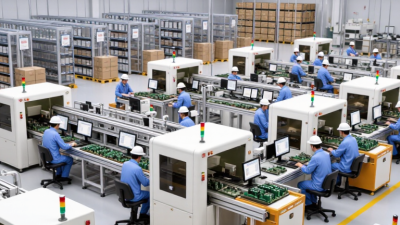
Reliable factories maintain clear material traceability from incoming laminate to packed assemblies. Operators should verify solder paste volume, placement accuracy, and reflow profiles with recorded data. Automated optical inspection can detect missing parts and solder bridges. X-ray inspection helps examine hidden joints under fine-pitch packages. Electrical testing, sample audits, and functional checks provide additional evidence.
Documentation matters greatly. A capable supplier follows recognized quality systems and communicates measurable acceptance criteria. It should explain process capability, corrective actions, delivery risks, and engineering changes in plain language. Factory visits can reveal practical details, such as labeled storage areas, humidity controls, and clean inspection benches. Small details matter.
However, no manufacturer performs perfectly every day. Honest suppliers share defect trends instead of hiding them behind attractive yield percentages. Rework records may expose weaknesses in stencil design or operator training. Buyers should also question whether impressive certifications reflect daily behavior. A strong partnership develops through technical reviews, trial runs, transparent reporting, and continuous process improvement. That work is rarely glamorous.
How China’s PCB Manufacturing and Assembly Processes Work
China’s PCB manufacturing usually starts with engineering review, not copper etching. Designers check layer count, impedance, hole sizes, and minimum trace spacing. Gerber files then guide imaging, drilling, plating, and etching. Multilayer boards receive resin-coated copper sheets and controlled lamination pressure. Small defects can hide inside a finished board.
Prismark’s 2024 industry estimates placed China above half of global PCB production value. That scale supports specialized lines for rigid, flexible, and high-density interconnect boards. Yet scale does not guarantee consistency. Operators still monitor copper thickness, registration accuracy, solder mask coverage, and surface finish after each major stage. IPC-6012 and IPC-A-600 provide widely used performance and acceptance references. They are useful benchmarks, not magic shields.
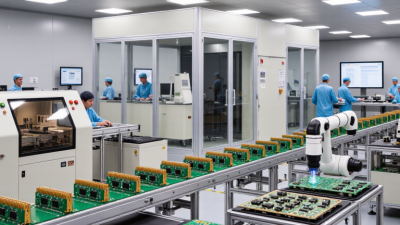
Assembly adds another controlled sequence. Solder paste is printed through a stainless-steel stencil, then inspected before component placement. Pick-and-place machines position parts at high speed. Reflow ovens create a carefully measured thermal profile, often across several heating and cooling zones.
Automated optical inspection checks polarity, solder bridges, and missing parts. X-ray inspection may examine hidden joints beneath area-array packages. IPC-A-610 remains a common workmanship reference for assembled boards.
The IPC Global Electronics Association reported continuing pressure for stronger electronics quality and supply-chain resilience in its 2024 industry research. One practical warning remains: a perfect first-pass yield is an attractive claim, but production data deserves independent sampling, traceability records, and occasional destructive testing.
Key Capabilities of China’s Top PCB Manufacturers
China’s leading PCB manufacturers compete through process depth, not only production volume. Prismark’s 2024 industry data places China at roughly half of global PCB production value. This scale supports advanced HDI, multilayer, flexible, and rigid-flex production. Strong facilities can build boards with microvias, sequential lamination, fine-line routing, and controlled impedance. These features matter in compact medical, automotive, and communication equipment.
Factory capability appears in small details. Engineers review stack-ups before tooling. Operators record copper thickness, drilling accuracy, and lamination pressure. Automated optical inspection checks solder pads, while X-ray inspection examines hidden joints. According to IPC’s 2023 Electronics Industry Survey, supply-chain resilience and manufacturing quality remain major priorities for electronics companies.
Traceability systems should connect each board to materials, operators, inspection images, and test results. That evidence is more convincing than a polished capability sheet.
Assembly strength also depends on process control. High-performing plants combine SPI, AOI, functional testing, and controlled rework areas. They can manage lead-free soldering, fine-pitch components, and mixed-technology assemblies without losing schedule visibility. Certifications help, but certificates alone prove little. In factory audits, calibration records and corrective-action history often reveal more. A perfect supplier profile can still hide weak change control. That assumption deserves scrutiny. Performance should be verified through sample builds, first-article reports, and measured yield data before larger production commitments.
Major Types of PCB and Assembly Suppliers in China
China offers several major types of PCB and assembly suppliers, each serving different production needs. Bare-board fabricators produce rigid, flexible, HDI, and multilayer PCBs. PCBA providers add component sourcing, SMT placement, testing, and final assembly. Turnkey manufacturers manage the complete process, from DFM review to packaged units. Prototype houses focus on small batches and fast engineering changes. High-volume factories prioritize automation, stable yields, and lower unit costs.
Prismark’s 2024 PCB industry review estimated mainland China generated roughly half of global PCB production value in 2023. This scale creates strong capacity, but supplier quality varies widely. IPC reports continue to highlight traceability, delivery stability, and process control as important electronics manufacturing risks. A factory may show impressive equipment, yet weak documentation can still cause field failures. That is an uncomfortable point. Certifications alone do not prove consistent workmanship.
Tips: Match the supplier type to your product stage. Choose a prototype-focused partner for early revisions. Select a vertically integrated factory for complex, repeatable programs. Ask for recent yield data, cross-section samples, test records, and material certificates. Confirm whether optical inspection, X-ray testing, impedance control, and functional testing are performed in-house. Review how engineering changes are approved. Small gaps often become expensive later. Also check production capacity during peak seasons, because quoted lead times may not reflect real factory pressure.
How to Evaluate and Select a Chinese PCB Partner
How to Evaluate and Select a Chinese PCB Partner
Selecting a Chinese PCB partner requires more than comparing quoted prices. Start with evidence. Request process documents, production photos, and recent quality records. A reliable supplier should explain its layer count, minimum trace width, surface finish, and material options clearly. Ask whether these capabilities apply to regular production, not only laboratory samples.
Review the full manufacturing chain. Check engineering support, component sourcing, PCB fabrication, assembly, inspection, and shipping control. A pilot order can reveal practical weaknesses, such as unclear silkscreen markings, solder bridges, or inconsistent solder paste coverage. Request electrical testing, automated optical inspection, and traceability for critical materials. Also examine how the factory handles nonconforming units. A fast replacement promise is less useful than a documented root-cause process.
Communication deserves careful testing. Send a controlled technical question before signing any contract. Measure response time, translation accuracy, and willingness to challenge an unrealistic design. A capable partner may recommend wider spacing or a different stack-up. That advice can prevent costly rework. Factory audits are valuable, but polished tours can mislead. Verify capacity through sample records and production schedules. Do not rely on certificates alone. They may be valid yet irrelevant to your product requirements. Define acceptance criteria, revision control, delivery milestones, and escalation contacts in writing. Leave room for improvement. No evaluation method catches every problem.