What Is the Best China EMS PCB Supplier?

Choosing the best China EMS PCB supplier is rarely about finding the lowest quotation. It is about matching manufacturing capability with your product’s risk, volume, and market requirements. A supplier may offer attractive pricing, yet struggle with fine-pitch components, controlled impedance, or engineering changes. That difference becomes visible when a prototype enters mass production.

A reliable ems pcb partner should demonstrate more than impressive factory photographs. Look for documented quality systems, traceable materials, calibrated inspection equipment, and clear corrective-action records. Ask how the team handles component substitutions, solder-joint defects, firmware loading, and last-minute design revisions. Factory experience matters here. A practical audit should include the SMT lines, incoming inspection area, finished-goods storage, and sample production records. Details reveal discipline.

Certifications can support trust, but they do not replace evidence. Request recent quality data, sample inspection reports, and references from comparable industries. Confirm whether the supplier controls purchasing, assembly, testing, packaging, and logistics directly. Communication also deserves careful attention. Slow answers may become expensive delays.

There is no universal “best” supplier. The right choice depends on technical complexity, order size, delivery expectations, and compliance needs. Some evaluations also overlook after-sales engineering support. That is a mistake. A thoughtful comparison should examine total cost, not only unit price. It should also leave room for doubt, because supplier claims require independent verification. This guide explains the main criteria, practical questions, and warning signs used to evaluate China EMS PCB manufacturers with greater confidence.
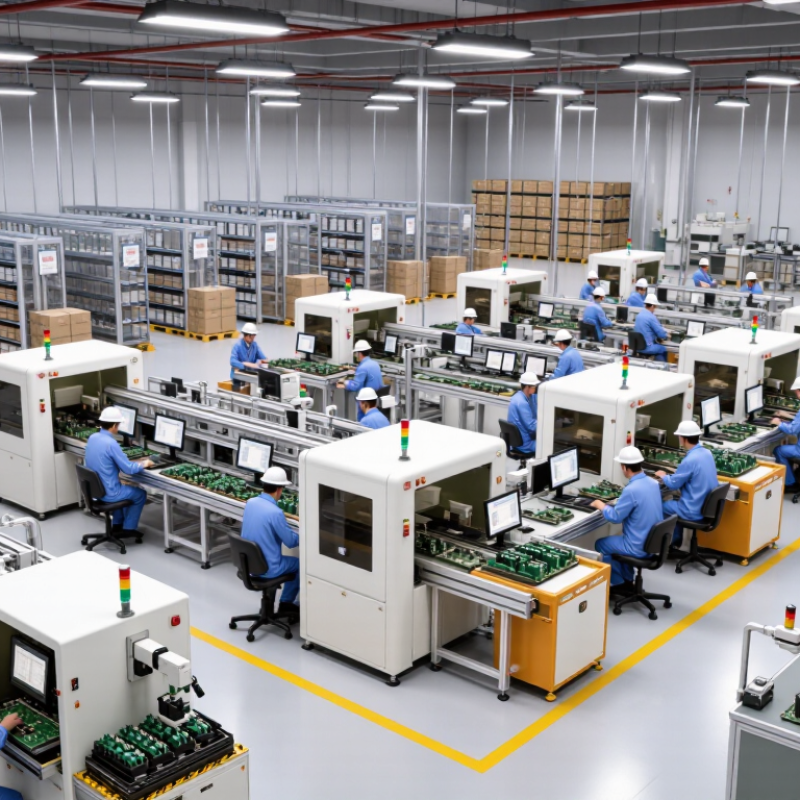
What Is the Best China EMS PCB Supplier?

Definition of China EMS PCB Suppliers

A China EMS PCB supplier is a manufacturing partner based in China that manages electronic production services. EMS means Electronics Manufacturing Services. These suppliers may source components, fabricate bare PCBs, assemble boards, test circuits, and package finished units. Some also support design review and supply-chain planning.

The definition goes beyond low-cost assembly. A capable supplier should understand surface-mount technology, through-hole soldering, component polarity, and production tolerances. It should provide traceable material records and clear inspection reports. Factory audits, process certifications, and sample testing help verify its claims. However, paperwork alone is not enough. A clean report cannot replace consistent results from real production batches.

In practical sourcing work, engineers often judge suppliers through a small pilot order. They examine solder joints, connector alignment, labeling, and test coverage. Communication matters too. A reliable team explains design risks before production starts. It should also report shortages instead of quietly changing components. I once assumed that a fast quotation meant strong manufacturing control. That assumption was weak. Price and speed can hide gaps in testing, documentation, or after-sales support. A better definition includes technical competence, manufacturing capacity, transparent communication, and measurable quality control. Small details reveal the difference.

Key Services Offered by EMS PCB Manufacturers

What Is the Best China EMS PCB Supplier?

A strong China EMS PCB supplier offers more than board assembly. It supports the full production path, from design review to tested finished units. Experienced engineers inspect Gerber files, component lists, and assembly drawings before quoting. This DFM review can identify narrow clearances, weak solder joints, or parts with long lead times. It prevents expensive surprises later. Sometimes, even a careful review misses a detail. That is why communication and documented changes matter.

Key services include SMT and through-hole assembly, component sourcing, PCB fabrication coordination, and prototype production. Many manufacturers also provide new product introduction support, functional testing, automated optical inspection, and X-ray inspection for hidden solder joints. Box-build assembly may include wiring, enclosure installation, labeling, and final quality checks. Reliable suppliers keep lot records, inspection reports, and approved production samples. These records make future troubleshooting faster. Repair and rework services can also reduce material waste when a controlled correction is possible.

Tips: Ask for sample inspection reports, process certifications, and traceability details. Confirm how the supplier handles shortages, substitutions, and design changes. Request a small pilot run before full production. Visit the factory if practical, or arrange a live video audit. A low quote can look attractive, but unclear testing often creates higher costs. Check response speed, too. Slow answers during development may become serious delays during production.

What Is the Best China EMS PCB Supplier? - Key Services Offered by EMS PCB Manufacturers

A practical comparison framework for evaluating electronic manufacturing service providers without relying on company or brand names.

Service Dimension Typical Services and Capabilities Key Technical Data to Verify Quality and Compliance Indicators Customer Value
PCB Assembly Surface-mount technology (SMT), through-hole technology (THT), mixed-technology assembly, prototype builds, and volume production. Component package range, minimum component size, maximum board size, placement accuracy, line capacity, and supported production volumes. IPC-A-610 workmanship requirements, documented inspection procedures, process traceability, and first-article inspection. Provides a single production source for assembling populated printed circuit boards.
PCB Fabrication and Sourcing Single-sided, double-sided, and multilayer PCB sourcing, including rigid, flexible, and rigid-flex circuit boards. Layer count, board thickness, copper weight, surface finish, controlled impedance capability, minimum trace and space, and maximum panel size. Material certificates, incoming inspection, electrical testing, and applicable IPC or customer specifications. Reduces coordination work between bare-board manufacturing and final assembly.
Design for Manufacturing Design-for-manufacturing (DFM), design-for-assembly (DFA), component review, footprint verification, and design feedback before production. Review of solder-mask clearances, component spacing, fiducials, thermal reliefs, test access, and manufacturability risks. Formal engineering review records, revision control, approved build packages, and documented engineering-change procedures. Helps prevent avoidable redesigns, assembly defects, and production delays.
Component Procurement Bill-of-materials analysis, authorized distribution channels, alternates management, shortage monitoring, and lifecycle tracking. Part availability, lead time, minimum order quantity, counterfeit-risk controls, date-code requirements, and approved substitution rules. Supplier qualification, incoming authenticity checks, lot traceability, and secure storage controls. Improves material continuity and reduces purchasing complexity for the customer.
Inspection and Testing Automated optical inspection (AOI), X-ray inspection, flying-probe testing, in-circuit testing, functional testing, and visual inspection. Inspection coverage, test-point requirements, test fixture responsibility, defect reporting format, and functional-test throughput. Calibrated equipment, test records, defect Pareto analysis, corrective-action reports, and controlled inspection plans. Detects assembly and soldering problems before products reach later production stages.
Box Build and System Integration Cable and wire-harness assembly, enclosure integration, labeling, firmware loading, final assembly, and product configuration. Supported enclosure materials, torque control, harness specifications, software-loading process, and final inspection requirements. Work instructions, serial-number traceability, configuration records, ESD controls, and final acceptance testing. Allows the supplier to deliver tested subassemblies or complete electronic products.
Prototyping and NPI Rapid prototype assembly, new-product introduction (NPI), pilot runs, process validation, and production ramp-up. Prototype quantity, quotation turnaround, sample lead time, engineering change response, and pilot-run capacity. First-article reports, build reviews, lessons-learned records, and controlled transition from prototype to mass production. Shortens the path from an approved design to a repeatable manufacturing process.
Supply Chain and Logistics Material planning, inventory management, kitting, export documentation, packaging, and global shipment coordination. Forecast flexibility, inventory ownership model, safety-stock policy, packaging specifications, and shipment documentation. Inventory reconciliation, lot tracking, supplier performance monitoring, and documented logistics procedures. Supports predictable deliveries and helps control material and transportation risks.
Quality Management Process control, corrective and preventive action, nonconformance management, audits, and continuous improvement. Defect-rate reporting, first-pass yield, rework policy, response time for quality issues, and customer complaint handling. ISO 9001 IPC-A-610 ESD Control Creates measurable and repeatable quality performance across production batches.
Industry-Specific Compliance Support for products used in medical, automotive, industrial, aerospace, telecommunications, and consumer applications. Required validation, environmental testing, regulatory documentation, traceability level, and sector-specific process controls. ISO 13485 IATF 16949 RoHS REACH Helps align manufacturing processes with the compliance needs of the target market.
After-Sales and Engineering Support Failure analysis, repair and rework, warranty support, field-return evaluation, product updates, and end-of-life planning. Response time, repair capability, failure-analysis methods, spare-parts policy, and engineering-change support. Root-cause analysis, corrective-action documentation, return-material authorization procedures, and service records. Improves product reliability and reduces the operational impact of post-production issues.

Evaluation tip: The best EMS PCB supplier is usually the provider that matches the product’s technology, volume, compliance requirements, testing needs, supply-chain risk, and total cost—not simply the supplier offering the lowest quoted unit price.

Criteria for Evaluating Supplier Quality and Reliability

What Is the Best China EMS PCB Supplier?

Supplier quality and reliability should be judged through evidence, not attractive quotations. A capable China EMS PCB supplier should provide clear process controls, trained operators, and traceable production records. Ask for current quality certifications, internal audit results, and compliance with relevant IPC standards. Certification alone proves little. The factory must show how it manages solder paste, moisture-sensitive components, and engineering changes. Request a sample build with documented AOI, ICT, functional testing, and, when necessary, X-ray inspection. Photos of a clean line help, but inspection data matters more.

Reliability also depends on communication. During a trial order, measure response time, clarification quality, and the accuracy of submitted documents. A dependable supplier confirms drawings, BOM revisions, tolerances, and packaging requirements before production. It should explain its corrective-action process after a defect, including root-cause analysis and verification. Visit the facility if possible. Observe material labeling, quarantine areas, and how operators handle unfinished boards.

I once focused too heavily on unit price. That shortcut was a mistake. A cheaper quote can conceal weak traceability, unstable subcontracting, or expensive rework. Examine delivery history using realistic production volumes, not promises made during a sales call. Ask for references from comparable projects, but verify them carefully. No supplier performs perfectly every month. What matters is whether problems are reported early, measured honestly, and corrected with documented action. Reliability is visible in these small, repeatable behaviors.

Comparison of Leading China EMS PCB Supplier Types

What Is the Best China EMS PCB Supplier?

The best China EMS PCB supplier depends on product complexity, order volume, and required engineering support. PCB specialists often provide fast prototypes, strong design-for-manufacturing feedback, and flexible board options. They may offer limited enclosure assembly or final product testing. Integrated EMS providers combine PCB fabrication, component sourcing, SMT, through-hole assembly, and functional testing. This model can simplify communication and reduce handoff errors.

Turnkey manufacturers manage more stages, including new product introduction, box-build assembly, packaging, and supply-chain planning. They suit products that need stable production and controlled scaling. However, their minimum order quantities may be higher. Smaller regional suppliers can provide closer project attention and faster engineering discussions. Their capacity may become a concern during sudden demand increases. This is where many comparisons fail.

From practical sourcing experience, price should never stand alone. Review factory audits, process control records, component traceability, inspection equipment, and corrective-action procedures. Ask for sample inspection reports and production references from similar products. A reliable supplier should explain solder-paste control, X-ray inspection, testing coverage, and material compliance clearly. Certifications help, but they do not replace process evidence. I have seen attractive quotations hide unclear testing responsibilities. That risk deserves careful questioning. A balanced evaluation should compare quality depth, communication speed, engineering capability, lead-time control, and total landed cost.

How to Select the Best Supplier for Your Project

Selecting the best China EMS PCB supplier requires more than comparing unit prices. Prismark’s 2024 PCB industry data places China at roughly half of global PCB production by value. That scale offers strong capacity, but quality varies between factories. Ask for recent audit records, IPC-A-600 or IPC-A-610 training, ISO 9001 certification, and documented material traceability. A reliable supplier should explain stack-up control, impedance testing, solderability checks, and nonconformance handling in clear language.

Request a small pilot order before approving mass production. Measure first-pass yield, defect patterns, delivery accuracy, and engineering response time. For complex assemblies, review the supplier’s DFM feedback and component sourcing process. A supplier that identifies an unmanufacturable pad or weak thermal design early can prevent costly rework. The 2023 IPC World PCB Production Report also shows how concentrated Asian production remains, so logistics planning deserves attention. Confirm packaging, moisture control, export documents, and backup production capacity. Cheap freight is not always cheap risk.

Tips: Build a weighted scorecard. Give quality and traceability more weight than price. Ask for three customer references, but verify them independently. Visit the factory if possible. I once trusted a polished sample too quickly; the second batch exposed weak process control. No scorecard is perfect. Leave room for technical judgment, especially when prototype data is incomplete. A useful supplier should welcome difficult questions, share measurable evidence, and admit where its process still needs improvement.