10 Best Printed Board Assembly Companies in 2026

The 2026 printed board assembly market is becoming more demanding, not merely larger. Products now require tighter tolerances, shorter delivery windows, and stronger traceability. A small solder defect can delay an entire medical, automotive, or industrial shipment.

Industry reports support this pressure. IPC’s World PCB Production Report identifies Asia-Pacific as the dominant manufacturing region, while its Global Sentiment of the Electronics Industry research tracks continuing concerns about labor, materials, capacity, and geopolitical disruption. Market studies from Grand View Research and Fortune Business Insights also forecast sustained growth in electronics manufacturing and PCB-related services through the decade. Forecasts differ, however. That matters.

Capacity alone does not prove reliability.

John W. Mitchell, president and chief executive officer of IPC, has described electronics manufacturing as “the foundation for innovation and economic growth around the world.” His statement reflects the sector’s wider responsibility. A capable supplier must combine engineering experience, process control, inspection technology, and transparent communication. Certifications help, but they never replace evidence from real production lines.

This guide examines ten printed board assembly companies considered notable in 2026. The evaluation focuses on manufacturing capabilities, quality systems, component sourcing, prototyping support, delivery performance, and industry experience. It also considers whether each company serves startups, complex industrial programs, or high-volume production.

No ranking is permanently correct. Supplier performance can change with ownership, demand, equipment, or staffing. Buyers should verify current certifications, audit results, factory locations, and customer references before signing a contract. That practical step is easy to overlook. It may prevent an expensive mistake.
10 Best Printed Board Assembly Companies in 2026

What Printed Board Assembly Means in 2026

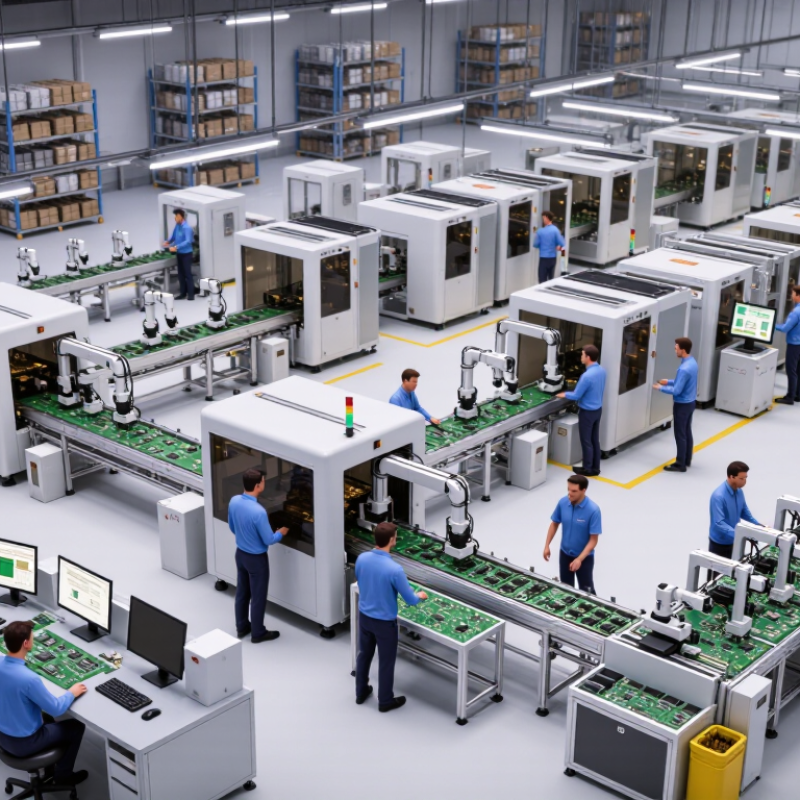
Printed board assembly in 2026 means more than placing components on a circuit board. It combines automated mounting, soldering, inspection, traceability, and design feedback. A modern assembly line may use machine vision, real-time process data, and digital work instructions. These tools help reduce defects before boards reach functional testing. According to a 2024 Fortune Business Insights report, the global printed circuit board market was valued at about USD 89.7 billion in 2023. It is projected to reach roughly USD 145.8 billion by 2032. That expansion increases pressure on assembly providers to deliver speed, consistency, and flexible production.

The meaning is also changing through miniaturization and supply-chain risk management. Smaller packages require tighter placement accuracy and cleaner process control. High-reliability products need documented materials, controlled temperatures, and repeatable inspection records. IPC industry guidance remains important because it defines accepted workmanship and process expectations. Still, standards do not solve every factory problem. A perfect checklist cannot replace experienced technicians. That point is easy to forget.

Tips: Ask for defect-rate data, inspection coverage, and traceability examples. Confirm whether prototypes and volume builds use the same quality controls. Request evidence, not promises. Also examine how quickly the supplier reports process failures. Silence is a warning sign.

How Printed Board Assembly Companies Are Evaluated

Evaluating printed board assembly companies requires more than comparing prices. A capable supplier should explain its process clearly, from component sourcing to final inspection. Reviewers should examine engineering experience, including surface-mount placement, through-hole work, fine-pitch devices, and mixed-technology boards. Ask for evidence from similar projects. General claims are not enough.

Quality control needs measurable proof. Check whether the facility uses controlled work instructions, calibrated inspection equipment, and complete production records. Traceability should connect each board to materials, operators, machine settings, and test results. Automated optical inspection is useful, but it cannot detect every hidden defect. Electrical testing, X-ray inspection, and functional testing may be necessary. A sample board should show clean solder joints, accurate placement, and undamaged edges.

Delivery performance also matters. Compare quoted lead times with actual performance across several orders. Review communication during engineering changes, material shortages, and failed tests. A reliable company reports problems early, not after shipment. Certifications can support credibility, but they should be verified rather than treated as proof of excellence. No scorecard is perfect. A polished factory tour may hide weak documentation, while a smaller operation may offer stronger technical attention. Pilot builds, site audits, and direct questions usually reveal more than marketing language. A few overlooked details can still change the final decision.

10 Best Printed Board Assembly Companies in 2026 - How Printed Board Assembly Companies Are Evaluated
No. Evaluation Dimension Weight What Is Evaluated Typical Evidence Scoring Guide
1 Manufacturing Quality 18% Process consistency, defect prevention, solder-joint quality, assembly accuracy, and final inspection controls. Quality records, first-pass yield, defect-per-million-opportunity data, inspection procedures, and corrective-action reports. 1–5 points
2 Industry Standards and Certifications 12% Use of recognized quality and electronics-assembly standards, including IPC-A-610 and J-STD-001, where applicable. Current certificates, audit reports, operator training records, and documented process specifications. 1–5 points
3 Technology and Equipment 12% Surface-mount technology capability, fine-pitch placement, through-hole assembly, automated optical inspection, and X-ray inspection. Equipment list, placement accuracy specifications, process capability studies, and maintenance records. 1–5 points
4 Engineering and Design-for-Manufacturing Support 10% Ability to review Gerber files, bills of materials, assembly drawings, component availability, and design risks before production. Engineering review procedures, feedback samples, manufacturability checklists, and revision-control practices. 1–5 points
5 Supply-Chain and Component Management 10% Component sourcing controls, traceability, counterfeit-part prevention, stock management, and shortage-response capability. Approved-supplier procedures, lot traceability, incoming-inspection records, and material-status reporting. 1–5 points
6 Testing and Traceability 10% Electrical testing, functional testing, programming, serialization, repair records, and production-history retention. Test coverage reports, fixture capability, serialized inspection data, and retained production records. 1–5 points
7 Delivery Reliability 9% On-time delivery, production scheduling, capacity planning, lead-time accuracy, and response to engineering changes. On-time-delivery percentage, production schedules, capacity plans, and documented escalation procedures. 1–5 points
8 Cost Transparency and Total Value 7% Quotation clarity, setup charges, tooling costs, material-price assumptions, rework policy, and total cost of ownership. Itemized quotations, change-order terms, payment conditions, and documented cost-review practices. 1–5 points
9 Compliance and Sustainability 6% Environmental, regulatory, occupational-safety, and product-compliance controls relevant to the target market. RoHS and REACH declarations where required, environmental-management records, waste-control procedures, and audit results. 1–5 points
10 Customer Support and Risk Management 6% Communication quality, issue resolution, business continuity, data protection, warranty handling, and long-term support. Support response targets, business-continuity plans, escalation workflows, warranty terms, and customer-service records. 1–5 points
Total Evaluation Weight 100% Recommended overall score: Calculate each dimension on a five-point scale and multiply the result by its assigned weight.
Evaluation method: Scores should be based on current documentation, audit evidence, production performance, technical capability, and verified customer requirements. Certification and regulatory expectations may vary by product category and market.

Top 10 Printed Board Assembly Companies in 2026

Top 10 Printed Board Assembly Companies in 2026

The top ten printed board assembly companies in 2026 are judged by more than production volume. Reliable partners combine engineering support, stable sourcing, precise placement, and documented testing. Buyers should examine prototype speed, low-volume flexibility, and full-scale capacity. A capable provider can review Gerber files, identify assembly risks, and suggest practical design changes before fabrication.

Traceability matters. Each board should connect to component lots, operator records, inspection results, and test data. Automated optical inspection can detect missing parts, polarity errors, and solder bridges. X-ray inspection is useful for hidden joints beneath compact packages. Strong factories also follow recognized quality systems and maintain clear process controls. Ask for evidence, not attractive promises.

Delivery performance deserves careful attention. A short quotation may hide tooling charges, material substitutions, or weak communication. No supplier is perfect. Even experienced teams can underestimate moisture sensitivity, connector tolerances, or changing component availability. The best evaluation includes sample reviews, manufacturing feedback, corrective-action records, and realistic lead-time discussions. Local support may simplify communication, while overseas production can offer wider capacity. The right choice depends on product risk, certification needs, forecast stability, and service expectations. Baebele

Services, Technologies, and Industries Covered

The 10 best printed board assembly companies in 2026 should be judged by services, technologies, and industries covered. Grand View Research valued the global PCB market at approximately USD 89.7 billion in 2023. It forecasts a 5.6% compound annual growth rate through 2030. That growth increases demand for dependable turnkey assembly, prototyping, component sourcing, box-build integration, and repair support. Speed matters, but stable process control matters more.

Strong providers commonly support surface-mount technology, through-hole assembly, fine-pitch placement, automated optical inspection, X-ray inspection, and selective soldering. They should also provide design-for-manufacturing reviews, lifecycle traceability, and secure test records. IPC-A-610 workmanship guidance remains a practical benchmark. However, certification alone does not guarantee consistent results. Factory evidence matters.

Industry coverage separates capable suppliers from narrow specialists. Medical electronics require controlled documentation and quality systems aligned with ISO 13485. Automotive programs often demand IATF 16949 discipline, vibration testing, and long-term component planning. Aerospace projects may require AS9100-based controls and strict configuration management. Industrial automation, communications, energy equipment, and consumer devices add different volume and reliability pressures. MarketsandMarkets projects continued expansion in electronic manufacturing services through 2029, driven by connected devices and regional supply-chain investment. The exact ranking remains debatable. A low-volume prototype expert may outperform a mass-production facility for one buyer.

10 Best Printed Board Assembly Companies in 2026: Services, Technologies, and Industries Covered

This chart summarizes the most commonly covered PCB assembly capabilities and target industries across leading providers. The values represent the number of companies, out of 10, offering each capability or serving each sector.

SMT and turnkey assembly are widely available, while capabilities such as conformal coating, medical electronics, and aerospace applications typically require more specialized production and compliance support.

How to Choose the Best Assembly Partner for Your Project

Choosing among the 10 best printed board assembly companies in 2026 requires more than comparing quoted prices. Start with technical fit. Confirm experience with your board type, component density, surface finish, and expected production volume. Ask for first-pass yield, defect rates, inspection coverage, and corrective-action records. Numbers reveal more than polished presentations.

A 2024 global smart-manufacturing survey of 1,350 manufacturers found that 94% viewed smart manufacturing as important to future competitiveness. Your assembly partner should therefore support traceability, automated inspection, and production data access. Request sample records showing lot tracking from incoming materials to final shipment. Also check whether the factory uses solder-paste inspection, automated optical inspection, and X-ray inspection where required. Small gaps matter.

Supply resilience deserves equal attention. The 2024 Resilinc EventWatch report recorded thousands of supply-chain disruptions worldwide, including factory fires, port closures, and severe weather. Ask how the supplier qualifies alternate components and manages obsolete parts. Verify lead times under normal and stressed conditions. A low quote can hide expensive delays. I once underestimated engineering-response speed; the board passed inspection, but slow feedback delayed testing by weeks. That mistake still matters. Review communication habits, not just equipment lists. Use a pilot build before committing to large volumes. The best partner may not be the cheapest, but it should make problems visible early.