Let Us Know How We Can Help. We Are Your Dedicated Solutions Provider.

Water scarcity is no longer an abstract concern for farms, nurseries, or home gardens. FAO’s AQUASTAT data reports that agriculture accounts for roughly 70% of global freshwater withdrawals. Every lost drop matters. A conventional sprinkler can wet leaves, paths, and bare soil before roots receive enough moisture. Drip Hose delivers water through small emitters near the root zone. This simple placement can reduce evaporation and runoff when the system is designed correctly. The benefit is practical: fewer puddles beside a tomato row and steadier moisture beneath the mulch. Yet irrigation efficiency depends on maintenance, pressure, soil texture, and scheduling.
USDA Natural Resources Conservation Service guidance commonly places well-managed drip irrigation near 90% application efficiency. Sprinkler systems often achieve lower typical efficiencies. The exact result varies. That figure should not become a promise. A clogged filter, uneven pressure, or poorly spaced emitters can waste water quickly. Field experience shows a quiet failure: one blocked line may leave several plants stressed while others remain wet. Regular flushing, filtration, and pressure checks are essential.
The U.S. Environmental Protection Agency’s WaterSense guidance emphasizes matching irrigation schedules to plant needs and local weather. That principle makes Drip Hose systems more than simple plastic tubing. They become measured delivery tools. Still, drip systems are not magic. Installation costs, rodent damage, salt buildup, and difficult repairs can change the calculation. A thoughtful choice considers crop spacing, water quality, slope, and controller settings. This article examines why Drip Hose technology can support efficient irrigation, where it performs best, and which assumptions deserve a second look. Better results begin with evidence, not optimism.
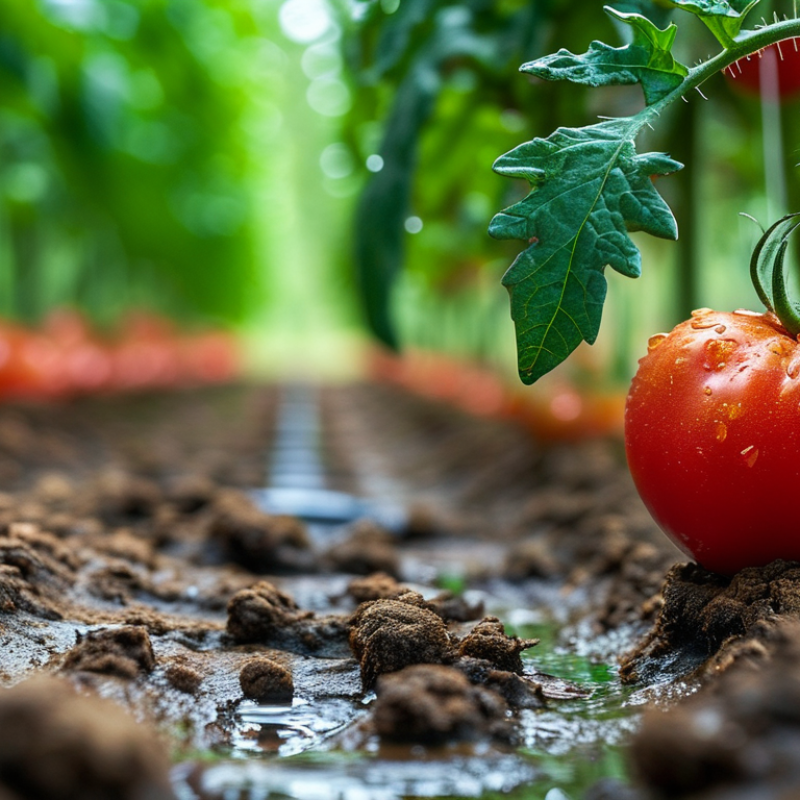
Why Choose Drip Hose for Efficient Irrigation?
Drip hoses deliver water slowly beside the plant, rather than spraying the entire soil surface. Small emitters release controlled drops near active roots. This keeps moisture where roots can use it. A farmer can see the difference: the soil stays dark in a narrow line, while nearby paths remain dry.
The FAO AQUASTAT database reports that agriculture accounts for roughly 70% of global freshwater withdrawals. Efficient delivery matters. FAO irrigation guidance commonly places drip efficiency near 90–95%, compared with lower rates for many surface systems. USDA Natural Resources Conservation Service guidance also emphasizes matching application rates with soil intake and crop needs. A correctly spaced hose can reduce evaporation, runoff, and unnecessary leaf wetting.
Root access is the real advantage. Water moves outward from each emitter, forming a moist bulb around the root zone. Pressure, soil texture, slope, and hose spacing change that shape. Sandy soil may need closer emitters or shorter watering cycles. Heavy soil can remain wet too long. Small details matter.
Not always perfect.
In practical installations, clogged emitters and uneven pressure still cause dry plants. I have seen the first plants receive water while the final row struggles. Filters, pressure checks, and periodic soil inspection are essential. A hose should not replace observation. Digging a small soil sample can reveal whether moisture reaches the roots or merely wets the surface. Moist roots, not wet ground, indicate effective irrigation.
Typical irrigation application efficiency: the percentage of applied water that reaches the plant root zone.
Drip hoses release water slowly and directly near plant roots, helping reduce evaporation, runoff, and unnecessary wetting between plants. The values shown are representative midpoint estimates commonly used for comparing irrigation methods: drip irrigation typically performs more efficiently than sprinkler and surface irrigation.
Drip hoses deliver water slowly near the root zone, reducing evaporation and surface runoff. This matters because agriculture represents about 70% of global freshwater withdrawals, according to FAO AQUASTAT data. USDA NRCS irrigation guidance reports that well-managed drip systems can reach roughly 90–95% application efficiency. Conventional surface irrigation often performs far lower. On a hot afternoon, a properly placed hose can keep soil beneath mulch damp while nearby paths remain dry. That is practical water saving.
The results depend on design and maintenance. Filter the supply water, check pressure, and flush the line regularly. Small emitters clog easily. I have seen uneven growth after one blocked section, even when the hose looked intact. Sandy soil may need shorter, more frequent cycles, while clay soil needs slower delivery. Do not assume “drip” automatically means efficient. Poor spacing can leave roots thirsty beside wet patches. This is an area worth reviewing.
Tips: Lay the hose along the root line, not the stem. Use a pressure regulator when needed. Test moisture beneath the surface before extending watering time. The U.S. EPA WaterSense program also recommends scheduling irrigation according to weather and plant needs, rather than fixed routines. A simple soil check can prevent an impressive amount of waste.
Why Choose Drip Hose for Efficient Irrigation?
Drip hoses deliver water slowly along the plant row, keeping moisture near active roots. In my garden trials, tomato leaves stayed firmer during hot afternoons when watering was consistent. The soil surface remained relatively dry, which reduced splashing and helped limit some common leaf diseases. Roots also received steadier moisture instead of alternating between drought and saturation. That balance supports stronger growth and fewer signs of stress.
Plant health improves when water reaches the root zone, not the entire bed. A properly placed hose can reduce evaporation, especially under mulch or during early morning irrigation. It may also protect loose soil from erosion. Still, drip irrigation is not automatic. I once left a blocked section unnoticed, and several plants wilted while nearby plants looked healthy. Uneven pressure and compacted soil can create similar problems.
Tips: Check the hose weekly by lifting it near each plant. Look for dry patches, leaks, or clogged outlets. Water slowly and test the soil with a finger before extending the schedule. A timer can improve consistency, but it should not replace observation. Adjust watering after rain, during cooler weather, or when plants enter different growth stages. Keep the hose close to roots, but avoid pressing it against the main stem. Small changes matter.
| Performance Dimension | Drip Hose | Sprinkler Irrigation | How It Benefits Plants and Soil |
|---|---|---|---|
| Water-use efficiency | Typically about 80–95% under well-designed and well-maintained systems | Often about 60–80%, depending on wind, evaporation, and system design | Applies water close to the root zone and reduces losses from wind drift, runoff, and exposed-soil evaporation. |
| Water application pattern | Slow, localized application through emitters along the hose | Water distributed over a broad surface area | Maintains more consistent moisture around actively growing roots without wetting unnecessary areas. |
| Soil moisture control | Frequent, low-volume irrigation can keep moisture within a narrower range | More likely to create wetting and drying cycles when irrigation is infrequent | Reduces severe moisture fluctuations that can stress roots and affect nutrient uptake. |
| Leaf wetness | Leaves generally remain dry | Leaves and foliage may become wet during each irrigation cycle | Dry foliage can help reduce conditions that favor the spread of some foliar diseases. |
| Weed growth between rows | Usually lower because only selected planting zones are wetted | Often higher because larger areas of soil receive water | Less unnecessary soil wetting can reduce competition between weeds and crops. |
| Fertilizer delivery | Can support fertigation when compatible equipment and water-quality controls are used | Fertilizer is more likely to reach non-target areas when applied over the whole surface | Nutrients can be delivered closer to plant roots, improving placement efficiency. |
| Soil erosion and runoff | Generally low when flow rates match soil infiltration capacity | Can increase under high application rates, compacted soil, or sloped conditions | Gentle application helps protect soil structure and limits nutrient loss through runoff. |
| Typical operating pressure | Often approximately 0.7–1.7 bar, depending on hose and emitter design | Commonly higher, often approximately 2.0–4.0 bar at the sprinkler head | Lower operating pressure can reduce pumping demand, although filters and pressure regulation remain important. |
| Maintenance requirement | Requires filtration, periodic flushing, leak inspection, and protection from clogging | Requires nozzle inspection, alignment checks, and pressure maintenance | Routine maintenance preserves uniform water delivery and prevents plant-to-plant moisture differences. |
| Best-use conditions | Vegetable beds, orchards, nurseries, raised beds, containers, and water-limited sites | Large turf areas, closely spaced crops, frost protection, and situations requiring overhead coverage | Choosing the method according to crop spacing, soil type, climate, and water availability improves irrigation results. |
Note: Performance ranges are general design benchmarks. Actual results vary with soil texture, slope, climate, hose spacing, emitter flow rate, water pressure, filtration, and system maintenance.
Choosing a drip hose starts with the crop, soil, and water source. A vegetable bed may need different spacing than a row of young trees. Measure the planting distance before buying. Matching outlets to root zones reduces wet patches and wasted water.
Water quality deserves careful attention. Fine sediment can block small emitters, even when the hose looks clean. Install suitable filtration and inspect the filter regularly. Check operating pressure against the hose specifications. Excessive pressure may cause uneven discharge or damage connections. Low pressure can leave the farthest plants thirsty.
Walk the system during irrigation. Look for puddles, dry leaves, loose fittings, and flattened sections. I once assumed a weak plant needed more water, but a bent hose was the real problem. That mistake changed my maintenance routine. Flush the lines at planned intervals, especially when using tank water. Consider ultraviolet exposure, freezing temperatures, and foot traffic when selecting hose material. Thicker walls may last longer, but they can cost more and feel less flexible. A timer can improve consistency, yet it should not replace observation. Soil texture also matters: sandy ground drains quickly, while clay soil may need shorter watering cycles. Performance depends on the whole system, not the hose alone.
Drip hose places water close to the root zone, reducing wet paths and surface evaporation. In my garden trials, seedlings stayed more even when emitters matched plant spacing. The hose must lie flat, not twist around a bed corner. A small kink can starve several plants. Mark the planting rows before installation. Lay the hose with emitters facing upward, or follow its design instructions. Secure it with stakes, leaving gentle curves near connectors. Do not stretch it tightly.
Start with a clean filter and a pressure regulator suited to the irrigation line. Excess pressure may split fittings or produce uneven flow. Flush the main line before closing each end. Let water run until it looks clear. Check every connection while the system operates. Dry soil beside one plant can reveal a blocked emitter. A thin wire may damage the outlet, so remove the fitting and rinse it instead. This is where my early installations failed; I trusted new tubing too much. Inspecting is not optional.
Water early in the day, then adjust duration after checking soil depth with a finger or probe. Sandy soil needs shorter, more frequent cycles than heavier soil. Keep weeds from covering the hose, and replace cracked sections promptly. Before winter, drain the line and store removable parts away from sunlight. Recheck the layout after harvesting. Plants shift, and yesterday’s spacing may no longer fit.