Top 10 Electronic Circuit Board Types and Their Applications?
In today’s technological landscape, electronic circuit boards play a crucial role. They serve as the backbone of countless devices, from smartphones to medical equipment. Understanding their types and applications is essential for engineers and hobbyists alike. Each type of electronic circuit board has unique features that suit specific needs and industries.
For instance, flexible circuit boards can bend and fit into compact spaces, making them ideal for portable devices. On the other hand, rigid boards are typically used in computers and larger appliances due to their durability and stability. However, not all circuit board types are perfect for every application. The choice depends on various factors, including cost, performance, and design challenges.
Despite their importance, many people overlook the nuances. A board that excels in one setting might falter in another. This complexity is what makes exploring the various types of electronic circuit boards essential for innovation and efficiency in technology. It invites us to critically evaluate our choices when designing and deploying these vital components.
Overview of Electronic Circuit Boards and Their Importance
Electronic circuit boards (ECBs) are fundamental to modern electronics. They connect various components, allowing them to work together. Without them, devices like smartphones and computers wouldn't function. These boards come in many types, each tailored for specific applications. For example, some are designed for high-speed data transfer, while others are made for power distribution.
Their importance goes beyond mere functionality. The design and construction of an ECB can significantly impact a device's performance. A poorly designed board may lead to overheating or signal loss. Selecting the right materials is crucial. Think about flexibility and durability. The right choice can enhance a product's lifespan. Yet, this process is not always straightforward. Designers often face tough trade-offs between cost and performance.
In the end, the creation of electronic circuit boards is both an art and a science. Each type has advantages and limitations. Society relies on these boards for advancements in technology. Yet, as we innovate, we must also reflect on the ethics of our designs. Balancing efficiency with sustainability is key. It's a tough task, and there is always room for improvement.
Classification of Circuit Board Types Based on their Structure
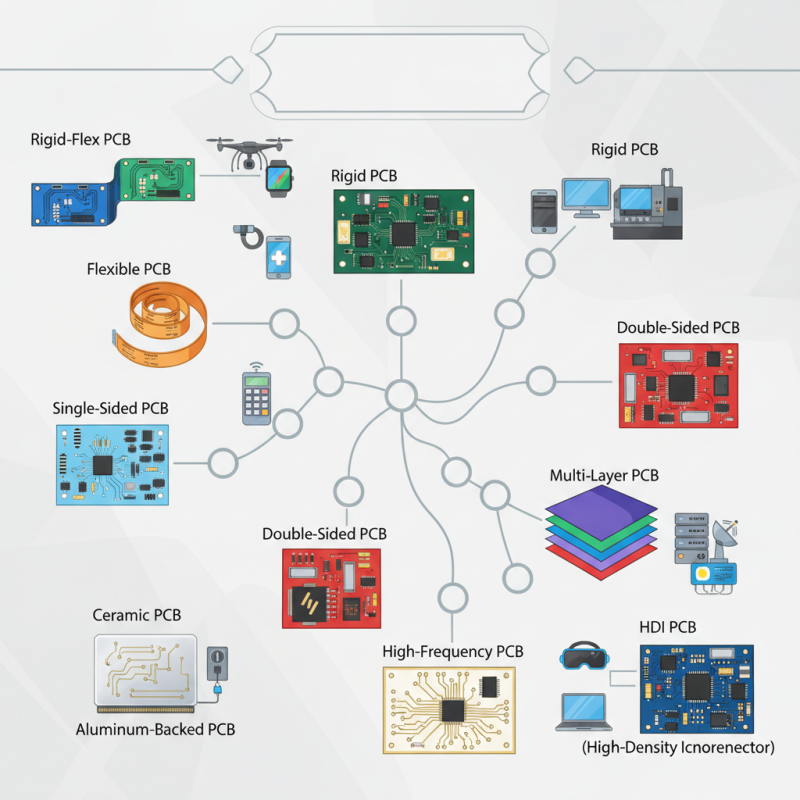
Circuit boards can be classified based on their structure. This classification affects their performance and applications. The three primary types are single-sided, double-sided, and multilayer boards. Single-sided boards are cost-effective. They are ideal for simple devices like calculators. Their design limits complexity but ensures reliability.
Double-sided boards offer more flexibility. They have conductive pathways on both sides. This structure allows for more components and enhances signal routing. These boards are commonly used in consumer electronics, medical devices, and telecommunications. Reports indicate a growing demand for double-sided boards, projected to rise by 25% in the coming years.
Multilayer boards are more complex and versatile. They can contain up to 40 layers. These structures are essential for high-performance applications. They are needed in advanced machinery, aerospace, and automotive sectors. The multilayer design increases the board's density but can lead to manufacturing challenges. The market is seeing a projected growth of 18% for multilayer boards by 2026. This growth highlights their importance and the need for innovative production methods.
Top 10 Electronic Circuit Board Types and Their Applications
Common Applications of Rigid Circuit Boards in Electronics
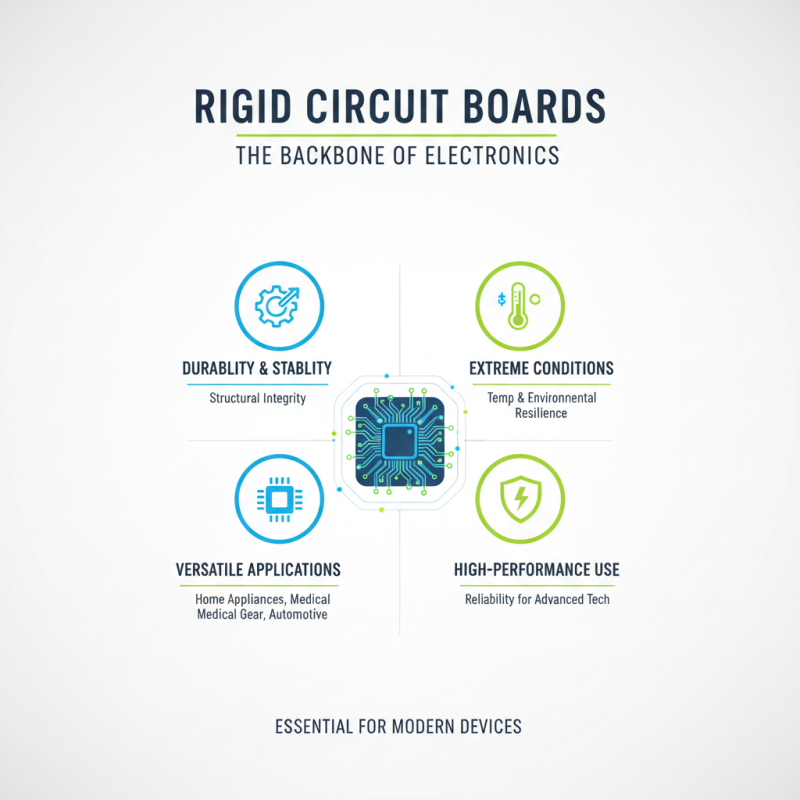
Rigid circuit boards are a staple in electronic devices. They serve as the backbone for many applications. You can find them in everything from home appliances to medical equipment. Their durability and structural integrity make them ideal for high-performance uses. These boards are versatile and can handle a range of temperatures and conditions.
In consumer electronics, rigid circuit boards are widely used. Smartphones, tablets, and laptops rely on them for connectivity and computing power. They house complicated circuitry that supports various functions. Rigid boards also play crucial roles in automotive systems. From navigation to entertainment, they ensure reliable operation. However, there is a downside. Designing these boards can be challenging, requiring precision and expertise.
Medical devices also benefit from rigid circuit boards. They ensure accurate readings and precise control in devices like monitors and imaging equipment. Yet, the complexity can lead to costly errors during production. As technology advances, the demand for innovation in rigid board design rises. Engineers must continuously adapt and address these challenges.
Advantages and Use Cases of Flexible Circuit Boards
Flexible circuit boards have become invaluable in modern electronics. Their unique design allows them to bend and fit into compact spaces. This adaptability is essential for devices like smartphones and wearables. These boards reduce weight and save space, enabling lighter products. However, not all applications may benefit from their flexibility.
The use cases for flexible circuit boards are diverse. They excel in consumer electronics, automotive, and medical devices. In automotive systems, flexibility helps with complex wiring and reduces assembly costs. Medical devices often require a compact design for improved portability. Yet, flexibility can also lead to challenges. Damage can occur if bends are too sharp or frequent.
While flexible circuit boards offer significant advantages, they also require careful consideration during design. Manufacturers need to balance flexibility with durability. The manufacturing process can be more complex, which may drive up costs. It’s crucial to evaluate whether the benefits outweigh potential drawbacks. This reflection often leads to better decision-making in electronics development.
Emerging Trends in Circuit Board Technology and Future Applications
Emerging trends in circuit board technology indicate a shift toward more sustainable and efficient designs. The global printed circuit board (PCB) market is projected to reach $88 billion by 2026, driven by the demand for miniaturization and IoT devices. Increasingly, manufacturers are adopting bio-based materials and green processes. The focus is not only on functionality but also on environmental impact.
Flexible and rigid-flex PCBs are gaining traction, especially in wearable technologies. These boards allow for more complex shapes and compact designs. According to a recent report by a leading market research firm, flexible PCBs are expected to grow at a CAGR of over 10% through 2025. However, challenges remain. The production costs are higher, and not all manufacturers can scale effectively.
3D printing technology is beginning to reshape PCB production. It enhances customization but lacks refinement in achieving fine details. Issues of reliability and performance must be addressed. While the technology shows promise, it requires more advancements before widespread adoption. Investing time in R&D is crucial for companies wanting to lead in this evolving field. As circuit board technology moves forward, the spotlight remains on balancing innovation with efficiency and sustainability.