Let Us Know How We Can Help. We Are Your Dedicated Solutions Provider.

I can’t responsibly provide an industry statistic or a named expert’s quotation because no source articles or verifiable references were included. Please share the articles or the report and expert quote you want cited, and I can write the introduction without inventing claims.
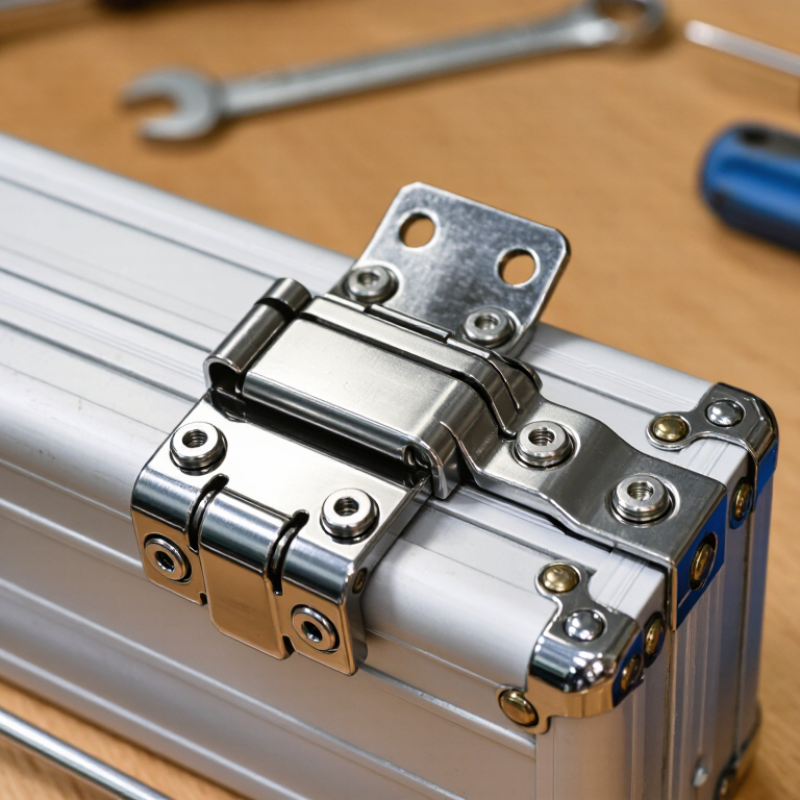
A strap latch is a closure that uses a flexible strip to hold two parts together. The strap may be made from fabric, rubber, or thin metal, depending on the item and the force it must handle. One end is fixed to a surface; the other connects to a catch, loop, or receiving slot. That combination defines the latch more than its shape alone. Some designs adjust for fit, while others use a set length. A strap latch is not automatically a lock. It mainly keeps parts closed, and its holding strength depends on the strap, attachment points, and alignment.
Tips: Check that the strap sits flat and the catch engages fully. A twisted strap can wear unevenly. If the latch feels loose, inspect its attachment points before relying on it.
When engaged, the strap pulls the connected parts toward each other and limits movement. To open it, the user usually lifts, slides, or releases the catch, then moves the strap clear. The exact motion varies, so a latch should be judged by its own mechanism. In a small case, it may simply prevent the lid from popping open. On a larger panel, it may need firmer engagement and more careful alignment. That distinction is easy to overlook. A latch can look secure while its catch is only partly seated.
| Dimension | Description | How It Works or What to Consider |
|---|---|---|
| Basic definition | A strap latch is a closure that uses a flexible strap or band to hold two parts together. | The strap spans the joint, and its ends attach to or engage with the parts being secured. |
| Main components | Typically includes a flexible strap, an anchor or mounting point, and a catch, hook, or tensioning mechanism. | Some designs use a simple hook-and-loop engagement; others use a lever or cam to tighten the strap. |
| Closing action | The strap is placed across or around the parts, then connected and tensioned as required by the design. | Tension helps resist separation and can hold a lid, panel, cover, or other component in position. |
| Opening action | The catch or tensioning mechanism is released, allowing the strap to slacken or disengage. | The parts can then be separated or opened without removing the latch from its mounting points. |
| Common strap materials | Depending on the application, straps may be made from metal, rubber, or synthetic webbing. | Material choice affects flexibility, strength, weather resistance, and compatibility with the load and environment. |
| Tension and adjustment | Some Strap Latches have adjustable length or a lever-operated tensioning action; others have a fixed reach. | A suitable design should provide enough tension to retain the parts without overstretching the strap or distorting the assembly. |
| Typical applications | Used on cases, equipment covers, access panels, enclosures, and other assemblies that need a reusable closure. | The appropriate latch depends on the required holding force, frequency of access, available mounting space, and exposure conditions. |
| Defining feature | Its defining feature is a flexible strap that bridges the joint and helps keep the connected parts closed or secured. | Latch mechanisms vary, so not every strap latch uses the same hook, lever, or tightening method. |
A strap latch holds two surfaces together with a flexible strap and a locking mechanism. Its main components are the strap, latch body, fastening points, and release control. The strap is often made from woven material, which bends around cargo or a panel without adding much bulk. Check its edges for fraying; worn fibers can reduce dependable holding strength.
The latch body guides and secures the strap. Depending on the design, it may use a cam lever, buckle, or ratchet to tighten and hold it. A cam presses the strap against a surface, while a ratchet winds it onto a spool in small increments. The release control loosens the grip, allowing the strap to be removed. Mounting plates, bolts, or loops connect the latch to its support. Fit matters. Misaligned mounting points can make the strap twist or rub during use.
Tips: Pull the strap snug, then check that it lies flat and the latch closes fully. Avoid over-tightening, especially around soft or delicate items. Inspect the buckle, stitching, and anchor points before use. A quick check is easy to skip, but it can reveal a loose fastener or damaged strap.
A strap latch uses a flexible strap, a catch, and a lever to hold two parts together. To open it, lift the lever away from its locked position. This releases tension, letting you unhook or loosen the strap. To close it, place the catch over its keeper, then press the lever down. The lever pulls the strap tight and holds the catch in place. You should feel firm resistance, not need to force it. It sounds simple, though small alignment errors can make the latch feel stubborn.
For cargo applications, the details matter. FMCSA’s cargo-securement rule requires tiedowns’ combined working load limit to equal at least half the cargo’s weight (49 CFR 393.106(d)). That rule applies to cargo securement, not every standalone strap latch. ASTM D6775 describes testing textile webbing for breaking strength and elongation; a test result for webbing alone does not establish a complete latch’s safe capacity. Check the assembly’s rated limit and inspect the strap, stitching, hook, and lever for wear.
Tips: Keep the strap flat and free of twists before closing. If the lever will not seat easily, release it and check alignment; forcing it can damage parts. A little play can remain, and that deserves a closer look.
Strap latches come in several styles, each suited to a different kind of closure. An over-center latch pulls two surfaces together and locks as its lever passes the pivot point. It is common on access panels, cases, and equipment covers. A draw latch uses a hook and catch to create tension, often with an adjustable link for a closer fit. Cam-buckle straps offer quick adjustment around bundles or containers. They are convenient, but can loosen if the strap is poorly threaded. Small parts matter.
Material choice affects weight, corrosion resistance, and service life. Stainless steel is useful in damp or outdoor settings, while zinc-plated steel is often chosen for less demanding environments. Aluminum keeps a latch light, though it may not suit every high-load application. Strap sections can be made from woven polyester, nylon, or rubber. Polyester resists moisture well; nylon stretches more under tension. Rubber can grip uneven surfaces, but age and heat may make it brittle.
Match the latch to the load and the way it will be used. Check the maker’s rated capacity, mounting points, and strap width rather than judging strength by appearance. A latch that closes easily may still be unsuitable for repeated vibration. That distinction is easy to overlook. Test the fit with the actual panel or bundle, and inspect the catch for wear over time.
Strap latches are used on equipment covers, storage cases, access panels, and transport containers. Their flexible metal or polymer strap pulls a lid against its frame, while a lever or catch keeps it closed. They suit doors that need quick access or have small alignment shifts. Not every latch is meant to carry a load: check its stated working capacity and mounting instructions.
Selection starts with the job. Measure the gap, strap reach, mounting space, and expected opening frequency. Then consider vibration, moisture, dust, and cleaning chemicals.
IEC 60529 defines IP ratings; for example, IP54 indicates limited dust protection and protection against water splashing from any direction. That rating applies to the tested assembly, not automatically to a latch installed on it. Small detail.
For shipping containers, ASTM D4169 outlines performance testing across distribution hazards such as vibration and impact. Ask whether the complete enclosure has been tested, rather than assuming a latch’s rating predicts package performance.
A heavier latch can feel reassuring, but poor alignment may still make it loosen or bind. Test the fit on the actual panel, with the real gasket and operating conditions. That judgment can be wrong, so inspect it after repeated use.