Let Us Know How We Can Help. We Are Your Dedicated Solutions Provider.

Buying a sock making machine in China can look simple until quotations start arriving. Prices vary sharply by machine type, automation level, brand, and included accessories.
A basic computerized sock machine may cost roughly US$2,000 to US$8,000. Advanced models can exceed US$15,000. These figures are practical reference points, not fixed promises. The search term “Machine Price Socks” often produces incomplete listings, confusing machine prices with complete production lines. Buyers should request detailed quotations from established manufacturers. Ask whether the price includes needles, compressors, installation, software, spare parts, and shipping. Small omissions can become expensive later.
Specifications matter more than attractive numbers. Confirm cylinder size, needle count, knitting speed, sock patterns, power requirements, and warranty coverage. A factory producing cotton sports socks needs different equipment from one making woolen dress socks. Samples are essential. Request a physical sample, production video, and clear testing conditions. Independent inspection can also verify the machine before shipment.
I have seen buyers focus too heavily on the lowest offer. That approach often creates avoidable maintenance problems. Still, no quotation is perfect. Supplier communication may be incomplete, and exchange rates can change the final budget. A reliable comparison should include machine cost, freight, duties, training, electricity, labor, and expected output. This guide examines those factors carefully, helping manufacturers judge Chinese equipment with realistic expectations rather than sales-page optimism.
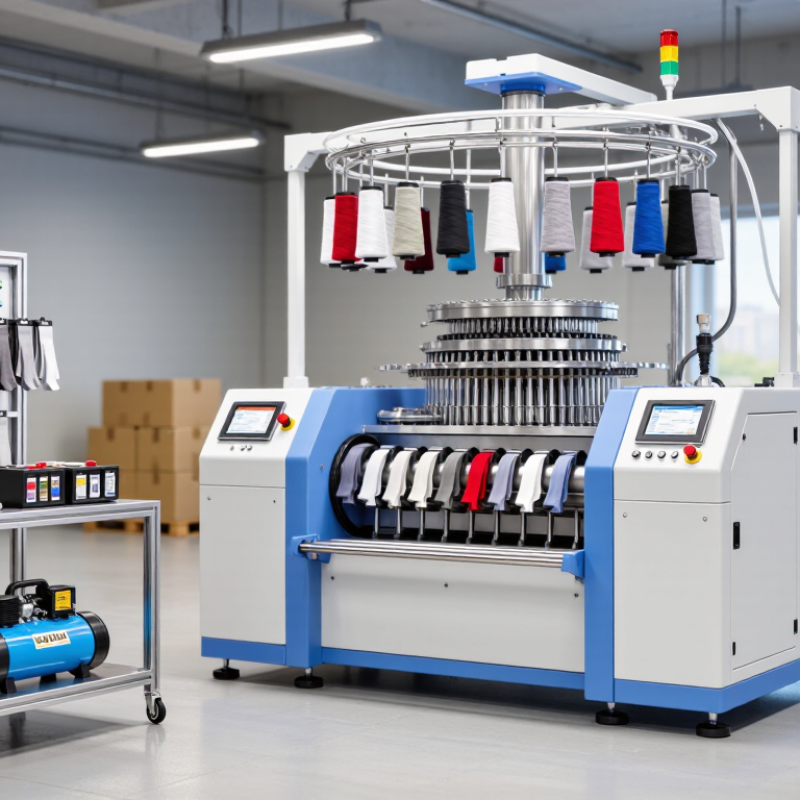
China offers several sock making machine types, and each serves a different production need.
Single-cylinder machines are common for everyday socks, sports socks, and basic rib designs. They usually have simpler structures and lower purchase costs.
Double-cylinder machines create more complex patterns, thicker textures, and improved elasticity. Their prices are higher because they require more needles and stronger control systems.
Computerized machines support jacquard patterns, mesh areas, colored toes, and programmed designs. They are suitable for customized orders, but operators need real training.
Terry sock machines can produce cushioned soles for athletic or winter socks. Some models combine terry knitting with automatic pattern control.
In practical sourcing, machine prices may range from several thousand to tens of thousands of US dollars. Configuration, needle count, output, and included accessories change the final quotation.
Tips: Ask for a sample knitted with your actual yarn. Check the cylinder size, daily output, spare-part availability, and installation support. A low price can hide weak sensors or limited training. I have seen buyers focus on speed and overlook maintenance space. That mistake becomes expensive. Also, advertised output is often measured under ideal conditions. Real production may be slower. Leave room for testing, operator learning, and occasional faults.
A sock making machine in China commonly costs between USD 3,000 and USD 15,000. The final price depends on machine type, production speed, and technical configuration. Basic models suit standard cotton socks and small workshops. Advanced machines can produce complex patterns, compression structures, or larger daily volumes. A lower quote may look attractive. However, it may exclude installation, spare parts, software, or shipping costs.
Machine gauge is a major pricing factor. Finer gauges usually require more precise components and stronger control systems. Automation also changes the budget. Automatic yarn feeding, fault detection, and remote monitoring can improve efficiency, but they increase the initial investment. Custom colors, special knitting functions, and upgraded motors add further costs. Buyers should also check output consistency, energy use, maintenance access, and operator training. A machine with impressive speed may still disappoint if fabric quality varies. This is an easy detail to overlook.
Tips: Request a complete quotation with every accessory listed. Ask for sample socks using your yarn and designs. Confirm the warranty, delivery time, installation support, and spare-parts availability. Compare actual production output, not only advertised speed. Leave room for unexpected expenses. There are usually some.
| Machine Category | Typical Specifications | Typical Output | Estimated China Price (USD) | Main Price Drivers |
|---|---|---|---|---|
| Basic single-cylinder sock machine | 84–200 needles; plain or limited-pattern socks; manual or semi-automatic functions | Approximately 250–450 pairs per 24 hours, depending on sock style and machine settings | $2,500–$6,000 | Needle count, cylinder diameter, automation level, controller, and included accessories |
| Computerized single-cylinder machine | 96–240 needles; programmed patterns, multiple colors, automatic knitting controls | Approximately 300–600 pairs per 24 hours | $4,500–$10,000 | Pattern memory, yarn feeders, touchscreen control, knitting speed, and software functions |
| Double-cylinder sock machine | 168–400 needles; suitable for rib structures, thicker socks, and more complex designs | Approximately 250–500 pairs per 24 hours | $6,500–$14,000 | Two-cylinder construction, needle configuration, fabric thickness, pattern capability, and precision |
| High-speed computerized machine | High-speed operation; automatic pattern control; multiple yarn feeders and enhanced monitoring | Approximately 450–800 pairs per 24 hours under suitable production conditions | $8,000–$18,000 | Motor and drive system, operating speed, electronic controls, sensor package, and build quality |
| Jacquard or advanced pattern sock machine | Electronic pattern programming; multi-color designs; detailed logos, textures, or terry structures | Approximately 250–650 pairs per 24 hours, depending on pattern complexity | $10,000–$25,000+ | Number of colors, pattern resolution, yarn-feeding system, software, and customization |
| Automatic sock production line | Sock knitting machine combined with linking, boarding, inspection, or packaging equipment | Capacity depends on the number of knitting machines and the slowest downstream process | $25,000–$100,000+ | Number of machines, automation scope, line layout, installation, testing, and factory integration |
Price reference: The figures above are indicative China-market ranges for new machines and are shown in U.S. dollars. Actual quotations vary according to configuration, order quantity, customization, export terms, shipping, taxes, and exchange rates. Production figures assume suitable yarn, trained operators, normal working conditions, and approximately 24 hours of operation.
In China, a basic single-cylinder sock machine usually costs between US$3,000 and US$7,000. It suits standard cotton socks, simple patterns, and small production runs. A double-cylinder model often ranges from US$5,000 to US$12,000. It can produce ribbed structures, thicker cuffs, and more shaped designs. Prices usually refer to the machine only, not the complete workshop.
Computerized jacquard machines commonly cost US$8,000 to US$20,000. Advanced models may exceed US$25,000 when they include multiple feeders, automatic pattern control, and higher output. Machine gauge matters. A finer gauge needs more precise needles and usually costs more. A supplier should also confirm daily capacity, power requirements, needle specifications, and compatible yarn types.
The cheapest quotation can be misleading. A US$4,000 machine may exclude freight, installation, spare needles, software, or training. These additions can raise the final cost by 10% to 25%. Ask whether the price is FOB, CIF, or delivered to your factory. Request a sample made with your own yarn. Small details matter here. Some buyers focus on speed and overlook maintenance access. That mistake can create long production delays. Warranty terms also need careful checking, because remote support may be limited. Prices change with exchange rates and customization, so written specifications are more reliable than a short online quotation.
The machine price is only the starting point. Installation can require leveling, electrical upgrades, air lines, and technician training. A practical setup may add 8% to 15% to the equipment price, depending on factory conditions. Spare needles, selectors, sensors, and belts also need early replacement stock. Small parts can stop production unexpectedly.
Electricity deserves careful attention. The International Energy Agency’s Energy Efficiency 2023 report identifies industry as using roughly two-fifths of global electricity. A sock machine may not consume enormous power alone, but several machines, compressors, lighting, and steam equipment can change the monthly bill. Record actual consumption for one production week. Estimates are often too optimistic.
Logistics create another layer. UNCTAD’s Review of Maritime Transport 2024 states that more than 80% of global merchandise trade by volume moves by sea. Freight, insurance, port handling, customs clearance, and inland trucking can therefore add meaningful costs. Import duties vary by destination and product classification. Confirm them before payment. Budget for installation visits, software updates, quality inspections, and operator wages as well. The first spreadsheet is rarely complete. That is normal, but it should be challenged before ordering.
A cost-effective sock making machine is not always the cheapest quotation. In China, a basic computerized model may cost about 8,000–25,000 US dollars. Advanced models can exceed 40,000 dollars. Final pricing depends on needle count, output, automation, and included spare parts. Freight, installation, training, and customs fees can add several thousand dollars.
Check productivity before comparing prices. The International Textile Machinery Federation reported a 7% decline in large circular knitting machine shipments in 2023. This suggests more cautious investment and stronger negotiation opportunities. Ask suppliers for verified output at your target sock size, not only theoretical speed. A machine producing 350 pairs daily may be less economical than one producing 450 pairs with fewer stoppages. Small details matter.
Calculate the five-year cost. Include electricity, needles, cylinders, software, maintenance, labor, and rejected socks. A 2024 report from the International Energy Agency noted that energy efficiency remains a major industrial cost factor worldwide. Request a sample production test using your yarn. Also inspect the control cabinet and spare-part availability. Cheap machines sometimes hide expensive downtime. I have seen buyers focus on purchase price and ignore technician response time. That mistake is easy to repeat. Ask for written warranty terms, training hours, and actual customer references before paying a deposit.