How to Choose a Substation With Transformer in 2026?
Match transformer capacity to present and future peak loads rather than sizing only for current demand.

Let Us Know How We Can Help. We Are Your Dedicated Solutions Provider.
Choosing a Substation With Transformer in 2026 requires more than comparing rated capacity and purchase prices. The right system must match your load profile, site conditions, expansion plans, and safety requirements. A rural processing plant may need a compact outdoor unit, while a data center may require parallel transformers, redundant feeders, and strict voltage control. Small details matter. Cable distance, ambient temperature, soil quality, and access for cranes can affect the final design.
Experienced project teams usually begin with measured demand data, not optimistic forecasts. Review peak load, motor starting current, harmonic distortion, and expected renewable generation. Then assess transformer efficiency, cooling method, insulation level, enclosure protection, and maintenance access. A dependable Substation With Transformer should also support clear protection coordination and reliable fault isolation. Digital monitoring can provide alerts for temperature, oil levels, partial discharge, and abnormal loading. These features improve decisions, but they do not replace trained inspections.
In 2026, buyers should verify supplier qualifications, factory testing, warranty terms, spare-part availability, and documented field performance. Ask for test reports and realistic delivery schedules. A low initial quotation may hide installation changes or long-term service costs. It is easy to overestimate future demand, too. I have seen projects select oversized equipment for imagined growth, then carry unnecessary losses for years. Conversely, under-sizing creates heat, outages, and expensive upgrades. Careful engineering, independent review, and honest operating data create a stronger basis for selection. This guide explains the key criteria, practical questions, and common mistakes that shape a safer, more resilient investment.
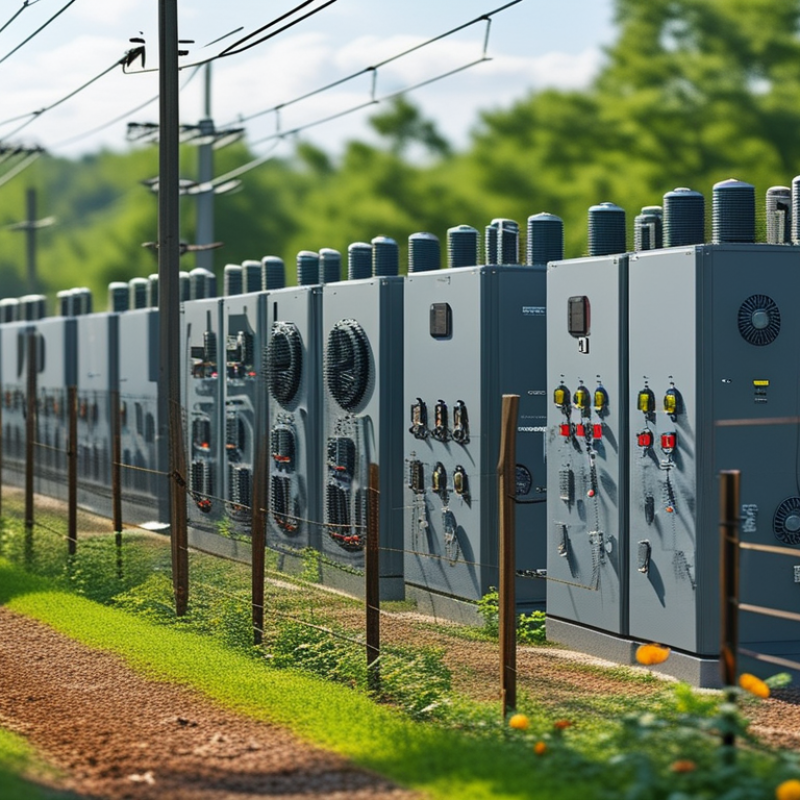
Defining electrical requirements should begin with measured demand, not guesswork. Record present load, peak demand, starting currents, and daily operating patterns. A factory may show a moderate average load but create sharp motor-starting surges. Those brief peaks can affect transformer sizing and voltage stability.
Select the primary and secondary voltage according to the utility connection and site distribution plan. Confirm the required transformer capacity, impedance, tap range, and cooling method. Include harmonics from variable-speed drives, rectifiers, and other nonlinear equipment. I have seen projects overlook harmonics, then discover unexpected heating during commissioning.
Calculate fault levels at each bus. Protection devices must interrupt the available short-circuit current safely and coordinate with upstream equipment. Specify grounding resistance, neutral treatment, insulation levels, and lightning protection. These details are not paperwork. They influence equipment clearances, cable selection, and maintenance procedures.
Allow realistic headroom for expansion. A transformer operating near its limit may perform well during testing but struggle on hot afternoons. However, excessive capacity can increase losses and capital costs. Review the load forecast with operations staff, not only design consultants. Their practical observations often reveal temporary loads, future machinery, or access problems. Document every assumption, because one uncertain figure can distort the entire substation design.
How to Choose a Substation With Transformer in 2026?
Transformer capacity should reflect today’s measured demand, not a hopeful estimate. Record peak kW, kVA, power factor, motor starting current, and seasonal changes. Then add known loads, such as electric vehicle chargers, heat pumps, production lines, or new buildings. The IEA Electricity 2024 report expects global electricity demand to grow by about 4% annually through 2026. That growth can quickly make a tightly sized transformer inadequate.
Leave practical headroom, but avoid excessive oversizing. A lightly loaded transformer may operate inefficiently and increase project costs. The U.S. Department of Energy’s transformer supply chain review also reported lead times extending beyond one year in some cases. Capacity planning therefore affects both performance and procurement risk. In field projects, a load forecast often looks precise. It can still be wrong. Weather, tenant changes, and delayed construction can shift the result.
Tips: Build a three-stage load forecast for current, five-year, and ultimate demand. Check transformer loading during normal and emergency conditions. Review harmonic-producing equipment and expected solar or battery connections. Ask the utility about fault levels, voltage regulation, and future feeder changes. Keep spare capacity for realistic expansion, not every possible scenario. Recheck the design before ordering; a small revision may prevent a costly replacement.
Match transformer capacity to present and future peak loads rather than sizing only for current demand.
Planning insight: The recommended transformer rating provides enough capacity for the projected five-year peak while keeping expected demand at or below approximately 90% of the nameplate rating.
Illustrative engineering planning values in kVA. The projection applies a 35% five-year load-growth allowance to present peak demand; final selection should also consider redundancy, motor starting, harmonics, ambient temperature, voltage level, and local utility standards.
Voltage selection should begin with measured network conditions, not a catalog rating. Record normal voltage, seasonal peaks, short-circuit levels, and future load growth. The IEA Electricity 2024 report forecasts global electricity demand to grow by an average of 3.4% annually from 2024 to 2026. That growth can make today’s comfortable margin disappear quickly. A transformer should therefore support expected demand without operating continuously near its thermal limit. Leave practical headroom. Too much capacity, however, can increase losses and purchase costs.
Protection must match the transformer, feeder, and grounding method. Review overcurrent, differential, earth-fault, surge, and temperature protection together. NERC’s 2024 State of Reliability report identifies protection-system misoperations as a major contributor to transmission disturbances. This finding matters because a correctly sized transformer can still cause outages when relay settings ignore fault current changes. Test coordination using actual clearing times, not assumptions. Small details matter, including CT saturation, cable length, and maintenance access.
Grid compatibility also includes frequency, phase sequence, harmonics, voltage regulation, and interconnection requirements. Check the utility’s fault-level limits and permitted voltage variation before ordering equipment. IEC 60076 provides a technical framework for power-transformer design and testing, but local grid rules remain decisive. Field experience shows that drawings can look perfect while commissioning exposes an overlooked neutral connection or incompatible relay input. Recheck those points. Forecasts are useful, but they are not certainty. A site survey and updated load study should challenge the original design before procurement.
Site conditions should guide the transformer choice. The IEA’s Electricity 2024 report expects global electricity demand to grow by about 4% annually through 2026. That growth increases pressure on weak grids and undersized substations. Check soil bearing capacity, flood history, lightning exposure, and access for cranes. Measure twice. A perfect site rarely exists.
Safety standards must become design inputs, not paperwork. IEC 61936-1 addresses high-voltage installation safety, while IEC 60076-2 defines transformer temperature-rise testing. NFPA research also identifies electrical distribution equipment as a major source of industrial fire risk. Provide clear working space, controlled access, grounding, fire separation, and oil containment where applicable. CIGRE reports that moisture, overheating, and insulation deterioration remain common transformer failure factors. That deserves attention.
Cooling selection depends on load shape and climate. Air-natural cooling is simpler, but hot, dusty sites may reduce its practical margin. Forced-air systems support higher loading, yet fans create maintenance points and noise. IEEE loading guidance links transformer aging to winding temperature, with insulation life falling sharply as temperatures rise. I would not trust a nameplate rating alone. Review hourly load data, ambient extremes, harmonic distortion, and emergency loading. Leave inspection space around radiators, keep sensors calibrated, and test alarms under realistic conditions. The overlooked detail is often ventilation at the enclosure, especially after installation changes.
Choosing a substation with a transformer in 2026 requires more than comparing purchase prices. Electricity demand is forecast to grow by about 3.4% annually through 2026, according to the International Energy Agency’s Electricity 2024 report. This growth increases pressure on transformer capacity, spare parts, and delivery schedules. Ask suppliers for verified factory-test records, guaranteed lead times, loss data, warranty terms, and references from similar installations. Check compliance with IEC 60076 or IEEE C57.12.00 requirements. A polished brochure is not evidence.
Evaluate total ownership cost, not only the quotation. Transformer losses continue for decades, so no-load and load-loss figures should be converted into estimated lifetime energy costs. Include civil works, protection equipment, oil testing, monitoring systems, insurance, and disposal planning. The U.S. Department of Energy’s National Transmission Needs Study highlights rising grid capacity and resilience requirements. That makes local service capability important. Can the supplier provide an engineer within 48 hours? Ask directly.
Technology readiness also deserves careful testing. Online temperature, dissolved-gas, bushing, and partial-discharge monitoring can support predictive maintenance. However, sensors do not replace skilled inspections. Digital-twin functions may improve planning, but their accuracy depends on clean operating data. Low-loss cores, biodegradable insulating fluids, and automated tap changers are promising, yet project teams should request field references and independent test results. I would not accept “2026-ready” without a documented testing plan, cybersecurity controls, spare-module strategy, and clear maintenance responsibilities. Some assumptions will be wrong. Plan for that.