Let Us Know How We Can Help. We Are Your Dedicated Solutions Provider.

Choosing a Processing Heater in 2026 is not just a burner or equipment decision. It affects product quality, energy use, uptime, and future operating costs. The U.S. Department of Energy’s Industrial Decarbonization Roadmap reports that industry accounts for about 30% of U.S. primary energy use. That makes heater performance a practical concern, not a minor specification detail.
The IEA’s Energy Efficiency 2024 report highlights efficiency as a key tool for reducing energy demand. Dr. Fatih Birol, the IEA’s Executive Director, has described energy efficiency as “the first fuel.” The phrase is broad, not heater-specific, but it offers a useful lens for comparing options. A sound evaluation should start with process duty, required outlet temperature, heat-transfer limits, fuel availability, and operating hours. Then compare thermal efficiency, turndown, emissions, controls, maintenance access, and total lifecycle cost. A high nameplate rating alone proves little.
Details matter. A heater serving a steady process may need different controls from one facing frequent startups and changing loads. Check the actual temperature profile, product sensitivity, and space available for installation. Ask suppliers to explain their assumptions and provide performance data at your operating conditions. A spreadsheet can clarify trade-offs. It cannot capture every maintenance delay or production constraint. That gap deserves attention. This guide will help readers assess heater types, define selection criteria, and identify questions to resolve before requesting quotations. The best choice is rarely the most impressive brochure; it is the one that reliably meets the process need.
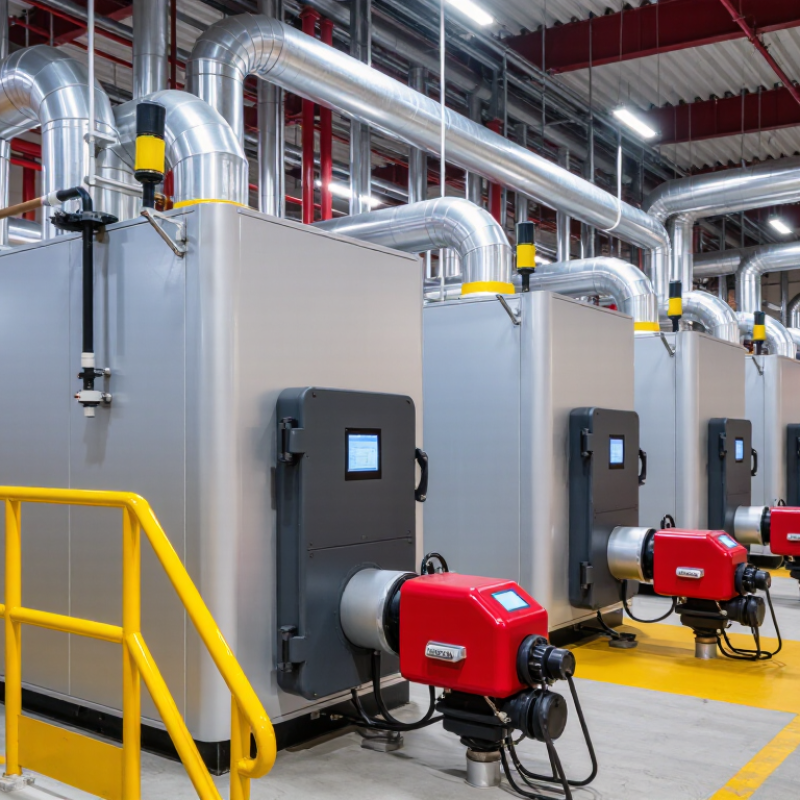
Before comparing heater types, define the job in measurable terms: material, batch or continuous throughput, inlet and target temperatures, and allowable temperature variation. The U.S. Department of Energy’s Improving Process Heating System Performance sourcebook estimates that process heating accounts for about two-thirds of manufacturing energy use. That makes real operating data worth collecting, not guessing. Record hourly demand, startup frequency, turndown range, and whether the load changes during a shift. Small details matter. A tank that runs steadily differs from a line that needs rapid recovery after each cycle.
Then check the conditions around the heater: available electrical capacity or fuel supply, ambient temperature, ventilation, exhaust limits, and space for maintenance. The IEA’s Tracking Industry analysis puts industry at roughly 37% of global energy use, underscoring why efficiency belongs in the specification alongside output. Compare options at the actual operating point, including heat losses and expected control accuracy, rather than relying only on a peak-rated capacity. Do not guess. If product temperature is critical, confirm sensor location and response time with a process engineer. One planning gap is easy to miss: future throughput may differ from today’s, but oversizing can also reduce control performance at low loads. Recheck the assumptions against a representative production week.
A processing heater should be compared by both heater type and the way heat reaches the product. The U.S. Department of Energy’s Process Heating Sourcebook estimates that process heating uses about two-thirds of manufacturing energy. That figure makes heat loss around ducts, furnace doors, and transfer surfaces worth checking—not just the nameplate rating.
Direct-fired heaters transfer heat through combustion gases and radiation. They can respond quickly, but gases may affect sensitive products. Indirect-fired systems keep combustion separate; a heat exchanger adds control, though it can slow response. Electric resistance heaters deliver heat at the element, with no on-site flue gases. Their operating cost still depends on electricity prices and the grid. Thermal-fluid systems circulate heated oil through jackets or coils, which suits several vessels but adds pumps and piping. Steam is familiar and steady, yet temperature limits and condensate handling matter.
The transfer method changes the result. Radiation heats exposed surfaces quickly; convection works well around moving air or liquid; conduction needs close contact. DOE guidance recommends assessing the whole heating system, including exhaust and controls, rather than judging a burner alone. But details matter. A small test load can mislead: production batches, cold starts, and uneven product thickness may change performance. That is easy to overlook.
| Heater Type | Heat Source and Transfer Method | Common Applications | Key Advantages | Important Limitations | Best Fit |
|---|---|---|---|---|---|
| Electric resistance process heater | Electric elements transfer heat directly to a flowing process fluid or to a vessel surface. | Clean liquids and gases, small-to-medium process streams, batch vessels, and sites without a suitable fuel supply. | Precise control; no combustion products at the point of use; compact installation; high conversion of electricity into heat at the heater. | Operating cost depends on electricity prices and the power supply. High-capacity installations may require substantial electrical infrastructure. | Processes requiring accurate temperature control, a clean heat source, or straightforward installation. |
| Direct-fired process heater | Fuel combustion heats process fluid flowing through tubes exposed to hot flue gas; heat moves mainly by radiation and convection. | Refining, petrochemical, chemical, and other high-duty continuous processes. | Can provide high heat duty and high process temperatures; suited to large, continuous operations where fuel is available. | Requires combustion controls, emissions management, and careful tube-temperature and flow monitoring. Local hot spots or inadequate flow can damage tubes or process fluid. | Large, continuous-duty processes with appropriate fuel, operating expertise, and emissions controls. |
| Thermal-fluid (hot-oil) heater system | A heater warms a circulating heat-transfer fluid, which transfers heat to process equipment through a jacket, coil, or heat exchanger. | Reactors, dryers, presses, and process lines needing indirect, distributed heat. | Provides indirect heating and can serve multiple users from a circulating loop. It can deliver heat at temperatures above the boiling point of water at atmospheric pressure. | Adds pumps, piping, expansion equipment, and fluid maintenance. Heat-transfer fluid has temperature limits and may degrade if overheated. | Several process users need controlled indirect heat, especially where steam conditions are unsuitable. |
| Steam heater or heat exchanger | Steam condenses on one side of a heat-transfer surface and releases latent heat to the process fluid on the other side. | Plant-wide heating, water and liquid heating, tanks, and processes with an existing steam system. | Condensing steam transfers heat effectively and can provide relatively uniform heating. Steam is easy to distribute in facilities with established infrastructure. | Process temperature is constrained by available steam pressure and heat-exchanger approach temperature. Condensate return, water treatment, and steam-system maintenance are required. | Moderate-temperature duties at plants that already generate and distribute steam. |
| Waste-heat recovery heater | Heat from exhaust gas or another hot process stream is transferred through a heat exchanger to a process fluid or utility stream. | Facilities with hot exhaust, flue gas, or process streams that would otherwise reject useful heat. | Can reduce fuel or utility demand by recovering available heat and can improve overall plant energy efficiency. | Performance depends on the temperature, flow, and availability of the waste-heat source. Fouling, corrosion, pressure drop, and process variability must be considered. | A supplementary heat source where a dependable, compatible waste-heat stream is available. |
Selection note: Confirm the required process temperature and heat duty, fluid properties, operating pressure, control accuracy, available energy sources, emissions requirements, and maintenance capabilities. Final equipment sizing should be based on process-specific engineering calculations.
Choosing a processing heater starts with a heat-load calculation, not a catalog rating. Estimate material mass, specific heat, and the required temperature rise. For a batch, multiply mass by specific heat and temperature change. For continuous flow, include throughput and operating time. Add energy for phase changes, vessel heating, and heat lost through insulation or exhaust. A 500-kilogram water-based batch heated from 20°C to 80°C needs roughly 35 kWh of useful heat, before losses.
Use measured site data where possible. Record start-up time, peak production rate, ambient temperature, and insulation condition. Convert the energy requirement into a delivery rate: useful kilowatts equal required kilowatt-hours divided by heating hours. Then account for heater efficiency and recovery between batches. Measure twice. A heater sized for average demand may fall behind during cold starts, while oversizing can cause short cycling and uneven temperatures. Real runs vary. Fouling, recipe changes, and frequent door openings can affect actual demand. Verify the estimate with a thermal test or qualified process engineer.
Tips: Keep a simple load sheet. Check utility capacity and temperature limits. Document your sizing margin instead of guessing. Recheck the calculation when recipes or throughput change. A tidy spreadsheet helps, but it cannot replace a measured production run.
How to Choose a Processing Heater in 2026?
Assess Materials, Controls, Safety, and Compliance
Start with the material, not the catalogue temperature. Check its operating range, thermal expansion, oxidation resistance, and compatibility with the process atmosphere. A heater that reaches the target temperature may still create uneven product temperatures or damage nearby seals. The U.S. Department of Energy’s Improving Process Heating System Performance sourcebook estimates that process heating uses about 36% of manufacturing energy. That makes insulation, heat transfer, and controllability practical cost considerations, not minor specifications.
Look closely at the control package. Confirm sensor type, placement, calibration intervals, alarm limits, and whether the system records temperature trends. A display is not proof of uniform heating. Small details matter. Ask how the heater handles sensor failure, power interruption, and over-temperature conditions. Review guarding, emergency stops, interlocks, and ventilation against the applicable requirements, including relevant provisions of NFPA 86 for industrial ovens and furnaces. Then verify electrical, pressure, and site-specific compliance with qualified personnel. Requirements vary by application and location. Paperwork can look complete while a sensor sits in the wrong spot. That deserves a second look. Specify acceptance tests and maintenance access before purchase; retrofits can be awkward once pipes, insulation, and production schedules are in place.
Match the sensor range to the process temperature and required control accuracy. These are approximate common-use ranges, not heater temperature ratings; actual limits depend on sensor construction, wire gauge, protective sheath, and operating atmosphere. Confirm the selected sensor’s specifications and applicable standards for your installation.
Choose a processing heater by the cost of heat delivered over its working life, not purchase price alone. The U.S. Department of Energy’s 2017 Bandwidth Study estimates that process heating uses about 36% of manufacturing energy. Small efficiency gaps can matter. Model annual energy use with your actual temperatures, shifts, throughput, fuel prices, and planned downtime. Include installation, controls, maintenance, replacement parts, and disposal. NIST Handbook 135 offers a life-cycle-cost framework for comparing options over the same service period and with consistent financial assumptions. Real operating data helps.
Supplier qualification deserves equal scrutiny. Request guaranteed output, efficiency at stated conditions, turndown range, temperature uniformity, and emissions data. Ask how each figure was measured, and specify acceptance tests after commissioning. Check references for similar duties, service response times, spare-part availability, documentation, and warranty exclusions. Compare the proposal against your maintenance records, not an idealized brochure duty cycle. That comparison can feel tedious. It is still cheaper than discovering weak control response during a cold start. One caveat: quoted efficiency rarely predicts site-wide savings by itself; insulation, airflow, and operator settings matter too.