Let Us Know How We Can Help. We Are Your Dedicated Solutions Provider.

Choosing the right U Channel Steel is not merely a matter of comparing width, price, and availability. The section must match the load, span, connection method, environment, and required service life. A channel that looks substantial on a supplier’s rack may still twist under eccentric loading. That detail is often missed.
The World Steel Association reported approximately 1.89 billion tonnes of crude steel production worldwide in 2023. Its sustainability guidance also highlights steel’s strong recycling potential. Edwin Basson, Director General of the World Steel Association, has stated, “Steel is a material that can be recycled over and over again without losing its properties.” That benefit matters, but it does not replace careful engineering.
A reliable selection process begins with verified dimensions, grade, yield strength, and surface condition. Check applicable standards, such as ASTM A6, EN 10279, or the project’s specified code. Compare the channel’s web depth, flange width, thickness, radius, and mass per metre. Then examine bending, shear, buckling, deflection, and connection behavior.
Corrosion changes the answer.
Outdoor platforms, coastal buildings, and chemical facilities may require galvanizing, coating, thicker material, or stainless steel. Fabrication also matters. Tight radii can complicate cutting and welding, while inconsistent dimensions can create alignment problems during installation. Manufacturer mill certificates and independent inspection records provide stronger evidence than a catalogue image.
Cost remains important. It should not lead the decision. A cheaper U Channel Steel profile may increase reinforcement, welding, transport, or maintenance expenses. Even experienced teams can overvalue initial price. This guide examines the practical checks that make steel selection safer, more economical, and easier to verify.
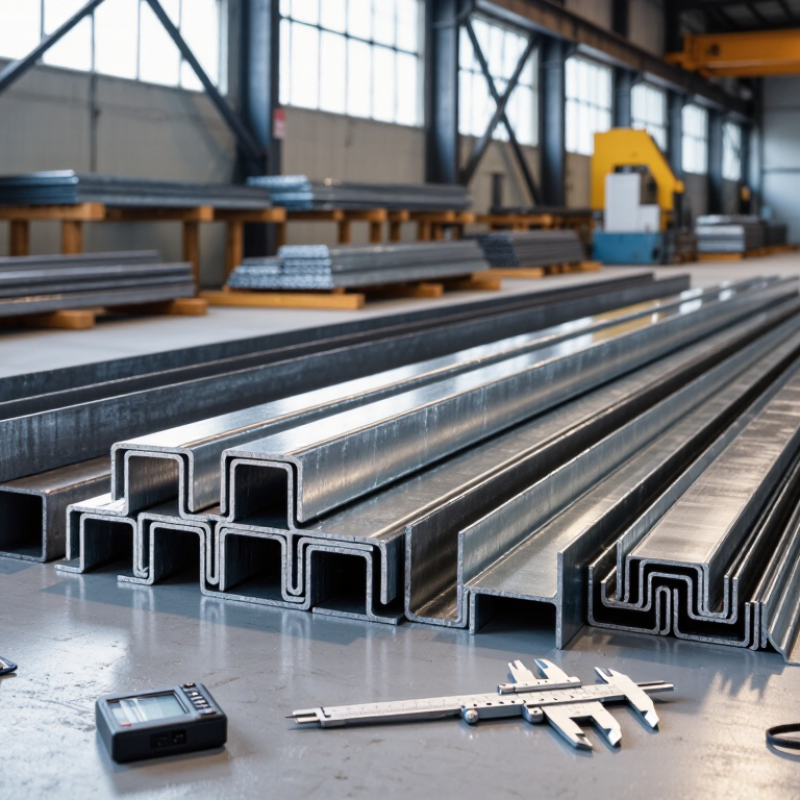
U channel steel is selected by shape, grade, manufacturing method, and loading condition. Its open section resembles the letter U, with a web connecting two flanges. This geometry provides useful bending resistance while keeping material use reasonable.
Hot-rolled U channels usually have thicker sections and rounded corners. They suit frames, supports, machinery bases, and heavily loaded structures. Cold-formed channels are lighter and often have sharper bends. They work well in wall systems, ceiling frames, and secondary supports. Their thinner walls require closer attention to local buckling.
The cross-sectional dimensions matter more than appearance. Check the web depth, flange width, thickness, corner radius, and steel grade. A deeper web can improve bending strength, but slender flanges may twist under uneven loads. Measure the actual section when possible. Mill tolerances can affect fit, especially around bolts and connecting plates.
Load direction also changes the choice. A channel standing on its web behaves differently from one used as a side rail. Engineers should review bending, shear, deflection, connection strength, and corrosion exposure.
Galvanized or coated steel may be suitable outdoors, but damaged surfaces still need protection. I have seen undersized channels perform acceptably in light frames, then deform after equipment was added. That mistake is easy to repeat. Structural drawings, verified calculations, and site measurements should guide the final selection.
How to Choose the Right U Channel Steel?
Assessing Load Requirements, Dimensions, and Material Grades
Selecting U channel steel starts with the load it must carry. Calculate weight, span, support spacing, and possible impact forces. Static loads alone can mislead you. Machinery vibration, wind, and repeated movement may increase stress.
I have seen channels selected by width alone. That approach often causes trouble. Check the channel’s height, flange width, web thickness, and overall length. A deeper section usually resists bending better, while thicker walls can improve durability. Confirm the connection method too. Bolts, welds, and brackets transfer forces differently.
Material grade affects strength, weldability, and service life. Review the certified yield strength and tensile strength before ordering. For outdoor structures, consider corrosion exposure, drainage, and protective treatment. Galvanized or coated steel may suit damp environments, but damaged coatings need attention. In fire-prone areas, temperature effects also require engineering review.
Use recognized structural standards and verified section tables. Ask a qualified engineer to check bending, shear, deflection, and local buckling. Small details matter. A channel that passes a strength check may still bend visibly under service loads. I sometimes leave extra capacity after reviewing uncertain site conditions. That choice costs more, but assumptions are not measurements. Recheck every dimension before fabrication.
| UPN Section | Overall Height h (mm) | Flange Width b (mm) | Web Thickness tw (mm) | Flange Thickness tf (mm) | Mass (kg/m) | Area (cm²) | Strong-Axis Moment of Inertia Ix (cm⁴) | Strong-Axis Section Modulus Wx (cm³) | Typical Application Screening |
|---|---|---|---|---|---|---|---|---|---|
| UPN 80 | 80 | 45 | 6.0 | 8.0 | 8.64 | 11.0 | 106 | 26.5 | Light framing, brackets, equipment supports, and short-span secondary members. |
| UPN 100 | 100 | 50 | 6.0 | 8.5 | 10.6 | 13.5 | 206 | 41.2 | Light to moderate loads where the span and deflection limits are controlled. |
| UPN 120 | 120 | 55 | 7.0 | 9.0 | 13.4 | 17.0 | 364 | 60.7 | Moderate beam, rail, frame, and support-member duties. |
| UPN 140 | 140 | 60 | 7.0 | 10.0 | 16.0 | 20.4 | 605 | 86.4 | Moderate-to-heavy loads with improved stiffness compared with smaller channels. |
| UPN 160 | 160 | 65 | 7.5 | 10.5 | 18.8 | 24.0 | 925 | 116 | Longer spans, heavier distributed loads, and primary framing subject to deflection control. |
| UPN 200 | 200 | 75 | 8.5 | 11.5 | 25.3 | 32.2 | 1,910 | 191 | Heavy-duty beams, machinery supports, platforms, and larger structural spans. |
| Material Grade Comparison | |||||||||
| Material Grade | Common Standard | Minimum Yield Strength fy | Tensile Strength Range | Impact Toughness / Delivery Condition | Typical Selection Consideration | ||||
| S235JR | EN 10025-2 | 235 MPa for nominal thickness up to 16 mm | 360–510 MPa | JR: 27 J at +20°C; normalized or normalized-rolled product condition may apply | General fabrication and lightly to moderately loaded structural members. | ||||
| S275JR | EN 10025-2 | 275 MPa for nominal thickness up to 16 mm | 410–560 MPa | JR: 27 J at +20°C; verify thickness-dependent values | A common choice when greater yield strength is required without moving to a higher-strength grade. | ||||
| S355JR | EN 10025-2 | 355 MPa for nominal thickness up to 16 mm | 470–630 MPa | JR: 27 J at +20°C; verify thickness-dependent values | Higher-load applications where reducing section size or increasing capacity is beneficial. | ||||
| A36 | ASTM A36/A36M | 250 MPa minimum | 400–550 MPa minimum range commonly specified | Impact requirements depend on the purchase specification | General structural steelwork under ASTM-based specifications. | ||||
| Grade 50 | ASTM A572/A572M | 345 MPa minimum | 450 MPa minimum tensile strength | Impact requirements depend on grade, thickness, and supplementary requirements | Higher-strength structural applications where the design standard permits its use. | ||||
| Illustrative Load-Screening Example | |||||||||
| Design Input | Assumed Value | Calculation | Interpretation | ||||||
| Beam arrangement | Simply supported, single-span beam | Mmax = wL² / 8 | Use the actual support condition, load position, and load combinations for final design. | ||||||
| Illustrative span | 3.0 m | Span length L = 3.0 m | Longer spans normally increase both bending demand and deflection. | ||||||
| Illustrative uniform load | 5 kN/m, excluding member self-weight | Mmax = 5 × 3² / 8 = 5.63 kN·m | The channel self-weight must be added to the applied load during design. | ||||||
| Illustrative uniform load | 10 kN/m, excluding member self-weight | Mmax = 10 × 3² / 8 = 11.25 kN·m | A larger section or stronger grade may be needed, subject to deflection and stability checks. | ||||||
| Illustrative uniform load | 15 kN/m, excluding member self-weight | Mmax = 15 × 3² / 8 = 16.88 kN·m | Heavy loading requires a complete check for bending, shear, lateral-torsional buckling, and connections. | ||||||
| Selection Checklist | |||||||||
| Check Item | What to Assess | Useful Reference | Selection Guidance | ||||||
| Applied load | Dead load, live load, point load, impact load, wind, and equipment load | Use factored or allowable load combinations required by the design code | Do not select a channel from load magnitude alone; include load location and load path. | ||||||
| Span and support condition | Simply supported, continuous, fixed, or cantilevered arrangement | Bending moment and shear depend on the structural system | A cantilever or point-loaded beam can require a substantially larger section than a uniformly loaded simple span. | ||||||
| Deflection | Serviceability under unfactored loads | Common project limits include L/240, L/ span 360, or stricter criteria | If deflection controls, increase Ix or reduce the span rather than relying only on a higher-strength steel grade. | ||||||
| Section orientation | Major-axis or minor-axis bending | Ix and Wx are much greater than the corresponding minor-axis properties | Install the channel with its web oriented to place the larger section modulus in the bending direction. | ||||||
| Stability | Lateral-torsional buckling, web buckling, flange bending, and local slenderness | Check unbraced length and restraint spacing | Open channels are more sensitive to torsion and lateral instability than closed sections. | ||||||
| Connections | Bolts, welds, bearing, bolt-hole weakening, and end connections | Connection resistance may govern before member resistance | Provide adequate bearing length, edge distance, weld size, and load transfer into the web or flanges. | ||||||
| Environment | Corrosion, temperature, fire exposure, and outdoor service | Specify coating, corrosion allowance, or fire protection where required | Choose the delivery condition and protective system to match the service environment. | ||||||
How to Choose the Right U Channel Steel?
Surface treatment often determines whether U channel steel survives for years or develops rust within months. The surrounding environment matters more than appearance.
For dry indoor structures, untreated steel may be acceptable after proper cleaning and a compatible paint system. Humid workshops need stronger protection. Hot-dip galvanizing creates a thick zinc layer that protects exposed edges and small scratches through sacrificial action. Electrogalvanizing provides a smoother finish, but its thinner coating may perform poorly outdoors. That assumption is often wrong.
Coastal air changes the decision. Salt deposits can remain inside channel corners, especially where drainage is limited. In these areas, galvanized steel with an additional coating can reduce maintenance. Zinc-rich primer and a durable topcoat are useful when abrasion is expected. However, coating adhesion depends on surface preparation, not just product selection. Remove mill scale, oil, and loose rust before painting. A beautiful finish can still fail underneath.
During field inspections, I check welds, bolt holes, cut ends, and trapped water first. These locations usually corrode before broad flat surfaces. ISO 12944 classifications can guide coating selection, but site conditions deserve closer attention. Chemical exposure, temperature changes, and cleaning methods may alter the expected service life. No treatment is permanent. Even well-galvanized channels need periodic inspection, especially near chloride spray and damaged joints.
Comparing surface treatments and environmental corrosion resistance
The index compares the typical corrosion resistance of common U channel steel surface treatments across representative environments. A higher score indicates better expected resistance. Hot-dip galvanizing generally performs well because the zinc coating provides both barrier and sacrificial protection, while painted systems depend strongly on surface preparation, coating thickness, and maintenance. Actual service life varies with steel thickness, coating quality, humidity, salt exposure, pollutants, and drainage conditions.
U channel steel works best when its profile matches the load, connection method, and working environment. In construction, deeper channels usually provide better bending resistance for beams, joists, and edge framing. Equal-leg sections simplify connections, while unequal-leg channels can fit offset supports and façade details. The World Steel Association’s 2024 Short Range Outlook forecast global steel demand at about 1.75 billion tonnes, showing the scale of ongoing structural steel use. Volume alone does not justify choosing a heavier section.
Manufacturing applications need a different selection approach. A channel supporting a conveyor frame may require a stiff web and wide flanges for bolted accessories. A machine base may need thicker material to resist vibration and local distortion. Check the manufacturer’s section properties, including area, moment of inertia, torsional behavior, and mass per metre. ASTM A6/A6M also establishes dimensional and quality requirements for rolled structural shapes. Small deviations can affect automated assembly.
Corrosion matters too. Galvanized channels suit exposed construction zones, while coated or stainless options may perform better near moisture or chemicals. The right profile depends on restraint, span, holes, welds, and support spacing. Do not select by thickness alone. That shortcut often fails. I have seen apparently strong channels twist because the open side faced the wrong direction. Engineering calculations should follow the applicable design standard, verified loads, and actual connection details. A practical trial assembly can reveal clearance problems before production begins. Yet, it should not replace structural verification.
Checking standards is the safest starting point when selecting U channel steel. Confirm the required grade, dimensions, wall thickness, and permitted tolerances. Different projects may follow different national or international standards. Do not rely on a product label alone. Request a mill test certificate and compare its data with the purchase specification. In practice, I also measure sample sections with calipers. Small dimensional errors can affect welding, fitting, and structural performance.
Quality is more than a clean surface. Check for straightness, rust, edge damage, and uneven thickness. Ask whether the steel has passed chemical and mechanical testing. Cost should include cutting, transport, packaging, inspection, and possible delays. The cheapest quotation may become expensive after rework. I once underestimated delivery costs. That mistake changed the final budget. Supplier reliability deserves equal attention. Review production capacity, lead times, traceability, and communication. A dependable supplier provides clear documents and reports problems early.
Tips: Compare at least three quotations using the same specification. Request a physical sample when tolerances are critical. Check how sections are bundled and protected during transport. Keep written records of every change. No checklist is perfect. An independent inspection can still reveal issues before shipment.