Let Us Know How We Can Help. We Are Your Dedicated Solutions Provider.

Choosing aluminium for a cooling application involves more than selecting the alloy with the highest thermal conductivity. Aluminium Heat Dissipation depends on alloy composition, component shape, surface area, airflow, and contact quality. A thin fin can release heat efficiently when air moves freely across its surface. A thick block may perform poorly if heat cannot spread through its base. Small details matter.
Common alloys offer different balances between conductivity, strength, corrosion resistance, and manufacturing cost. High-purity aluminium usually transfers heat well, while some strengthened alloys sacrifice conductivity for durability. That trade-off deserves careful review. A datasheet value alone cannot predict real performance. Actual results also depend on temperature, mounting pressure, thermal interface materials, and surrounding airflow. It is wise to compare supplier data with controlled prototype testing. Use thermocouples or infrared measurements, while recognizing that infrared readings can be affected by surface emissivity. Testing needs care.
Designers should examine the complete thermal path, from the heat source to the surrounding air. A rough contact surface may create hidden resistance between the component and its heat sink. Anodizing can improve surface protection and appearance, but its thermal effect requires evaluation in the specific design. Environmental exposure matters too, especially in humid or salty locations. There is no universal “best” aluminium choice. The right decision balances measurable heat transfer, mechanical demands, production limits, and service life. Some early assumptions may prove wrong. That is useful. Careful testing reveals what calculations miss.
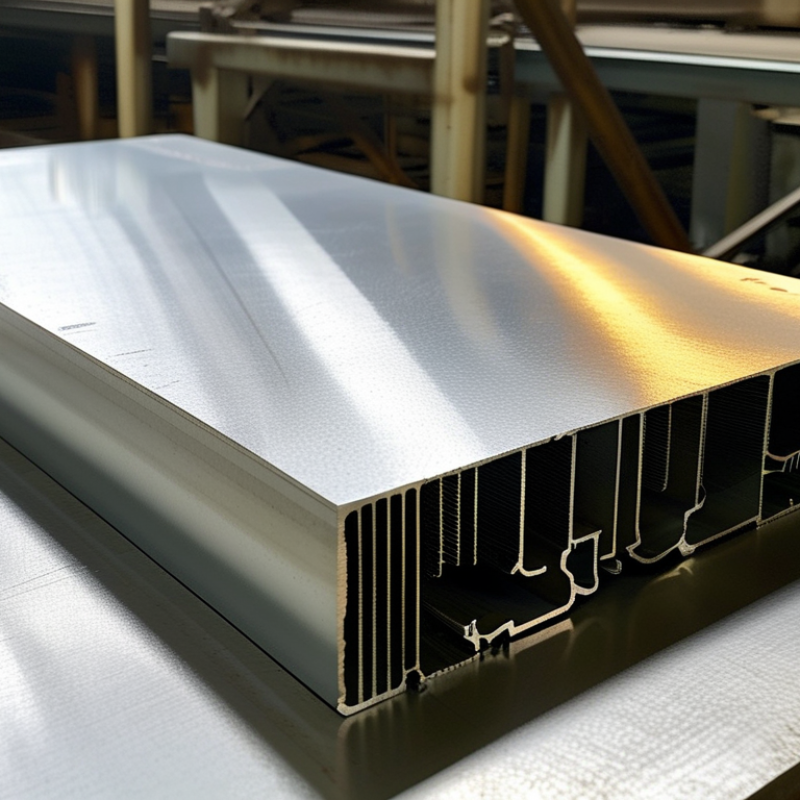
Aluminium works well for heat dissipation because it combines thermal conductivity, low density, and easy forming. ASM International’s ASM Handbook, Volume 2, lists pure aluminium near 237 W/m·K at room temperature. Common aluminium alloys usually range from 120 to 180 W/m·K. That difference matters in real designs.
A thin aluminium wall can move heat quickly from a hot component to fins or a larger surface. Its density is about 2.7 g/cm³, according to engineering data compiled by ASM International. This is roughly one-third of copper’s density. The advantage is practical: lighter heat sinks can fit inside portable equipment.
However, higher conductivity does not guarantee cooler operation. Poor contact pressure, uneven thermal paste, or blocked airflow can waste the material’s potential. I have seen designs focus on alloy grade while ignoring a narrow air outlet. That was an expensive assumption.
Choose the alloy after checking the required thermal path, strength, and manufacturing method.
For demanding parts, verify conductivity with supplier certificates and test the finished component under ASTM E1461 conditions.
Keep the base thick enough to spread heat.
Add fins only where air can move freely.
Avoid sharp transitions around mounting holes. They can create local hot spots.
Surface treatment also needs review, because coatings may add thermal resistance.
A thermal camera can reveal unexpected temperature differences during prototype testing.
Aluminium is effective, but the whole system decides whether it performs well.
Aluminium’s thermal conductivity strongly affects how quickly heat travels through a component. Pure aluminium conducts around 237 W/m·K, while common alloys conduct less. Alloying elements improve strength but often reduce thermal performance. This trade-off matters in heat sinks, housings, and cooling plates.
Density also influences the design. Aluminium is lightweight, so engineers can use larger fins without creating excessive load. Specific heat capacity affects how much energy the material stores before its temperature rises. It matters during short heating cycles.
Thermal expansion deserves attention too. Aluminium expands significantly with temperature changes, which can stress fasteners, circuit boards, or bonded surfaces.
Surface and interface properties are equally important. A rough or poorly fitted contact area increases thermal resistance. Thin thermal interface materials can help, but excessive thickness may hinder heat flow. Surface emissivity affects radiation cooling, especially in still air. Dark anodized surfaces may radiate heat more effectively, although anodizing does not automatically improve internal conduction.
I once treated conductivity as the only selection factor. That approach looked efficient on paper. It ignored strength, expansion, and manufacturing limits. A practical choice balances alloy grade, fin geometry, wall thickness, and contact pressure. For demanding applications, measured thermal data is safer than relying on generic tables. Values can change with temper, processing, and temperature. Small design assumptions can become large thermal errors.
Choosing aluminium for heat dissipation starts with the cooling requirement, not the alloy name. ASM Handbook, Volume 2, lists thermal conductivity near 229 W/m·K for 1050 aluminium, while 6061-T6 is commonly near 167 W/m·K. 3003 and 6063 often sit between these values. These figures are useful, but they vary with temper, temperature, and supplier testing. A higher number does not always win.
For simple passive heat sinks, 1050 can suit low-stress applications needing maximum conductivity. It is softer and may deform during machining or assembly. 3003 offers better formability and moderate conductivity for folded fins and light-duty housings. Extruded 6063 is a practical choice when fin geometry, surface finish, and manufacturing consistency matter. For structural frames carrying vibration or load, 6061-T6 provides stronger mechanical performance, although it transfers heat less efficiently. The Aluminium Association identifies these alloy families as common commercial grades, but its standards should be checked against the actual temper.
The interface deserves attention. In field tests, a thin thermal interface layer can matter more than a small alloy difference. Keep contact surfaces flat, clean, and firmly clamped. Also measure the real heat path. A thick 6061 base may outperform a thin 1050 plate if it reduces spreading resistance. This is where design teams sometimes oversimplify. I would prototype two grades, record surface temperatures, and compare results under identical airflow. Reports from the U.S. Department of Energy repeatedly stress system-level thermal performance, not material conductivity alone. Practical cooling is rarely perfect. Test it.
Choosing the right aluminium form begins with the heat path, not the alloy label. Rolled plate offers consistent thickness and reliable contact with a heat source. Extruded aluminium creates narrow fins economically, increasing surface area without many joints. Cast aluminium supports complex channels, but internal porosity can reduce thermal performance. That detail is easy to overlook.
According to the ASM Handbook, Volume 2, commercially pure aluminium can reach roughly 230 W/m·K thermal conductivity. Common 6061-T6 aluminium is closer to 167 W/m·K, while some 6063 grades approach 200 W/m·K. Higher strength may reduce conductivity. The best choice depends on the complete assembly, not one impressive specification.
For dense electronics, an extruded fin profile usually provides a practical balance between conductivity, weight, and airflow. Keep the base thick enough to spread heat across the fins. Excessively thin fins may reduce weight but deform during installation. The European Aluminium report Aluminium in Heat Exchangers highlights aluminium’s strong conductivity-to-weight advantage in compact thermal systems. However, fin spacing must match the fan and dust conditions.
Tight fins can trap debris and raise pressure drop. A higher conductivity number is not automatically a cooler assembly.
Contact resistance, surface flatness, fasteners, and thermal interface materials can matter more than expected. Testing the actual profile remains essential, because catalogue data rarely reflects the final geometry.
How to Choose Aluminium for Better Heat Dissipation?
Aluminium selection begins with thermal conductivity, but alloy choice is only part of the design. ASM Handbook, Volume 2, lists conductivity near 237 W/m·K for pure aluminium and about 167 W/m·K for 6061-T6. Stronger alloys often transfer heat less efficiently. That trade-off matters in compact enclosures. A thin, flat base can spread heat quickly, but excessive thinning may create local hot spots. In practical testing, I always measure the base temperature near the heat source. Surface temperature alone can hide uneven conduction.
Fin geometry strongly influences heat dissipation. More fins increase surface area, yet crowded fins restrict airflow. ASHRAE Handbook guidance shows that convection depends on airflow speed, fin orientation, and temperature difference. Vertical fins usually perform better in natural convection because warm air rises between them. For forced airflow, fin spacing should match the fan’s pressure capability. A smooth extrusion may outperform a denser design. It is not always obvious.
Tips: Keep the heat source close to the aluminium base. Use a thin thermal interface layer, but avoid excessive pressure or uneven contact. Consider anodizing carefully; its electrical insulation can help, while its added thermal resistance may reduce performance. Validate the final design with thermocouples at several points. A simulation is useful, but it can still mislead when contact resistance, dust, or installation orientation changes. Recheck the design under real operating conditions.