Let Us Know How We Can Help. We Are Your Dedicated Solutions Provider.

China’s automotive supply base serves a large and varied vehicle market. OICA’s 2023 production statistics report approximately 93.5 million motor vehicles produced worldwide. That figure signals the scale of the parts industry, but it does not measure Toyota Yaris mirror demand directly. A careful supplier comparison needs closer evidence: product coverage, manufacturing capability, quality controls, and export experience.
This guide examines China-based suppliers offering a Toyota Yaris Mirror or related replacement assemblies. Fitment matters. Yaris mirrors can differ by model year, market, steering position, and equipment, including electric adjustment, heating, folding, or turn-signal repeaters. A photograph alone may not confirm compatibility. Buyers should check OE references, connector details, mounting points, and the vehicle’s production year before requesting a quotation. Small differences can cause real delays.
The supplier profiles should be read as a shortlist, not an independently audited ranking. Company catalogs, stated certifications, sample inspection, and direct verification offer stronger evidence than broad marketing claims. Toyota’s annual reporting can help establish the brand’s global scale, while OICA data provides wider production context; neither source certifies an individual mirror maker. That distinction is important. Some supplier information may also change, so confirm current specifications, lead times, warranty terms, and documentation before placing an order. A little caution is useful here.
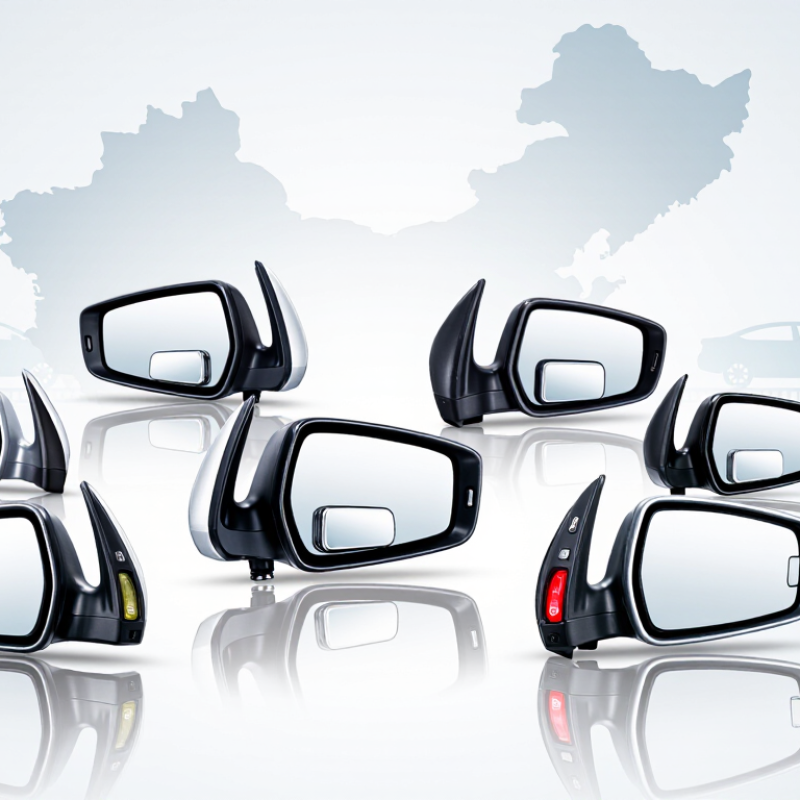
A replacement mirror must match the Yaris model year, body style, and mounting position. Check whether the original unit is manual or power-adjustable, heated, folding, or fitted with a turn signal. Connector shape and pin count matter too; a plug that looks close may still fail to operate correctly. Compare the mounting triangle, glass shape, and wiring before ordering. Fitment is rarely forgiving.
NHTSA’s Federal Motor Vehicle Safety Standard No. 111 sets requirements for rear visibility and mirror performance in the United States. It is a useful technical reference, but it does not identify which replacement part fits a specific vehicle. Confirm fitment by VIN or the vehicle’s exact year and trim, then compare the part number and features against the removed mirror. Small differences between production versions can be easy to miss.
Tips: Photograph the mirror connector and mounting points before removal. Count the pins, and test adjustment, heating, and signal functions after installation. NHTSA reported 7,522 pedestrian deaths in traffic crashes in 2022; mirrors cannot prevent every collision, but correctly aimed mirrors help drivers monitor surrounding traffic. One detail I would still verify twice is the wiring—not every seller’s compatibility listing is equally precise.
China’s automotive mirror supply chain connects optical design, molding, coating, electronics, and final assembly. A typical project begins with drawings, fit requirements, and sample reviews. Suppliers coordinate resin housings, glass, actuators, wiring, and adjustment mechanisms. Small changes matter. A connector shifted by a few millimeters can complicate door assembly. Reliable communication is as important as machine capacity.
In established manufacturing clusters, component makers often work near molders and assembly plants. This proximity can shorten sample cycles and make engineering changes easier to verify. Production teams inspect mirror curvature, surface finish, movement range, and electrical connections. They may use gauges, visual checks, and functional tests on sampled units. Records help trace batches when a defect appears. But paperwork alone cannot catch every issue, and inspection plans can be too narrow.
For buyers, supplier evaluation should include tooling ownership, material consistency, delivery planning, and after-sales response. Ask how production changes are approved and how rejected parts are isolated. A site visit can reveal practical details: clean storage, labeled bins, and stable test routines. Price matters, yet a low quotation may conceal longer validation or replacement lead times. Even mature lines need review. Some gaps appear only after months of use, so feedback should return to engineering and production teams.
When evaluating suppliers for compact-car replacement mirrors, begin with exact fitment: mounting points, connector pins, adjustment range, and housing clearance. Fit is non-negotiable. OICA reported 93.5 million motor vehicles produced worldwide in 2023, up 10% from 2022. This scale makes delivery resilience worth checking, but it does not prove any individual supplier can meet your order volume. Ask for monthly capacity, lead times, and evidence of stable production.
Check optical clarity and mechanical durability on physical samples, not photographs. View the mirror from the driver’s normal seat position; look for distortion near the edges and movement after repeated adjustment. For products sold in the United States, verify applicable Federal Motor Vehicle Safety Standard No. 111 requirements with current test records. Other markets may require different checks. Test the details.
Supplier records matter too. Request material specifications, inspection criteria, lot traceability, and reports for vibration, corrosion, and folding-cycle tests where relevant. Confirm that packaging protects the glass and adjustment mechanism during shipment. One uncomfortable point: a neat sample can conceal inconsistent production. Compare several units from different batches, and document any variation before approving supply.
This table is an evaluation framework, not a ranking of named companies. The suggested weights total 100 points; confirm requirements for the exact vehicle year, market, and configuration before placing an order.
| No. | Evaluation Criterion | What to Verify | Useful Evidence | Suggested Weight |
|---|---|---|---|---|
| 1 | Vehicle fitment and interchangeability | Confirm compatibility by model year, body style, market, side, steering configuration, and mirror features. Check connector, mounting points, adjustment range, and any heating or folding functions. | Fitment matrix, dimensional drawing, connector pinout, and a sample checked against the vehicle or verified reference part. | 20% |
| 2 | Regulatory and market compliance | Check applicable exterior-mirror and field-of-vision requirements in the destination market. UNECE Regulation No. 46 may apply in markets that use UNECE vehicle regulations; requirements vary by jurisdiction. | Relevant approval documentation, test reports, and a clear statement of the markets and product configurations covered. | 15% |
| 3 | Quality management system | Verify a current quality-system certificate and confirm that its scope covers the manufacturing site and relevant automotive products. IATF 16949 is an automotive quality management standard; certification should be checked for validity and scope. | Certificate details, issuing-body verification, audit records, and documented corrective-action procedures. | 12% |
| 4 | Materials and environmental durability | Review housing, base, glass, coating, and seal specifications. Ask how the product is evaluated for temperature exposure, moisture, corrosion, vibration, and weathering appropriate to the intended market. | Material specifications, supplier declarations, and test reports identifying methods, conditions, and sample configurations. | 10% |
| 5 | Mechanical and electrical function | Test manual or powered adjustment, folding, heating, signal functions, and other features only where fitted. Check switch operation, motor movement, wiring, and connector compatibility. | Functional test results, wiring information, feature-by-feature configuration list, and inspected production samples. | 10% |
| 6 | Product validation and consistency | Ask how fit, appearance, operation, and durability are validated. Confirm that test results apply to the same design and configuration being quoted. | Inspection plans, control plans, sample approval records, and test reports linked to part revisions. | 10% |
| 7 | Production capacity and lead time | Assess stated monthly capacity, current utilization, tooling readiness, order lead time, and the process for handling demand changes. Request assumptions behind quoted capacity and timing. | Capacity statement, production schedule, tooling status, and documented order-planning process. | 8% |
| 8 | Traceability and change control | Check whether batches can be traced to production dates and material lots, and whether design, material, or process changes are reviewed and communicated before implementation. | Sample labels or records, change-notification procedure, revision history, and nonconformance records. | 5% |
| 9 | Packaging and transport protection | Confirm that packaging protects glass, housings, and adjustment mechanisms from impact, abrasion, moisture, and movement during transport. Check carton labeling and packing quantities. | Packaging specification, shipment photographs, drop or transport test information where available, and sample shipment inspection. | 5% |
| 10 | Warranty and after-sales support | Review written warranty coverage, claim process, replacement-part availability, response time, and responsibility for investigating recurring defects. | Warranty terms, claim form, service contact process, and documented corrective-action examples. | 5% |
Scoring suggestion: rate each criterion consistently, apply the stated weight, and compare only suppliers assessed against the same vehicle configuration and destination-market requirements. Confirm fitment using reliable vehicle identification and part references before purchase.
China’s replacement-mirror market includes suppliers with different strengths. These ten profiles are capability snapshots, not a verified ranking. Supplier 1 focuses on molded housings; Supplier 2 offers glass and backing plates. Supplier 3 emphasizes powered adjustment, while Supplier 4 handles manual assemblies. Supplier 5 specializes in heated glass. Each profile should state its production scope, inspection process, and available fitment records.
Supplier 6 develops folding mechanisms; Supplier 7 supplies mirror indicators. Supplier 8 focuses on painted covers, and Supplier 9 supports small production runs. Supplier 10 offers broader assembly and packaging services. These descriptions are comparison categories, not claims about named companies. Buyers should verify connector pin count, mounting points, glass curvature, and actuator function against the vehicle’s original part. A polished catalog is helpful, but it cannot replace a sample check.
Tips: Request clear photos of the rear connector and mounting base. Compare sample dimensions before placing a larger order. Ask how defects are recorded and handled. Small details matter. Some listings may omit useful specifications, so confirm them in writing.
When comparing Chinese suppliers for Yaris mirrors, assess repeatable quality, not just a polished sample. The ISO Survey 2023 recorded more than 1.26 million ISO 9001 certificates worldwide, but certification alone does not prove reliable mirror production. Ask for inspection records covering fit, adjustment range, vibration, and finish. OICA reported 93.5 million vehicles produced globally in 2023, a reminder of the scale and pressure behind automotive supply chains. Small defects matter.
Customization should be confirmed with drawings and physical samples. Check left- and right-side fit, connector layouts, heating options, folding mechanisms, and surface color. Export capability needs equal scrutiny: request packaging specifications, lead-time history, and destination-market shipment references. UN Comtrade lists vehicle rear-view mirrors under HS code 700910; its trade figures can help compare export activity, though the code does not identify individual suppliers. A supplier’s export record is useful, not conclusive.
Tips: Request a sample from a normal production run, then compare it with the approved sample. Ask how dimensional changes are recorded. Still, I would not treat one successful inspection as proof of long-term consistency. A clear answer about corrective actions often says more than a glossy catalog.
Suggested evaluation weights for comparing supplier quality, customization, and export capabilities.
The chart presents a proposed assessment framework, not measured scores or a ranking of specific suppliers. Evaluate quality through documented testing and consistency, customization through tooling and specification flexibility, and export capability through relevant documentation and shipping experience.