Let Us Know How We Can Help. We Are Your Dedicated Solutions Provider.

Choosing a dependable source for an Lp207 Pillow Block Bearing takes more than comparing prices. Buyers need to confirm bore size, housing dimensions, insert material, sealing design, and rated load against the actual application. A bearing used on a dusty workshop conveyor may need different protection from one installed in a clean packaging line. Fit matters. So does the operating environment.
This guide introduces ten Chinese suppliers for buyers who want a practical starting point, not a guaranteed ranking. Supplier capabilities, product ranges, and stock can change, so verify current details directly. Compare technical drawings, material specifications, quality documents, lead times, and warranty terms before requesting a quotation. Ask whether the listed unit matches the required shaft diameter and mounting arrangement; similar product codes can still hide important differences. A ranking alone can mislead. Catalog descriptions may omit details that become obvious only during installation, such as clearance, lubrication access, or the space needed for maintenance. Where information is unclear, request written confirmation and a drawing. This small step can prevent delays and avoidable fit problems. The suppliers discussed here should be assessed on evidence and application fit, not promotional claims alone. Reliable sourcing is rarely effortless, and no single supplier will suit every buyer. That is worth remembering.
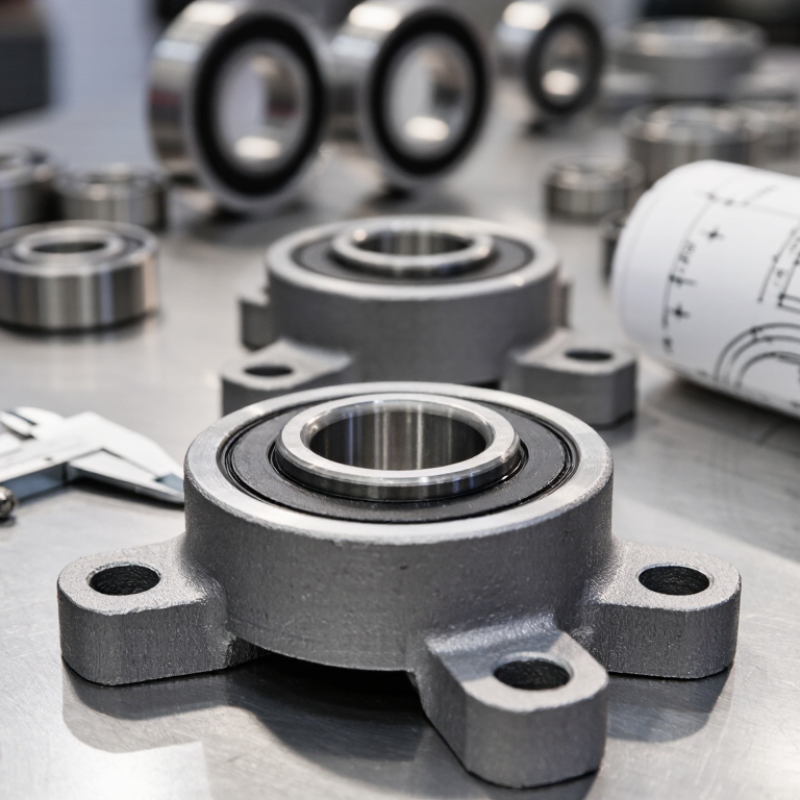
An LP207 pillow block bearing is a mounted unit: an insert bearing sits inside a housing that bolts to a machine frame. Many LP207 listings specify a 35 mm shaft bore, but dimensions and locking methods can vary. Check the drawing before ordering. A set screw or another locking arrangement secures the shaft, while the housing supports the bearing during rotation. Some versions include a grease fitting; others may not. That detail is easy to miss.
The unit typically carries radial loads, such as those from a belt-driven shaft, and can tolerate limited alignment error. It is not a substitute for a thrust bearing when substantial axial force is present. ISO 281:2007 defines basic rating life, L10, as the life reached by 90% of a group of identical bearings under stated conditions. That is a calculation basis, not a service-life guarantee. Load, lubrication, contamination, and installation all matter. ISO 15243:2017 classifies rolling-bearing damage, including wear and fatigue, helping technicians connect failure patterns with operating conditions. A neat catalog match can still fail in a dusty housing or on a misaligned shaft. The fit deserves a second look.
Assess an LP207 supplier by matching the bearing unit to its application, not by comparing quotations alone. Confirm the shaft bore, housing material, insert design, seals, and allowable speed against a signed drawing. Request dimensional inspection records and traceable material or heat-treatment documentation. ISO 281:2007 provides methods for calculating bearing rating life. ISO 15243:2017 classifies bearing damage. Ask how the supplier connects its test results to these standards. MarketsandMarkets estimated the global bearing market at USD 128.3 billion in 2023 in its Bearing Market report. Not proof of quality. Large demand makes careful supplier screening more important.
Ask for a sample from the same production process used for bulk orders. Measure the bore and check the housing fit with the intended shaft; record noise and vibration during a short trial. Request batch inspection results, production lead times, and a written process for handling defects. LP207 specifications can vary, so confirm the exact configuration before comparing suppliers. A polished sample can still hide inconsistent production. This check is easy to overlook. During a factory review, look for controlled measuring tools, clear batch labels, and clean storage. These details do not guarantee performance, but gaps in records or traceability deserve follow-up.
When comparing Chinese LP207 pillow block bearing manufacturers, look beyond quoted price and catalog images. Check whether the supplier controls machining, heat treatment, assembly, and final inspection, or relies on outside workshops. Ask how steel batches are identified and whether inspection records can be linked to a production lot. Details matter.
Review the dimensions that affect installation: shaft fit, housing bolt spacing, bearing insert alignment, and sealing arrangement. Request a sample and measure it against your drawing, rather than assuming every LP207 unit is interchangeable. Ask for load ratings, operating limits, and test methods in writing. A certificate alone may not show how consistently the product performs. This check is useful, but it is not perfect.
Also compare sample lead time, minimum order quantity, packaging, and the process for handling defects. Clear answers about tolerances and replacement procedures are more useful than broad promises. Notice whether technical staff ask about speed, dust, moisture, and mounting conditions; these details can change the suitable seal or lubrication choice. A polished catalog can still hide variation. No scorecard catches everything, so keep notes on what remains unverified before approving a supplier.
A practical comparison checklist for evaluating suppliers. It does not rank or identify companies; confirm all product specifications against the supplier’s current drawing and catalogue.
| Comparison factor | Technical benchmark or fact | What to request and compare | Why it matters |
|---|---|---|---|
| 1. Model identification | “LP207” is not enough by itself to establish every unit’s dimensions or construction. Pillow-block designations can vary between manufacturers. | Request a dimensioned drawing showing the complete unit, insert-bearing designation, housing type, and revision date. | Prevents ordering a unit that does not fit the existing equipment. |
| 2. Bore and shaft fit | A UC207 insert commonly has a nominal 35 mm bore; confirm that the particular LP207 assembly uses this insert and bore size. | Compare the specified bore, recommended shaft tolerance, locking method, and measured sample dimensions. | Incorrect fit can cause installation problems, slippage, or premature wear. |
| 3. Mounting dimensions | Housing height, base length, bolt-hole spacing, and hole size must match the target machine; do not rely on the model code alone. | Check the supplier drawing against the installed unit or equipment drawing, including tolerances. | Ensures bolt-up and shaft-center alignment. |
| 4. Bearing load ratings | Basic dynamic and static load ratings are product-specific catalogue values, not universal values for every unit bearing with a similar designation. | Compare published ratings, rating definitions, and the assumed operating conditions for each quoted product. | Supports a suitable bearing-life and load assessment. |
| 5. Materials and construction | Housing material and insert construction affect strength, corrosion resistance, weight, and suitability for the operating environment. | Request material specifications for the housing, bearing rings, rolling elements, and surface treatment, where applicable. | Helps match the unit to load, moisture, dust, and temperature conditions. |
| 6. Sealing and lubrication | Seal design and factory grease differ by product. Relubrication provisions, if present, should be confirmed for the exact assembly. | Ask for seal arrangement, grease type, relubrication instructions, and any stated operating-temperature limits. | Affects contamination protection and maintenance intervals. |
| 7. Manufacturing quality controls | A quality-system certificate does not by itself verify the dimensions or performance of a specific bearing unit. | Request applicable certificates, inspection plans, measurement records, and the inspection criteria used for the order. | Provides evidence that production and inspection requirements are controlled. |
| 8. Testing and sample inspection | The appropriate checks depend on the purchase specification; dimensional inspection and rotation or noise checks may be agreed for samples. | Agree in writing on sample quantity, inspection method, acceptance limits, and responsibility for test costs. | Reduces uncertainty before approving a production order. |
| 9. Traceability and documentation | Batch identification and consistent product documentation help link delivered goods to inspection and production records. | Check packaging labels, lot or batch records, product drawings, inspection reports, and certificate availability. | Makes quality issues easier to investigate and manage. |
| 10. Commercial and delivery terms | Minimum order quantity, lead time, packaging, warranty terms, and shipping conditions are quotation-specific and should be confirmed in writing. | Compare quotations using the same specification, order quantity, delivery term, destination, and required delivery date. | Enables a meaningful total-cost and supply-risk comparison. |
China’s Top 10 LP207 Pillow Block Bearing Suppliers are best assessed through measurable details, not sales claims. Compare bore tolerance, housing material, seal design, grease type, and batch inspection records. LP207 dimensions can vary by design, so confirm the shaft diameter and mounting-hole spacing against the supplier’s drawing. Ask for a sample and check whether the insert turns smoothly under light hand pressure.
Market scale offers context, not proof of quality. Fortune Business Insights reported that the global bearing market was valued at about US$123.3 billion in 2023, with growth projected through 2032. For technical comparison, ISO 281:2007 explains basic bearing life calculations using dynamic load rating and applied load. It does not certify a supplier. A top-ten list can still miss a reliable factory with limited online visibility. That deserves a second look.
Tips: Request a dated inspection report, material specification, and clear warranty terms. Check whether the supplier can trace a sample to its production batch. Compare lead time and packaging, too; rust marks on a stored unit are a practical warning. Ask one awkward question: what happens when a batch fails inspection? The answer matters.
Typical catalog dimensions for a 35 mm bore UCP207-style unit are shown for reference when comparing suppliers. LP207 designations and product dimensions can vary; confirm the exact drawing and tolerances with the supplier before ordering. Dimensions are in millimeters.
When comparing LP207 pillow block bearing suppliers, verify the exact housing, insert, bore size, and lubrication details before judging a quote. Ask for a current product drawing and material specification, then compare them with your equipment requirements. A clear traceability document and consistent batch markings help, but paperwork alone cannot prove performance. Request sample inspection results or arrange an incoming check for dimensions, surface finish, and bearing rotation. Small details matter.
Pricing should show what is included: unit cost, packaging, shipping, taxes, and any tooling or inspection charges. Compare like with like. A lower price may reflect different materials, tolerances, or service terms, so ask direct questions before accepting it. If a quote seems unusually low, pause and verify the specification again. It is easy to miss one line.
Delivery terms deserve the same attention. Confirm the dispatch date, estimated transit time, shipment method, and who handles damage or shortages. Ask whether the quoted lead time applies to the full quantity, not just a sample order. Put agreed dates and remedies in writing. Plans change. Even careful suppliers can face delays, so a small buffer may be sensible. Still, avoid treating a promised date as guaranteed; review past delivery records where available and match the order schedule to your actual stock needs.