China Top 10 Cable and Wire Manufacturers for Global Buyers

China’s cable and wire industry now serves power grids, renewable projects, railways, data centers, and industrial plants worldwide. Demand is not slowing quietly. The International Energy Agency’s Electricity 2024 report projects global electricity demand growth of about 3.4% annually through 2026. That growth requires dependable conductors, stronger insulation, and faster delivery.

Market research supports this direction. Grand View Research estimates that the global wire and cable market reached approximately USD 216.43 billion in 2023. It also expects continued expansion through 2030, driven by electrification, construction, and renewable energy investment. Prysmian Group’s former CEO Valerio Battista described cables as “the backbone of the energy transition.” The wording is simple. The purchasing decision is not.

This guide introduces ten leading Chinese manufacturers for global buyers. The selection considers export experience, product range, testing capability, certification practices, production scale, and project references. It covers power cable, control cable, fiber optic cable, fire-resistant cable, and specialized industrial products. A polished catalog is not proof. Buyers should still verify factory audits, third-party test reports, conductor materials, delivery records, and after-sales support.

Some manufacturers excel in extra-high-voltage systems. Others focus on flexible industrial cable or communication networks. No ranking is flawless. Supplier strength can change with ownership, capacity, or management decisions. That uncertainty deserves attention. For serious buyers, the best choice is rarely the cheapest quotation. It is the supplier that can repeatedly meet technical specifications, documentation requirements, and delivery promises.
China Top 10 Cable and Wire Manufacturers for Global Buyers

China’s Cable and Wire Manufacturing Industry at a Glance

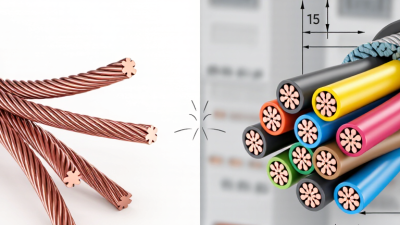
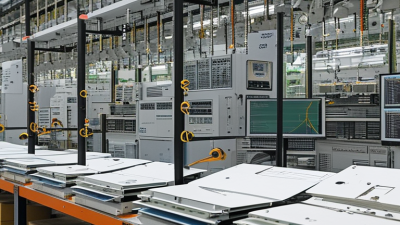
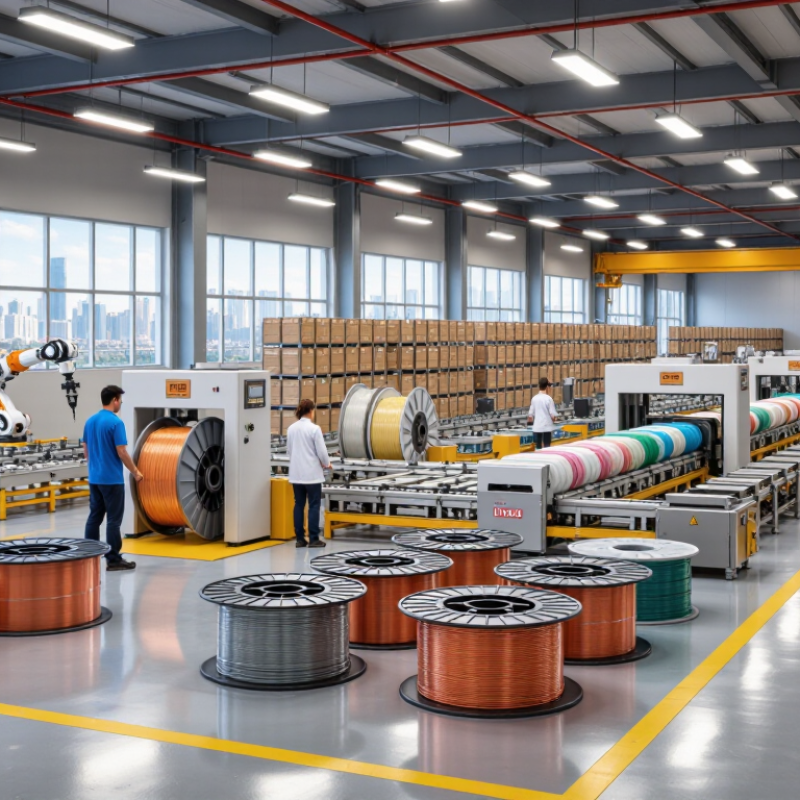
China’s cable and wire manufacturing industry serves construction, power, telecommunications, transport, and industrial automation. Its supply chain covers copper and aluminum processing, insulation, shielding, testing, and export packaging. Many factories operate modern extrusion lines and automated winding equipment. Production scale is large, but quality can differ between suppliers.

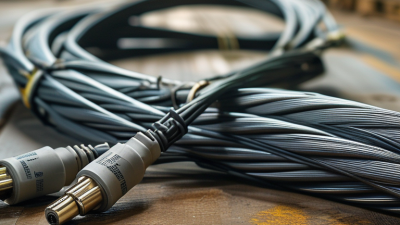
Experienced buyers usually inspect conductor resistance, insulation thickness, flame performance, and temperature ratings. They also review test reports, factory certifications, and traceability records. A reliable manufacturer should explain its material sources clearly. It should also provide samples before mass production. Small details matter, such as clean labeling, sealed cable ends, and moisture-resistant packing. No factory is perfect. Even strong suppliers may face delays during peak seasons or raw-material price changes.

Tips: Ask for drawings, standards, tolerances, and inspection procedures in writing. Confirm whether testing covers the complete cable or only selected materials. Visit the facility when possible, and observe storage conditions, laboratory equipment, and production records. Do not judge capability from machinery alone. Communication, corrective action, and delivery history reveal more. Some buyers focus heavily on price, then discover that replacement costs are higher. A practical evaluation should balance safety, performance, service, and long-term supply stability.

How the Top 10 Chinese Cable Manufacturers Are Selected

China Top 10 Cable and Wire Manufacturers for Global Buyers

The selection begins with evidence, not factory size or online visibility. The International Energy Agency’s Electricity 2024 report expects global electricity demand to grow by about 4% in 2024 and 2025. This supports continuing demand for transmission, construction, renewable energy, and industrial cables. However, market growth does not prove manufacturing quality.

Each manufacturer is assessed through a weighted framework. Production capacity matters, but testing depth matters more. We review compliance with relevant IEC, ISO, and destination-market requirements, including documented tests for insulation, voltage, fire resistance, and conductor performance. Export records from UN Comtrade help verify international activity, while audited financial information and delivery evidence indicate operational stability. Customer references, warranty handling, batch traceability, and factory audit results receive additional weight. A cable should arrive with clear markings, sealed packaging, and a traceable test certificate.

The ranking also considers sustainability and supply-chain discipline. Industry reports from Grand View Research and MarketsandMarkets identify infrastructure, energy transition, and grid expansion as major cable-demand drivers. Still, published market estimates use different definitions, so direct comparisons remain imperfect. Some factories disclose detailed testing data; others reveal very little. That weakness requires caution. Scores are therefore adjusted when evidence is incomplete, outdated, or independently unverifiable. The final list favors consistent proof over impressive claims, low prices, or a single successful shipment.

Profiles of China’s Top 10 Cable and Wire Manufacturers

China’s top ten cable and wire manufacturers serve different industrial needs, so a useful profile looks beyond production volume. The first specializes in high-voltage power cables, with 35 kV testing facilities and strict insulation checks. The second focuses on building wires, offering flame-retardant options for commercial projects. The third produces flexible control cables for automation panels and factory equipment.

The fourth is known for renewable-energy cables, where sunlight, temperature changes, and outdoor moisture demand careful jacket selection. The fifth supplies data and communication cables, with attention to signal loss and shielding performance. The sixth serves rail and transportation projects, using low-smoke materials and vibration-resistant designs. The seventh concentrates on marine cables, testing resistance against saltwater and oil exposure. Details matter.

The eighth manufacturer supports mining and heavy industry, producing reinforced cables for abrasion-prone environments. The ninth develops custom cable assemblies, including molded connectors, numbered conductors, and small-batch prototypes. The tenth combines aluminum and copper products for infrastructure buyers seeking weight or cost control.

A reliable profile should include factory-audit findings, test reports, traceability procedures, and delivery records. Certifications help, but they do not replace independent verification. Buyers should compare conductor resistance, insulation thickness, bending radius, and operating temperature. Some suppliers communicate well before an order, then become less precise during production. That risk deserves attention. Sample approval, clear drawings, and staged inspections can reduce expensive misunderstandings.

Product Range, Standards, and Global Market Coverage

China Top 10 Cable and Wire Manufacturers for Global Buyers

The leading Chinese cable manufacturers serve several practical applications. Their product ranges include low-voltage power cables, medium-voltage systems, control cables, and instrumentation wires. Many also produce data cables, building wires, solar cables, overhead conductors, and flexible industrial cables. Product selection should match voltage, temperature, installation method, and mechanical stress. A cable for a rooftop array needs different protection than one inside a factory tray. Small details matter.

Reliable manufacturers normally offer products tested against IEC, ASTM, BS, EN, or UL requirements. However, standard labels alone prove little. Buyers should request current test reports, conductor resistance data, insulation thickness records, and flame-performance results. Factory audits can verify extrusion lines, copper storage, batch marking, and final inspection procedures. Traceability is valuable. It links each cable drum to materials, operators, and test results.

Global market coverage often includes Europe, North America, Southeast Asia, the Middle East, Africa, and Latin America. Export experience may include wooden drums, moisture barriers, multilingual labels, and customized documentation. Yet no supplier fits every project. Catalogs sometimes simplify technical limits, while delivery promises may ignore port congestion or approval delays. Buyers should compare samples, certificates, warranty terms, and after-sales response before placing large orders. Some specifications remain unclear. That deserves direct questioning.

How Global Buyers Can Compare and Choose a Chinese Supplier

Choosing among China’s top 10 cable and wire manufacturers requires more than comparing online rankings. A reliable buyer should examine product standards, factory experience, and export records. Ask for test reports covering conductor resistance, insulation thickness, voltage performance, and flame behavior. These details reveal more than polished catalog photos.

Request samples from several suppliers and test them under identical conditions. Check copper or aluminum consistency, printing clarity, cable flexibility, and drum packaging. Review certifications relevant to the destination market, such as IEC or national requirements. A factory audit can confirm machinery, quality procedures, worker training, and actual production capacity. Photos alone are weak evidence.

Pricing still matters, but the lowest quote can hide thinner insulation, uncertain materials, or unstable delivery. Compare payment terms, lead times, minimum order quantities, warranty language, and spare production capacity. Ask how the supplier handles a failed batch. Their answer shows practical responsibility. Our early comparisons sometimes focused too heavily on price. That was a mistake. A supplier may pass one inspection and still struggle with communication during urgent changes. Keep written specifications, approve a sealed reference sample, and use independent pre-shipment inspection for important orders. No supplier is perfect. The better choice is the one with clear evidence, repeatable quality, and honest responses when problems appear.

China Top 10 Cable and Wire Manufacturers for Global Buyers - How Global Buyers Can Compare and Choose a Chinese Supplier

Rank Anonymized Supplier Profile Primary Product Category Typical Technical Range Common International Standards Typical Applications Export Suitability Documents Buyers Should Request Key Comparison Criteria
1 Profile 01
Building-Wire Specialist
PVC-insulated copper or aluminium wire 300/500 V 450/750 V
Solid or stranded conductors; common conductor sizes from 0.5 mm² to 630 mm²
IEC 60227
IEC 60228
Applicable national installation standards
Residential wiring, commercial buildings, lighting circuits, control panels and fixed installations High demand in general construction markets; suitable for containerized and regular project orders Conductor-resistance report, insulation test report, dimensional inspection report, routine test records and material declarations Check conductor class, actual cross-sectional area, insulation thickness, copper purity, color consistency and batch traceability
2 Profile 02
Low-Voltage Power-Cable Specialist
XLPE- or PVC-insulated low-voltage power cable 0.6/1 kV
Single-core or multicore construction; copper or aluminium conductor; optional steel-wire or steel-tape armour
IEC 60502-1
IEC 60228
IEC 60332 for flame-retardant versions
Power distribution, industrial plants, infrastructure projects, utility connections and commercial facilities Strong international demand; armour, sheath color and conductor material can be configured by market Type-test certificate, routine-test report, conductor-resistance data, insulation-resistance data, packing list and certificate of conformity Compare voltage rating, insulation material, armour structure, short-circuit temperature, bending radius and drum protection
3 Profile 03
Medium-Voltage Cable Specialist
XLPE-insulated medium-voltage power cable 3.6/6 kV 6/10 kV 8.7/15 kV 12/20 kV 18/30 kV
Copper or aluminium conductor with metallic screen and optional armour
IEC 60502-2
IEC 60228
IEC 60840 for higher-voltage applications where applicable
Substations, renewable-energy collection systems, industrial distribution and urban utility networks Best suited to engineered projects requiring technical approval and pre-shipment inspection Partial-discharge test, withstand-voltage test, type-test certificate, screen-resistance data and cable-design drawings Evaluate insulation cleanliness, semiconductive screens, partial-discharge performance, conductor screening, test voltage and project references
4 Profile 04
Overhead-Bundled-Cable Specialist
Aerial bundled cable for low-voltage distribution 0.6/1 kV
Twisted insulated conductors; messenger options; aluminium conductors commonly used for distribution networks
IEC 60502-1
IEC 60228
Local utility specifications
Overhead residential distribution, rural electrification, service drops and compact utility corridors Useful where overhead systems reduce installation cost and improve protection against accidental contact Conductor and insulation test reports, mechanical-load data, weathering performance data and utility approval documents Compare strand construction, messenger strength, UV resistance, torsion performance, neutral identification and accessories compatibility
5 Profile 05
Overhead-Conductor Specialist
Bare aluminium overhead conductor AAC AAAC ACSR
Aluminium-based stranded conductors with different strength, conductivity and span capabilities
IEC 61089
ASTM B231
ASTM B232
Applicable utility specifications
Transmission lines, sub-transmission networks, distribution lines and overhead grid expansion Suitable for utility tenders and large-volume infrastructure shipments Tensile-strength report, electrical-resistance report, lay-length data, galvanizing records for steel core and drum inspection report Compare breaking load, conductivity, sag characteristics, aluminium grade, steel-core protection and conductor surface quality
6 Profile 06
Control-Cable Specialist
Multicore control and instrumentation cable 300/500 V 450/750 V
Copper conductors with PVC, XLPE or low-smoke insulation; screened and armoured options
IEC 60227
IEC 60228
IEC 60502-1
IEC 60332 where flame performance is required
Motor control centers, automation systems, switchgear, process plants and industrial control circuits Appropriate for customized orders with numbered cores, color coding and detailed cable schedules Core-identification schedule, insulation-resistance report, continuity test, screen-coverage data and cable-construction drawing Check core count, conductor flexibility, screen type, drain wire, numbering durability, EMC performance and minimum bending radius
7 Profile 07
Flexible Rubber-Cable Specialist
Flexible rubber-insulated and rubber-sheathed cable 300/500 V 450/750 V 0.6/1 kV
Fine-stranded copper conductors for repeated movement and demanding environments
IEC 60245
IEC 60228
IEC 60332 where flame performance is specified
Welding equipment, cranes, mining equipment, portable tools, industrial machinery and temporary power systems Good fit for machinery and equipment exporters requiring flexible cable assemblies Flexing test data, oil-resistance data, cold-bend test, conductor-resistance report and flame-test report Compare bending cycles, temperature range, oil resistance, tensile strength, conductor flexibility and sheath recovery
8 Profile 08
Solar-Cable Specialist
Photovoltaic cable for solar DC systems 1.0/1.0 kV DC 1.5 kV DC
Tinned or bare copper conductor; cross-linked insulation and sheath; UV, ozone and weather resistance
IEC 62930
EN 50618
IEC 60228
IEC 60332-1-2
Solar modules, rooftop systems, utility-scale photovoltaic plants, battery connection and DC collection systems High suitability for renewable-energy projects and standardized solar cable assemblies DC voltage test, UV-aging test, ozone-resistance test, smoke and flame test, conductor-resistance report and material declaration Check DC voltage rating, outer-diameter tolerance, connector compatibility, UV-aging results, temperature rating and long-term insulation performance
9 Profile 09
Fire-Performance Cable Specialist
Fire-resistant, flame-retardant and low-smoke cable 0.6/1 kV
Copper or aluminium conductor; mica tape, mineral insulation or low-smoke halogen-free compounds depending on design
IEC 60331
IEC 60332
IEC 60754
IEC 61034
Hospitals, transportation hubs, high-rise buildings, emergency systems, data facilities and public infrastructure Suitable for projects with life-safety requirements and mandatory fire-performance documentation Circuit-integrity test, vertical flame test, acid-gas test, smoke-density test, oxygen-index data and complete material declaration Distinguish fire-resistant from flame-retardant performance and compare circuit-integrity duration, smoke emission and halogen content
10 Profile 10
Specialty-Export Cable Specialist
Custom-engineered cables for industrial and infrastructure projects Project-specific
May combine shielding, armour, low-smoke materials, water blocking, special temperature ratings or customized conductor designs
IEC standards selected by application
ASTM standards where specified
Customer and utility specifications
Rail transit, marine systems, oil and gas facilities, mining, data centers, renewable energy and OEM equipment Best for buyers with technical drawings, approved-vendor procedures and defined inspection requirements Approved drawings, material certificates, design calculations, qualification tests, inspection and test plan, factory-acceptance records and packing specifications Assess engineering capability, change-control procedures, quality-system certification, sample approval, production capacity and after-sales response

Note: Technical ranges and standards shown are commonly used reference points for international cable procurement. Final requirements should be confirmed against the destination market, project specification, applicable regulations and the supplier’s current test documentation.