What is Board Assembly and How Does it Work?
Board assembly plays a crucial role in electronics manufacturing. According to Dr. Sarah Thompson, an expert in PCB design, "A well-executed board assembly is key to product reliability." This process involves placing components on a printed circuit board (PCB) and soldering them into position. It may seem simple, but the details matter significantly.
Precision is vital in board assembly. Even minor misalignments can lead to product failures. The industry often faces challenges, such as component shortages or incorrect specifications. These issues can cause delays and increase costs. Moreover, quality control remains a persistent concern. Ensuring that every board meets high standards is not easy.
The process itself includes several steps: surface mount technology, soldering, and inspection. Each step requires skilled labor and advanced technology. However, even the best systems can have hiccups. Mistakes can happen. Addressing these flaws ensures a better product. Ultimately, board assembly is more than a technical task; it’s a blend of art and science.
Understanding Board Assembly: Definition and Purpose
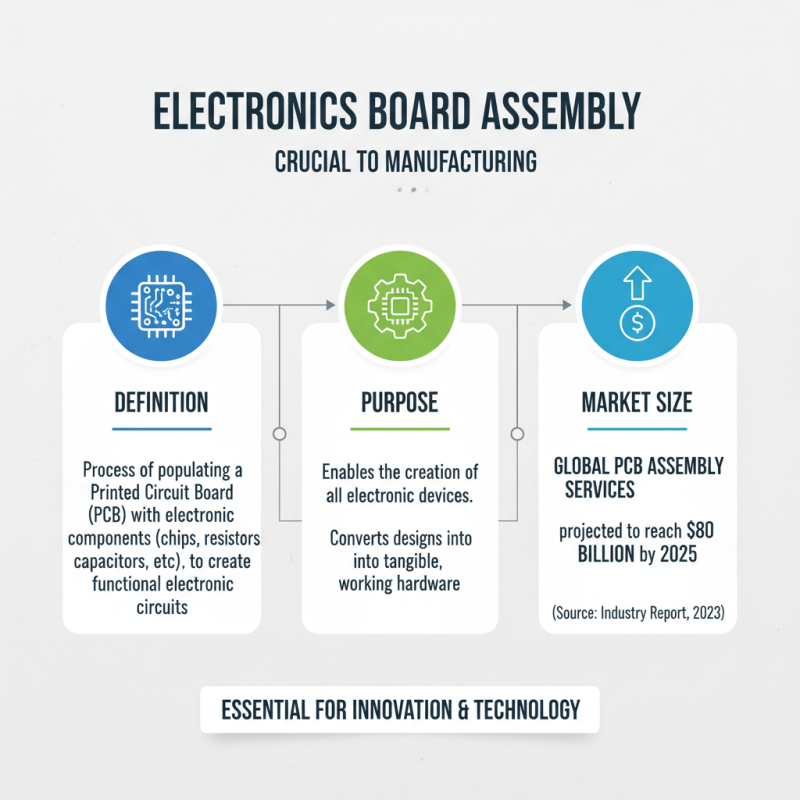
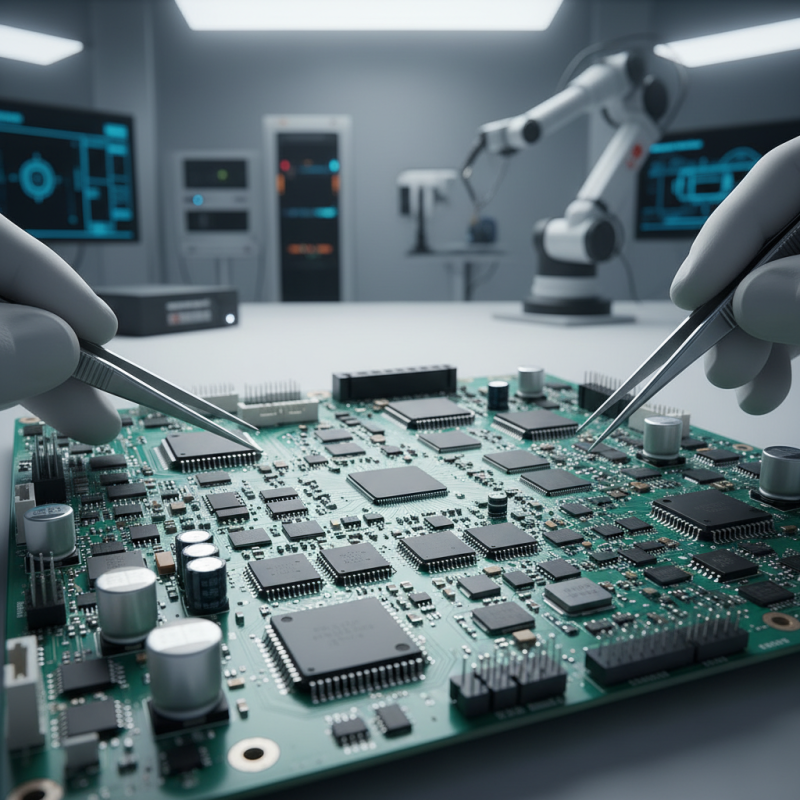
Board assembly plays a crucial role in the electronics manufacturing sector. It combines various components to create functional electronic circuits. Understanding its definition and purpose is essential for anyone in this industry. According to a recent industry report, the global market for PCB assembly services is projected to reach $80 billion by 2025, reflecting the significance of this process.
The primary goal of board assembly is to ensure reliability and efficiency in electronic devices. Components like resistors, capacitors, and integrated circuits are precisely placed on a printed circuit board (PCB). For example, the automated pick-and-place machines can achieve placement accuracy of within 0.01 mm. This level of precision is needed to prevent errors during operation. However, not all assembly processes achieve this standard. There are instances where improper handling leads to defects, causing increased costs and delays.
Moreover, the rise of IoT devices has intensified the demand for advanced assembly techniques. Reports suggest that 30% of electronic components are still sourced from outdated processes. This reliance on older methods can hinder innovation and efficiency. It highlights the need for continuous improvement in assembly standards and technologies. Addressing these challenges is vital for maintaining competitive advantages in the fast-evolving electronics market.
Components of a Board Assembly: Key Elements Explained
In a board assembly, various components work together to create a functional electronic device. The key elements include the printed circuit board (PCB), which serves as the foundation. This board hosts electrical connections and components, enabling communication between them. It’s essential for the PCB to be designed accurately; otherwise, it might lead to malfunction.
Components like resistors, capacitors, and integrated circuits play vital roles. A resistor limits current flow, while capacitors store and release energy. Integrated circuits can perform complex functions in a compact space. Each of these components must be placed precisely on the PCB. If any are misplaced, the entire assembly can fail.
Another element is the soldering process, which connects components to the PCB. Using the wrong temperature or solder material can damage components. This step requires careful attention. During assembly, inspecting each connection is crucial. Even a tiny mistake can cause significant issues later on. This highlights the need for quality control in manufacturing. Overall, board assembly is intricate and requires precision at every stage.
The Process of Board Assembly: Step-by-Step Overview
Board assembly is a crucial stage in electronics manufacturing. This process involves placing various components on a printed circuit board (PCB). The assembly can greatly influence the performance and reliability of the final product. According to a report by Smithers, the global market for PCB assembly is expected to reach $73.3 billion by 2025, showcasing its importance.
The board assembly process typically occurs in several steps. It begins with surface mount technology (SMT), where components are soldered onto the board. Automated machines often handle this step, ensuring precision and speed. The reflow soldering process follows, where the board is heated to melt solder paste.
A study from IPC reveals that around 20% of defects can occur during this phase due to improper temperature control or inadequate solder volume. These challenges remind us to continually refine our techniques.
After the components are attached, inspections and testing follow. This ensures that the assembly meets quality standards. However, human error can still impact outcomes. Reports indicate that up to 30% of defects are attributed to manual handling. This highlights the ongoing need for training and process optimization in board assembly to minimize risks and improve efficiency.
Types of Board Assembly Techniques and Their Applications
Board assembly is a crucial process in electronics manufacturing. Different techniques are available, each suited for various applications. Understanding these can help in selecting the right method for your project.
Surface mount technology (SMT) is widely used. This technique attaches components directly to the surface of the circuit board. It allows for a higher density of components and reduces the size of the board. However, it can be challenging to solder small components accurately. One mistake can lead to defective assemblies, which require rework or replacement.
Through-hole technology (THT) is another common method. Here, components are inserted through holes in the circuit board. This technique provides strong mechanical connections. However, it often results in a bulkier design. Many engineers still prefer it for specific applications. Both methods offer distinct advantages and limitations, and the choice depends on project requirements.
What is Board Assembly and How Does it Work? - Types of Board Assembly Techniques and Their Applications
| Assembly Technique |
Description |
Applications |
Advantages |
| Through-Hole Technology |
Components are inserted into holes on the PCB. |
Used for larger components and high-reliability applications. |
Strong mechanical bond and good solder quality. |
| Surface Mount Technology (SMT) |
Components are mounted directly onto the surface of the PCB. |
Ideal for compact devices and high-volume production. |
Less space required and can be automated. |
| Mixed Technology |
Combines both through-hole and surface mount components. |
Used in complex assemblies where both techniques are beneficial. |
Flexibility in component selection and design. |
| Flip-Chip Technology |
Die are flipped and soldered directly to the PCB. |
Used in high-performance applications like processors and RF devices. |
Reduced package size and improved electrical performance. |
Common Challenges in Board Assembly and Solutions
Board assembly plays a crucial role in the electronics manufacturing industry. However, it faces several challenges. According to a recent industry report, nearly 30% of electronic board failures are due to assembly errors. These errors can occur at various stages, including component placement and soldering processes. Proper training and stringent quality control are essential to mitigate these issues. Still, many companies struggle with maintaining consistent standards.
One common challenge is timely inspection. Insufficient inspection processes lead to undetected defects. Studies show that boards with poor inspection protocols have a 40% higher return rate. Implementing automated inspection systems can significantly improve this. However, the upfront costs and adjustment periods can deter manufacturers. Resolving this dilemma requires finding a balance between quality and budget constraints.
Another critical issue is the supply chain. Disruption in component availability can delay assembly. In 2022, around 25% of manufacturers reported significant delays due to supply chain issues. To address this, building stronger relationships with suppliers is vital. Flexibility in sourcing alternatives should also be part of the strategy. This challenge highlights the importance of adaptability in manufacturing processes, which is often overlooked. Careful planning and risk assessment are necessary for a robust assembly operation.
Common Challenges in Board Assembly and Solutions