Let Us Know How We Can Help. We Are Your Dedicated Solutions Provider.

Choosing among the 7 Best Wide Belt Sander Metal Sanding Machines requires more than comparing motor power. A strong machine must deliver consistent stock removal, controlled heat, and a repeatable surface finish. Stainless steel can show blue heat marks quickly. Aluminum may load the abrasive belt. Mild steel can expose uneven grinding pressure through visible scratch patterns.
Grinding educator Dr. Jeffrey Badger offers a useful principle: “Control the process, and the finish follows.” That idea guides this comparison. Each Wide Belt Sander Metal Sanding Machine should be judged by belt stability, contact pressure, conveyor accuracy, dust extraction, and operator control. A wider belt does not automatically create a better result. It may increase productivity, but poor tracking can multiply defects across every sheet.
This outline examines seven practical machine choices for workshops and production lines. It considers abrasive compatibility, sanding width, feed speed, motor capacity, adjustment systems, and maintenance access. It also looks at details operators notice daily, including vibration, belt changes, noise, and heat buildup near the workpiece edge.
No ranking is perfect. A compact machine may suit custom fabrication better than a powerful industrial unit. One model may excel on flat steel yet struggle with delicate aluminum surfaces. Buyers should verify specifications through demonstrations, test pieces, service records, and independent user feedback. Even experienced operators can overlook setup time. That is where real costs often appear.
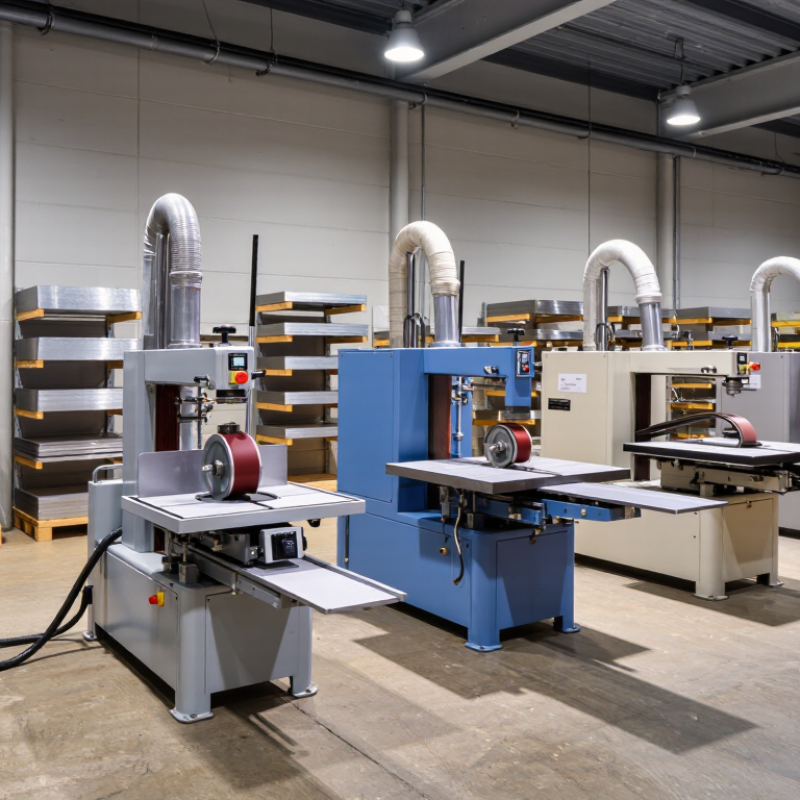
A wide belt sander for metalworking is an industrial finishing machine designed to smooth and size flat metal surfaces. It moves a sheet or part beneath a wide abrasive belt. The belt removes scale, weld discoloration, burrs, and uneven marks across broad surfaces. Unlike a handheld grinder, it provides more consistent contact and repeatable thickness control. That consistency matters.
Inside, a powered conveyor supports the workpiece while a contact drum or platen presses the abrasive. Operators select belt width, grit, feed speed, and sanding pressure for the metal and required finish. Coarse zirconia or ceramic abrasives can level welds quickly, while finer belts refine the surface. Stainless steel needs controlled heat because excessive pressure can cause discoloration or distortion. Aluminum demands clean belts. Loaded abrasive can drag soft metal and leave deep scratches.
In practical shop use, measurement should guide every pass. Check thickness with a calibrated gauge, inspect the scratch pattern under angled light, and record settings. Keep the sheet flat and let the machine do the cutting. Forced pressure often shortens belt life and damages edges. Guarding, dust extraction, and suitable eye, hearing, and respiratory protection are essential. I have found that the first setup is rarely perfect. Test first. Even experienced operators should question a shiny finish; it may hide uneven removal.
Choosing among the 7 best wide belt sander metal sanding machines requires more than comparing motor power. In daily workshop use, belt width should match the largest parts you handle. A wider belt covers sheet metal evenly, while a narrower design may suit brackets and small panels. Check the abrasive system carefully. Zirconia or ceramic belts often remove material quickly, but aluminum oxide can provide a smoother finish at lower cost.
Feed control matters greatly. Variable feed speed helps prevent heat marks on stainless steel and thin sheets. A rigid conveyor table should move without vibration or sudden movement. Look for adjustable contact rollers, a platen unit, and accurate thickness controls. These features support both aggressive grinding and controlled finishing. Keep settings easy to read. Tiny dials are frustrating when gloves are required.
Dust extraction is not optional. Fine metal particles can spread across the work area within minutes. Choose a machine with sealed guards, effective collection ports, and accessible filters. Cooling support may also reduce discoloration during long passes. I once underestimated table alignment, and uneven pressure caused a visible taper on a flat panel. That mistake changed my inspection routine. Now I test with scrap metal before production work. Safety switches, emergency stops, belt tracking, and simple maintenance access deserve equal attention. A powerful machine is useful, but steady control usually produces the better surface.
Comparing the 7 Best Wide Belt Sanders for Metal
A serious comparison starts with the material, not the machine’s appearance. Check the rated abrasive width, maximum stock thickness, and feed speed range. Stainless steel often needs controlled heat, while mild steel may tolerate faster passes. A wide sanding belt can remove scale quickly, but excessive pressure may create uneven lines or discolor the surface.
Inspect the motor rating, drum construction, and belt-tracking system. A rigid frame reduces vibration when sanding long plates. Automatic tracking is useful, though it still requires regular cleaning and adjustment. Compare dust collection capacity, enclosure quality, and emergency-stop access. Metal particles are sharp and conductive, so poor extraction can damage components and create avoidable workplace hazards. Safety matters.
Measure real output, not only advertised power. Test each machine with the same plate thickness, abrasive grade, and feed setting. Record removal rate, surface consistency, noise, and belt wear. The best option may not be the fastest one. A machine that leaves fewer ridges can reduce later polishing time. That matters in production. Operator comfort also deserves attention, because awkward controls encourage mistakes during long shifts. One weakness remains easy to miss: a powerful motor cannot compensate for poor setup. Check service access, replacement-part availability, and calibration instructions before buying. Some impressive specifications look less convincing after practical testing.
| Machine | Working Width | Abrasive Belt Size | Workpiece Thickness | Feed Speed | Abrasive Belt Speed | Main Motor | Dust Collection | Best Suited For | Key Advantage |
|---|---|---|---|---|---|---|---|---|---|
| Machine 1 | 24 in (610 mm) | 24 × 78 in (610 × 1980 mm) | 0.04–4.7 in (1–120 mm) | 16–65 ft/min (5–20 m/min) | 3,600–5,400 ft/min (18–27 m/s) | 30 hp (22 kW) | Approx. 4,000 CFM (6,800 m³/h) | Small-to-medium metal fabrication shops | Compact footprint with practical thickness adjustment |
| Machine 2 | 37 in (940 mm) | 37 × 75 in (940 × 1905 mm) | 0.04–6.0 in (1–150 mm) | 20–82 ft/min (6–25 m/min) | 4,000–5,900 ft/min (20–30 m/s) | 40 hp (30 kW) | Approx. 5,500 CFM (9,350 m³/h) | General-purpose stainless and carbon-steel finishing | Good balance of capacity, speed, and operating cost |
| Machine 3 | 49 in (1,245 mm) | 49 × 75 in (1,245 × 1905 mm) | 0.04–6.0 in (1–150 mm) | 16–98 ft/min (5–30 m/min) | 4,000–6,000 ft/min (20–30 m/s) | 50 hp (37 kW) | Approx. 7,000 CFM (11,900 m³/h) | High-volume deburring and surface preparation | Wide contact area for consistent sheet-metal finishing |
| Machine 4 | 51 in (1,300 mm) | 51 × 81 in (1,300 × 2,060 mm) | 0.03–6.0 in (0.8–150 mm) | 13–98 ft/min (4–30 m/min) | 4,500–6,000 ft/min (23–30 m/s) | 60 hp (45 kW) | Approx. 8,000 CFM (13,600 m³/h) | Weld blending and heavy stock removal | High material-removal capacity with a rigid contact system |
| Machine 5 | 52 in (1,320 mm) | 52 × 81 in (1,320 × 2,060 mm) | 0.04–8.0 in (1–200 mm) | 16–100 ft/min (5–30 m/min) | 4,000–6,000 ft/min (20–30 m/s) | 75 hp (56 kW) | Approx. 9,000 CFM (15,300 m³/h) | Industrial plate, coil, and fabricated-part processing | Handles thicker workpieces and demanding production cycles |
| Machine 6 | 63 in (1,600 mm) | 63 × 81 in (1,600 × 2,060 mm) | 0.04–8.0 in (1–200 mm) | 16–100 ft/min (5–30 m/min) | 4,500–6,000 ft/min (23–30 m/s) | 100 hp (75 kW) | Approx. 11,000 CFM (18,700 m³/h) | Large-format sheet and structural-component finishing | Excellent throughput for wide parts and continuous production |
| Machine 7 | 75 in (1,900 mm) | 75 × 81 in (1,900 × 2,060 mm) | 0.04–8.0 in (1–200 mm) | 13–98 ft/min (4–30 m/min) | 4,500–6,000 ft/min (23–30 m/s) | 125 hp (93 kW) | Approx. 13,000 CFM (22,100 m³/h) | Heavy-duty continuous metal-processing lines | Maximum working width and production capacity |
Operating a metal wide belt sander begins with preparation, not pressure. Wear eye protection, hearing protection, fitted gloves during handling, and suitable work clothing. Keep loose sleeves away from the conveyor. Inspect the belt for tears, uneven wear, or embedded metal particles. Check the emergency stop before starting.
Set the abrasive belt for the metal grade and desired finish. A coarse belt removes scale quickly, while a finer belt leaves fewer visible scratches. Place the workpiece flat against the conveyor. Keep its leading edge straight. Start the dust extraction system, then run the machine briefly without stock. Listen for unusual vibration or belt tracking problems.
Feed the metal steadily. Do not force it. Excessive pressure can overheat the surface and shorten belt life. Watch for sparks, discoloration, or a sudden change in motor sound. These signs often indicate excessive contact or a clogged abrasive. Stop the machine before measuring the finished thickness. Metal can feel cooler or smoother than it actually is.
I usually make a light test pass first. It saves material and exposes poor settings early. Still, one mistake remains easy to make: rushing the second pass. Mark the surface with layout dye when uniform removal matters. Check several points with a calibrated thickness gauge. If the finish looks uneven, inspect belt alignment, feed speed, and workpiece support before increasing pressure. Proper settings vary with alloy, thickness, and abrasive condition.
Reliable metal sanding begins with disciplined maintenance, not machine speed. Inspect the abrasive belt before every shift for tears, glazing, or uneven wear. Check the tracking system and rollers for metal chips. A small chip can create vibration, poor finishes, or sudden belt damage. Clean dust from guards, vents, and extraction channels after use. Fine metal particles can collect near hot components and increase fire risks. Stop the machine before touching any internal part. Disconnect and isolate its power source during servicing.
Operators should wear eye protection, hearing protection, fitted work clothing, and suitable respiratory protection. Loose sleeves and jewelry can catch moving parts. Keep hands away from the sanding contact area, even when the belt appears slow. Confirm that guards, emergency stops, and extraction systems work correctly before sanding. Use steady pressure instead of forcing the workpiece into the belt. Excessive pressure overheats the surface and shortens belt life. The machine may sound normal while developing a dangerous fault, so unusual vibration deserves immediate attention.
Tips: Keep a simple maintenance log with belt changes, roller inspections, and faults. Remove chips with an approved vacuum system, not compressed air. Allow hot metal to cool before handling it. Never bypass a guard for convenience. I still find rushed inspections tempting during busy production, but that habit needs correction. A two-minute check can prevent damaged parts, injuries, and costly downtime.