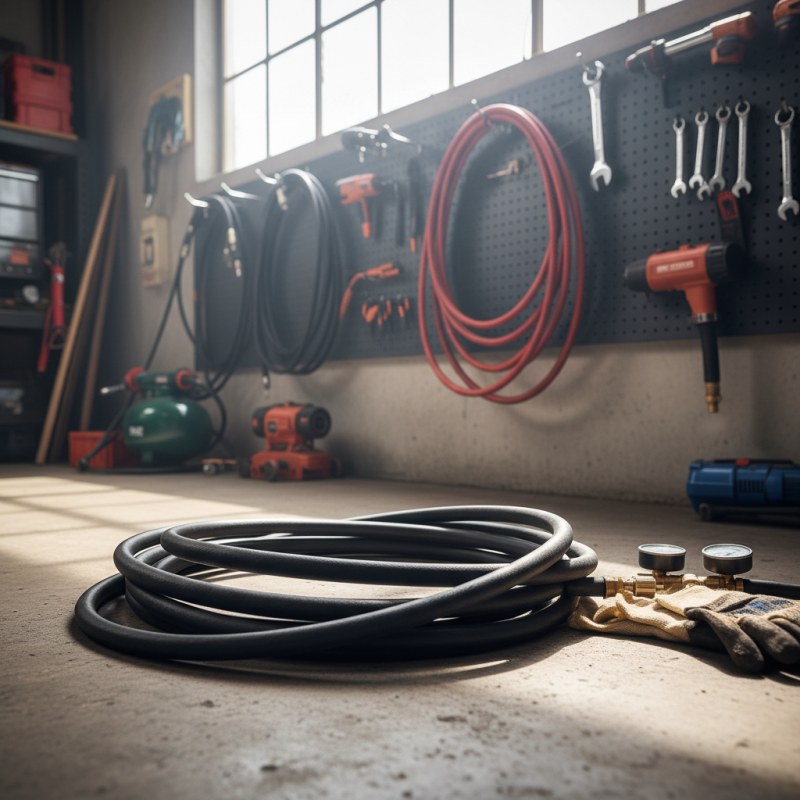
What is the best rubber air hose for your needs?
Choosing the right rubber air hose is crucial for your projects. With various options available, it can be overwhelming. Each hose has unique features for different needs.
The quality of a rubber air hose can significantly impact performance. Durable materials and flexibility are essential factors. Consider the hose length, diameter, and pressure rating. These dimensions affect airflow and usage.
Finding the best rubber air hose requires some reflection on your specific needs. Think about the environment in which you will use it. Will it be for home repair or professional tasks? Such factors will help you narrow down your choices.
Understanding Rubber Air Hose Types and Applications
When selecting a rubber air hose, understanding the types and applications is crucial. Rubber air hoses come in various forms, including standard, reinforced, and multipurpose varieties. According to recent industry reports, reinforced hoses provide better durability, making them ideal for heavy-duty work sites. Meanwhile, multipurpose hoses offer a blend of flexibility and resistance to wear, suitable for automotive and industrial applications.
Tips: Always check the PSI rating before purchasing. A hose rated above your compressor's output can help avoid damaging both the hose and the equipment.
Consider the length and diameter of the hose. A longer hose means reduced airflow but increased reach. Industry data shows that a ¼-inch diameter hose can limit flow rates, particularly in larger applications. Think about your specific needs before making a choice.
Tips: Store hoses properly to extend their lifespan. Avoid sharp bends and direct sunlight exposure. This simple step can save time and money in the long run.
Key Features to Consider When Choosing a Rubber Air Hose
When choosing a rubber air hose, key features play a crucial role. Consider the hose diameter, as it affects airflow. A wider diameter allows for quicker delivery of air, while a narrow one can be easier to handle. Think about the length too. Longer hoses offer more flexibility but can sometimes lead to pressure loss. This balance between length and diameter is vital for efficiency.
Material quality is another important aspect. Look for hoses made from durable rubber that can withstand various conditions. This is essential for longevity and performance. Additionally, check the temperature ratings. Some hoses perform better in extreme temperatures. A hose that melts in the sun or freezes in the cold is not ideal.
Finally, consider flexibility and kink resistance. Hoses that are stiff can be difficult to maneuver. Those that kink easily can cause frustrating interruptions. Reflect on how you plan to use the hose. Will you need to move around a lot? The right choice can make your tasks easier and more efficient. If something doesn’t seem right, it’s worth reassessing your options.
Comparing Durability and Flexibility in Rubber Air Hoses
When choosing a rubber air hose, consider durability and flexibility. A durable hose withstands wear over time. It should resist kinks and abrasions. Good durability ensures longevity. If a hose cracks or frays, it becomes unusable. So, pay attention to the materials used.
Flexibility is equally crucial. A flexible hose allows for easier maneuverability. It bends without breaking, which is essential for tight spaces. However, too much flexibility can reduce durability. Finding the right balance can be challenging. Stiff hoses may last longer but are tricky to work with.
Look at the thickness and weight of the hose. Heavier hoses often indicate a robust build. Yet, heavy hoses can be cumbersome. Light hoses are easier to handle. But they might not endure heavy use. Reflect on your specific needs. Will you use it daily or occasionally? This decision will guide your choice. Always test a hose if possible. Feel the flexibility and check the weight. An informed choice benefits everyone in the long run.
Selecting the Right Diameter and Length for Your Needs
Choosing the right diameter and length for your rubber air hose is essential for efficiency. A hose that is too small can limit airflow, reducing your tool's performance. According to industry studies, hoses with diameters of 3/8 inch or 1/2 inch are commonly used in most residential applications. If you’re running multiple tools, a larger diameter might be necessary.
Length is another crucial factor. A longer hose allows for greater reach but may come with pressure loss. Research indicates that every 100 feet of hose can reduce pressure by approximately 5 psi. This could impact performance significantly, especially for high-demand tools. If you're working in a large space, consider the balance between reach and pressure.
Tips: Ensure you measure the distance from your air source to your tools. Consider your workspace layout to determine the ideal hose length. If in doubt, opt for a slightly longer hose; it can always be coiled up. Always assess your needs before deciding. There’s no one-size-fits-all solution here. Evaluate your specific requirements to avoid frustrations later.
Maintenance Tips for Extending the Life of Rubber Air Hoses
Maintaining your rubber air hose can significantly extend its lifespan. Regular inspection is essential. Look for cracks or wear. These small issues can lead to larger problems. If you see damage, replace the hose promptly. Treat your hose gently. Avoid harsh chemicals that can degrade the material.
Keep your hose clean. Dust and debris can build up over time. A simple rinse with water can do wonders. Store the hose properly when not in use. Avoid sharp bends and twists. These can cause stress points that lead to leaks. A well-organized storage solution is key.
Lastly, remember to check your connections. Loose fittings can lead to air leaks. Ensure the hoses are tightly secured. They should fit snugly without any force. Some wear and tear is normal, but regular care can drastically improve your hose's performance. A little effort goes a long way.
Air Hose Durability Comparison