Let Us Know How We Can Help. We Are Your Dedicated Solutions Provider.

Choosing a commercial deck oven can shape a bakery’s daily rhythm, from the first morning batch to the final bake. Deck ovens use heated baking surfaces to deliver direct heat, making them useful for breads, pizzas, pastries, and other products that benefit from a well-browned base. Results still depend on dough, loading, and operator technique. Equipment alone cannot guarantee a perfect crust.
This guide examines seven commercial deck ovens to help bakery owners compare practical features, not just headline specifications. We consider deck size, temperature range, heat recovery, steam options, controls, energy needs, and service access. A busy shop may value fast recovery between loads, while a small bakery may need a compact footprint and dependable controls. Every model involves trade-offs. Some details, including electrical requirements and available configurations, can vary by region or change over time, so confirm them with the manufacturer or an authorized dealer before buying. We also recognize that published capacity figures rarely capture the realities of a crowded production day. That matters.
Use these comparisons as a starting point, then match the oven to your menu, expected output, installation space, and local service support. A test bake with your own dough can reveal more than a brochure. The right choice is the one your team can operate consistently.
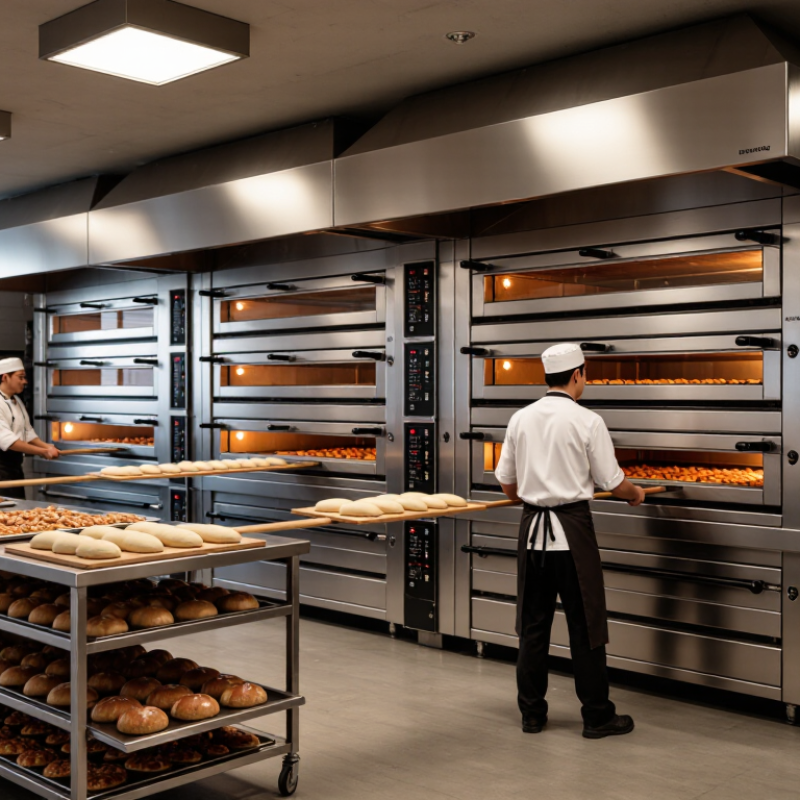
A commercial deck oven is built around one or more flat baking chambers, called decks. Each deck has a heated floor, usually made from stone or another heat-retaining material, plus heating elements above or below. The hot floor transfers heat directly into dough, helping bread develop a firm base and a crisp crust. Heat from above colors the surface. It is a simple idea, but balance matters.
Bakers set the deck temperature and, on many ovens, adjust top and bottom heat separately. This lets them suit different products: a loaf may need strong floor heat, while pastries benefit from gentler coloring. Many models also offer steam injection. A short burst of steam keeps the dough surface flexible during the first part of baking, supporting expansion before the crust sets. Timing is important. Too much steam can leave the surface damp.
Trays or peels slide into the chamber, where the deck stores heat between batches. That reserve can help maintain steady baking, though frequent loading may still lower the temperature. Watch the display, but check the bake too: ovens vary, and a dial is not a promise. In a busy bakery, operators often rotate items or adjust settings after seeing uneven color. Small corrections help. Even then, hot spots happen, and learning an oven takes real test bakes.
Commercial deck ovens shape bakery results through heat transfer, temperature control, steam, and recovery between loads. A stone or steel deck stores heat and transfers it directly to dough, supporting crisp bottoms and even browning. But deck material alone cannot guarantee consistency. Airflow, insulation, and loading habits matter too. When staff open the doors repeatedly during a busy morning, slow heat recovery may leave later batches pale.
Independent controls for upper and lower heat help bakers adjust crust color without overcooking the center. Steam can support a glossy crust and good expansion, but more is not always better. Excess steam may soften the crust or delay browning. Chamber size, door width, and usable deck area also affect daily workflow. A large oven may seem efficient, yet it can waste energy when production is modest. No oven is perfect for every menu.
Tips: Test candidate ovens with your own dough, tray size, and typical load. Record deck temperature, bake time, and color across several batches. Check recovery after loading, not just the displayed temperature. One detail is easy to miss: staff need clear, repeatable controls, especially during rushed shifts.
Temperature is one factor that shapes baking performance. These representative working ranges vary with the recipe, loaf size, oven calibration, steam, and loading conditions; always follow the recipe and test results from your own oven.
Choosing a deck oven starts with the bakery’s daily workload, not its advertised capacity. Estimate how many loaves or trays must bake during your busiest hour. Then check each deck’s usable width and depth against your pans, including room for airflow. A tight fit can produce uneven color. It can also slow loading.
Heat behavior matters as much as space. Ask whether the oven allows separate top and bottom heat settings, and how accurately operators can adjust them. This helps when one menu includes crusty sourdough, delicate pastries, and sheet cakes. Look for clear temperature controls and a door that opens smoothly without blocking the work aisle. Stone or other baking surfaces may affect bottom browning, so test them with your own dough. Numbers alone can mislead.
Run a practical trial before committing, if possible. Bake several loads, not just one attractive sample, and record recovery time after each door opening. Check the center and corners for differences in color and texture. Have the staff who will use the oven handle loading and cleaning; their feedback often reveals awkward controls or hard-to-reach crumbs. Don’t skip the boring details. Confirm electrical or fuel requirements, ventilation needs, service access, and the space required for installation. Even a careful test has limits: dough temperature, proofing, and operator timing can change results. Keep notes, and compare ovens under similar conditions.
Seven Best Commercial Deck Ovens for Bakeries in 2026
Choosing among seven commercial deck oven styles starts with the bread and the daily bake schedule. A single-deck electric oven suits a small menu and limited floor space. Double-deck electric models increase capacity without widening the work line. Gas-fired decks can suit bakeries with suitable utilities and ventilation. Stone-hearth ovens provide a dry, direct baking surface for crisp-bottomed loaves. Steam-injection models help create glossy crusts, though they need careful water and maintenance planning. Compact countertop decks fit test batches or tight kitchens. Modular multi-deck systems let busy shops expand capacity in stages. I would not call one layout perfect; uneven loading can still produce uneven color.
Tips: Check interior deck dimensions, not just exterior width. Ask about recovery time between loads and how easily the oven holds temperature during peak service. Bring your heaviest pans when evaluating access.
Before buying, compare energy requirements, installation needs, cleaning access, and local service availability. Ask operators to bake your own dough, since showroom demonstrations may not reflect your workflow. Watch the rear corners and lower crust closely. Those spots often reveal heat patterns that a quick glance misses. A used oven may appear economical, but worn seals or inconsistent controls can cost time. Record temperature readings across several baking cycles before committing.
This comparison covers seven common commercial deck-oven configurations rather than specific branded models. Dimensions and utility figures are indicative planning ranges; confirm exact specifications, clearances, and electrical requirements with the equipment supplier before purchase.
| Oven configuration | Typical usable deck size (W × D) | Decks | Typical temperature range | Indicative electric input | Best suited to | Key considerations |
|---|---|---|---|---|---|---|
| Compact single-deck oven | About 18 × 18 in (46 × 46 cm) | 1 | About 150–500°F (65–260°C) | Roughly 3–6 kW | Small bakeries, cafés, and low-volume artisan bread or pastry production. | Small footprint and lower capacity; check whether the deck accommodates the bakery’s trays or pans. |
| Half-sheet single-deck oven | About 18 × 24 in (46 × 61 cm) | 1 | About 150–500°F (65–260°C) | Roughly 4–8 kW | Small-to-medium bakeries baking cookies, rolls, and tray-based pastries. | Can suit one 13 × 18 in half-sheet pan, subject to usable interior space and loading clearance. |
| Long single-deck oven | About 18 × 36 in (46 × 91 cm) | 1 | About 150–500°F (65–260°C) | Roughly 5–10 kW | Businesses needing a longer hearth for baguettes, batards, or multiple smaller items. | Verify the clear deck area and door opening; long loaves need usable loading and unloading space. |
| Standard two-deck oven | About 24 × 36 in per deck (61 × 91 cm) | 2 | About 150–500°F (65–260°C) | Roughly 10–20 kW total | Medium-volume bakeries producing bread and pastries at different temperatures or in separate batches. | Independent controls are useful when each deck needs a different temperature; check electrical supply and ventilation. |
| Three-deck production oven | About 24 × 36 in per deck (61 × 91 cm) | 3 | About 150–500°F (65–260°C) | Roughly 15–30 kW total | Higher-volume bakeries with steady daily production and several products in rotation. | Offers more baking capacity in one footprint; confirm available amperage, phase, and space for servicing. |
| Stone-hearth deck oven | Commonly about 18 × 24 to 24 × 36 in per deck (46 × 61 to 61 × 91 cm) | 1–3 | About 150–500°F (65–260°C) | Varies by size; commonly about 4–10 kW per deck | Artisan loaves and hearth-style products where direct contact with a heated baking surface is desired. | Stone or refractory hearths store heat; allow for warm-up time and follow the maker’s cleaning and maintenance instructions. |
| Steam-injection deck oven | Commonly about 18 × 24 to 24 × 36 in per deck (46 × 61 to 61 × 91 cm) | 1–3 | About 150–500°F (65–260°C) | Varies by size and steam system; commonly about 5–10 kW per deck | Bakeries making crusty bread that benefits from steam during the early part of baking. | Check water connection, drainage, steam controls, and cleaning requirements; steam features vary by model. |
Before installing a commercial deck oven, confirm floor loading, door access, utility capacity, and required clearances with qualified tradespeople. Check ventilation and fire-safety requirements against the oven’s installation manual and local codes. During commissioning, verify temperature accuracy with an independent oven thermometer and record the results. A display reading alone may not tell the whole story.
Daily operation shapes consistency. Allow the oven to preheat fully, load trays evenly, and avoid blocking airflow between decks. ENERGY STAR’s commercial food-service guidance notes that restaurants can use five to seven times more energy per square foot than other commercial buildings. That makes a leaking door seal or unnecessarily long idle periods worth investigating. Wipe spills after cooling, and inspect door hinges, seals, and vents regularly. A rushed check is easy to skip. It can also be the reason one corner bakes darker.
Tips: Keep a simple log of preheat times, temperature checks, cleaning, and repairs. Use a soft cloth and approved cleaner; harsh tools can damage interior surfaces. If temperature drift keeps returning, stop adjusting settings by guesswork and arrange qualified service. Real kitchens are messy, and logs may be incomplete. Review them anyway.