Let Us Know How We Can Help. We Are Your Dedicated Solutions Provider.

Choosing the right Dog Barking Device requires more than comparing prices or counting customer reviews. Dogs bark for different reasons, including fear, boredom, territorial behavior, pain, and excitement. A device that helps one calm dog may confuse another. It may also fail completely.
Veterinarian and animal behaviorist Dr. Ian Dunbar has said, “Barking is a normal and natural behavior for dogs.” That reminder should guide every buying decision. Responsible owners should reduce excessive barking without trying to silence normal communication. Training, exercise, veterinary checks, and environmental changes should remain part of the solution.
This guide reviews seven Dog Barking Device options for global buyers. It considers sound, vibration, citronella, and smart monitoring technologies. Each option is examined for range, sensitivity, battery life, weather resistance, comfort, and ease of adjustment. International shoppers should also check shipping restrictions, warranty support, local animal-welfare expectations, and product instructions.
A small garden, a busy apartment, and a rural property create different needs. A microphone may react to traffic or a neighbor’s dog. A vibration setting may suit some dogs, but not every temperament. No device is perfect. That is worth admitting.
The safest products use gradual settings and discourage punishment-based use. Owners should monitor the dog’s body language, including tucked tails, pacing, hiding, or repeated scratching. These signs suggest stress, not successful training. Used carefully, the right device can support a broader behavior plan instead of replacing it.
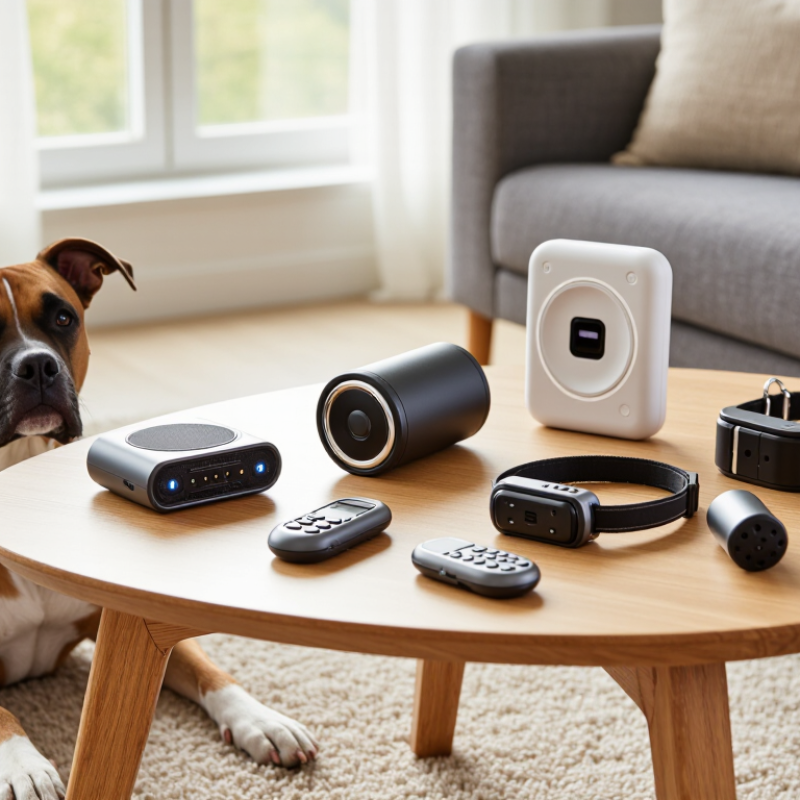
Dog barking devices are tools designed to reduce repeated or nuisance barking. Common types include ultrasonic units, vibration collars, audible sound emitters, and controlled spray systems. Each uses a different signal to interrupt barking, rather than physically restraining the dog. Ultrasonic devices produce a high-frequency tone that most people barely hear. Vibration models create a brief pulse. Some outdoor units detect sound and respond automatically.
The basic process is simple: a microphone or sensor detects barking, then the device delivers a selected response. Effectiveness depends on distance, background noise, the dog’s hearing, and the reason for barking. A device may interrupt territorial barking, but it will not solve fear, boredom, pain, or separation distress. In practice, results are often uneven. Some dogs adapt quickly, while others become more anxious. That limitation deserves attention.
Tips: Choose adjustable intensity and test the lowest setting first. Avoid continuous activation. Place outdoor units away from rain and direct heat, and check battery or power compatibility for your region. Observe your dog’s body language, including tucked ears, pacing, or hiding. These signs suggest stress, not learning. Pair the device with exercise, quiet rewards, and calm training. If barking changes suddenly, consult a qualified veterinarian, since illness or discomfort can be overlooked. A humane device should support communication, not replace it.
7 Best Dog Barking Devices for Global Buyers
The Main Types of Dog Barking Devices Explained
Dog barking devices are not interchangeable. APPA’s 2023–2024 National Pet Owners Survey recorded about 65 million U.S. dog-owning households, showing the scale of this concern. The PFMA’s 2024 Pet Population Survey also reported around 13.5 million dogs in the United Kingdom. These figures do not measure excessive barking, but they explain the growing demand for practical training tools.
Seven common device types include ultrasonic emitters, audible tone units, vibration collars, static stimulation collars, citronella spray collars, sound-activated indoor devices, and camera-based training systems. Ultrasonic and tone devices use sound outside, or near, human hearing. Vibration systems deliver a physical cue without an electric pulse. Static devices require extra caution, careful fitting, and professional guidance. Spray collars release a scent near the dog’s nose. Indoor units react to barking, while camera systems let owners speak or reward remotely. The last two can be useful in apartments.
No device fixes fear.
The American Veterinary Society of Animal Behavior recommends reward-based training and discourages aversive methods. Therefore, buyers should check sensitivity controls, detection accuracy, battery life, weather resistance, and local welfare rules. A device that reacts to every passing car may increase stress. In my assessment, gradual training remains essential, even with advanced monitoring. Some products promise silence too quickly. That claim deserves doubt. Pairing a quiet cue with treats, distance, and veterinary advice is usually more reliable than relying on correction alone.
The Main Types of Dog Barking Devices Explained
The chart compares representative working distances for seven commonly sold device formats. Values are rounded category-level benchmarks rather than brand specifications; real performance varies with terrain, weather, battery condition, dog temperament, and the device’s placement. Ultrasonic, audible-tone, vibration, static-correction, and citronella devices use different mechanisms and should be selected according to local regulations and humane training practices.
Comparing the 7 best dog barking devices requires more than counting reviews. Start with the trigger system: microphone detection, smart sound filtering, or remote activation. Ultrasonic, vibration, and audible-tone models suit different dogs. Spray-based options require extra welfare consideration and careful handling. The American Pet Products Association’s 2023–2024 National Pet Owners Survey shows widespread pet ownership in the United States, but it does not prove that one training tool fits every household. That distinction matters.
Check detection range in real conditions. A device that works across an empty garden may fail beside traffic, rain, or neighboring dogs. Compare battery life, weather resistance, adjustable sensitivity, and false-trigger performance. The seven devices should also be tested at the same distance. Record barking frequency before and after use. The RSPCA and veterinary behavior professionals generally favor reward-based training, so a device should support calm behavior rather than simply interrupt noise. No device wins every yard. I would not pretend otherwise.
Tips: Use short trials, beginning at the lowest effective setting. Pair quiet behavior with treats, distance, or a calm verbal cue. Never rely on a device for separation anxiety, pain, or fear-related barking. The American Veterinary Society of Animal Behavior recommends addressing the underlying cause, not only suppressing the sound. Look for transparent manuals, measurable claims, replaceable batteries, and clear safety guidance. A lower price can hide weak microphones or poor weather sealing. Test carefully.
Safety, Effectiveness, and Ethical Considerations
For global buyers, the seven most practical barking devices include ultrasonic units, vibration collars, citronella-free sound trainers, reward dispensers, indoor monitors, treat cameras, and manual clickers. Their value depends on the cause of barking, not the product label. The 2023–2024 APPA National Pet Owners Survey estimates that 65.1 million U.S. households own a dog, showing the scale of this everyday welfare issue. A device should reduce noise without creating fear, pain, or confusion.
Safety comes first. The American Veterinary Society of Animal Behavior recommends reward-based training and rejects aversive methods, including shock-based correction. The RSPCA also warns that punishment can increase anxiety and damage the human–dog relationship. Ultrasonic and vibration tools may seem gentle, but some dogs still react with stress, avoidance, or trembling. Watch the ears, posture, breathing, and appetite. Stop immediately if these change.
Training must remain central. A monitor can identify triggers, while a treat dispenser can reward quiet behavior within seconds. A clicker is simple, cheap, and easy to replace worldwide. Automatic collars are less suitable when several dogs share one home, because the wrong animal may receive the correction. Product claims often sound stronger than independent evidence. I have found that frustrating. Buyers should check adjustable settings, skin-contact warnings, repair access, and local animal-welfare guidance before purchase.
| Device Type | How It Works | Typical Operating Range | Power and Maintenance | Effectiveness Evidence | Safety Profile | Ethical Considerations | Best Use Case |
|---|---|---|---|---|---|---|---|
| Ultrasonic Handheld Trainer | Emits a high-frequency sound when the handler presses a button. The sound is intended to interrupt barking rather than physically restrain the dog. | Usually about 3–8 m outdoors, depending on weather, obstacles, and the device’s output. | Typically uses a replaceable or rechargeable battery. Requires occasional cleaning and battery checks. | Moderate and variable May interrupt some dogs briefly, but responses differ by age, hearing ability, temperament, and motivation. | Generally low physical risk when used briefly and at a reasonable distance. Do not aim close to the ears or use continuously. | Use as a short interruption followed by reward-based training. Avoid using it to frighten, punish, or suppress fear-related barking. | Supervised training in homes, gardens, or during walks. |
| Outdoor Ultrasonic Bark Control Unit | Uses a microphone to detect barking and activates an ultrasonic signal automatically or through adjustable sensitivity settings. | Commonly advertised at approximately 5–15 m, but walls, vegetation, wind, and competing sounds can reduce performance. | Battery-powered or mains-powered. Outdoor models need weather protection and periodic sensor cleaning. | Limited and inconsistent Independent results are mixed; false triggers and failure to detect individual barks are possible. | Non-contact, but the effect may extend to nearby dogs. Avoid placing it near sleeping areas or where dogs cannot move away. | Do not use in multi-dog settings without observing all animals. Stop use if a dog shows distress, avoidance, or increased anxiety. | Short-term management of nuisance barking in a single, supervised outdoor area. |
| Vibration-Only Bark Collar | A collar-mounted microphone detects barking and delivers a vibration pattern. Some models offer adjustable sensitivity and intensity. | Works on the wearing dog; detection distance is normally limited to the collar’s microphone range. | Usually rechargeable or powered by a small replaceable battery. The collar should be removed regularly to inspect the skin. | Moderate for some dogs Can interrupt habitual barking, but it is not a guaranteed solution and may be less effective for highly motivated barking. | Lower physical risk than static stimulation when correctly fitted. It should not be tight, worn continuously, or used on dogs with neck or skin problems. | Introduce gradually with positive reinforcement. Do not use it as the only response to barking caused by pain, fear, separation distress, or territorial anxiety. | Individual dogs that respond well to gentle tactile interruption under supervision. |
| Tone-Only Bark Collar | Detects barking and plays an audible tone. The owner can pair the tone with a quiet cue and reward calm behavior. | Operates on the wearing dog; sound can be heard by people and animals nearby, depending on volume and surroundings. | Rechargeable or replaceable-battery operation. Requires regular fitting checks and inspection of the microphone openings. | Moderate as a training aid Most useful when combined with consistent rewards and environmental management. | Usually low physical risk. The tone should not be excessively loud, and the collar should be removed during unsupervised periods. | Preferable to aversive stimulation when the dog remains relaxed. Discontinue if the tone produces fear, confusion, or escalating vocalization. | Reward-based training for dogs that are responsive to sound and calm handling. |
| Citronella or Scent-Spray Collar | A bark sensor releases a small burst of scented spray near the dog’s muzzle when barking is detected. | Designed for the wearing dog; sensor performance depends on correct collar placement and background noise. | Uses a refillable cartridge and battery. Refills may be less accessible in some countries and require proper storage. | Moderate but inconsistent Some dogs stop temporarily, while others habituate or become anxious. | Avoid contact with eyes, nose, mouth, and damaged skin. Check ingredients and local import rules; never substitute household aerosols. | Because the spray can startle or frustrate a dog, pair use with training and investigate the cause of barking first. | Short supervised trials for dogs that do not show sensitivity to sound or scent. |
| Reward-Based Automatic Treat Dispenser | Uses a sound sensor, camera, or app-defined trigger to dispense a small food reward when quiet behavior follows barking. | Local models work within the room; connected models commonly depend on Wi-Fi coverage and app connectivity. | Needs food-safe cleaning, regular refilling, battery or mains power, and reliable network access for connected functions. | Strongest ethical training option Supports reinforcement of quiet behavior, although timing errors and false triggers can reduce results. | Generally low risk when suitable treats are used. Account for allergies, calorie intake, choking risk, and food guarding. | Rewards an alternative behavior rather than punishing barking. It should not replace exercise, enrichment, social contact, or behavior assessment. | Indoor training, separation-related management, and teaching a quiet cue with professional guidance when needed. |
| Smart Camera with Bark Alerts | Monitors sound and video, then sends an alert to a phone or records patterns for later review. It does not directly punish barking. | Typically covers the camera’s viewing area; remote access depends on internet service, power, and regional app availability. | Requires mains power or battery charging, lens cleaning, secure Wi-Fi, software updates, and attention to data privacy. | High value for diagnosis It helps identify triggers and timing, but effectiveness depends on the behavior plan that follows. | Non-contact and low physical risk. Avoid placing cameras where heat, cords, or unstable mounting could create hazards. | Supports humane decision-making by revealing boredom, fear, pain, external triggers, or separation distress instead of merely suppressing sound. | Homes requiring remote observation, trigger identification, and evidence for consultation with a veterinarian or qualified behavior professional. |
Buyer note: Performance varies by dog, environment, fitting, local regulations, and product quality. Barking caused by pain, fear, separation distress, or medical conditions should be assessed by a veterinarian or qualified behavior professional. Avoid devices that deliver electric shock or cause pain, and never leave a bark-control collar on a dog unsupervised.
Choosing a barking device starts with the dog, not the product category. APPA’s 2023–2024 National Pet Owners Survey reports that 65.1 million U.S. households own a dog, showing how varied home environments can be. A device suitable for a quiet apartment may fail in a busy rural yard. Observe the trigger first: strangers, separation, boredom, or other animals. Ultrasonic models are discreet, while vibration-based devices may suit some dogs better. Avoid devices designed to cause pain. The American Veterinary Society of Animal Behavior recommends reward-based training and warns against aversive methods.
Check detection accuracy before buying. A reliable unit should distinguish barking from traffic, children, and neighboring dogs. Adjustable sensitivity matters, especially in homes with multiple pets. Outdoor buyers should inspect weather resistance, battery access, and operating temperature. Indoor users should consider wall thickness and room layout. Research from the RSPCA emphasizes that excessive barking often reflects unmet behavioral or welfare needs, not simple disobedience. One device cannot solve every cause.
Tips: Pair the device with quiet-command training and treats. Test it for several days. Keep a behavior log. Stop if your dog hides, trembles, or becomes unusually withdrawn. Results can be inconsistent. I would also question impressive range claims, because walls, wind, and background noise change real performance. Choose transparent safety information, clear instructions, and accessible customer support. A trial period is useful, since your dog may react differently from the manufacturer’s test animals.