2026 Top CNC Metal Parts Suppliers for Global Buyers

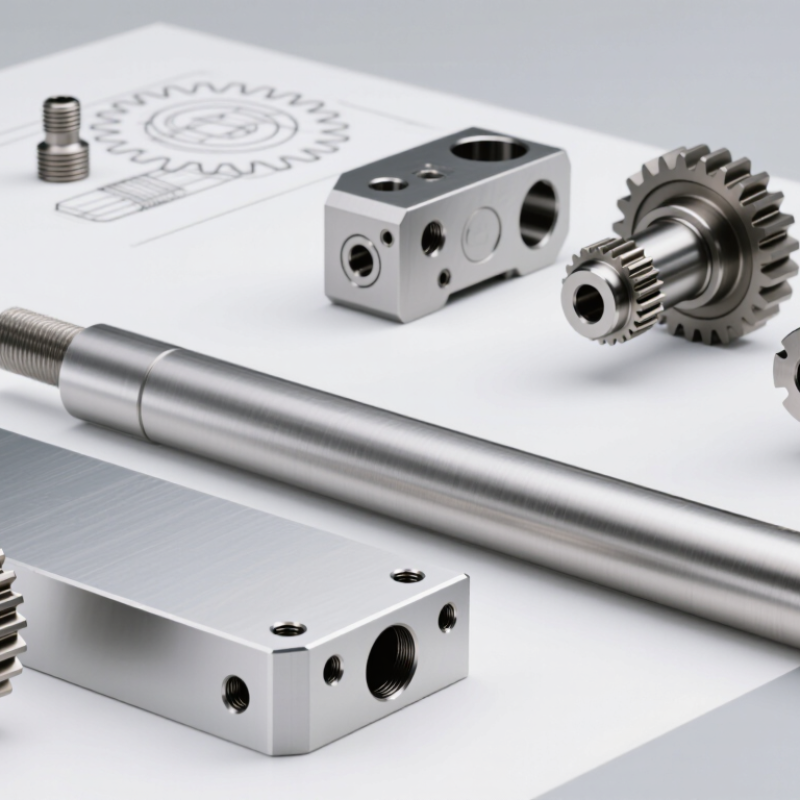
Global buyers need suppliers that can deliver precise parts, clear documentation, and dependable communication. Cnc Metal Parts may look simple in a catalog, yet small differences in machining capability can affect fit, finish, and assembly. A milled aluminum housing, for example, may require tight tolerances around mounting holes and a clean anodized surface. A stainless-steel shaft may call for consistent dimensions across repeated production runs.

This guide to 2026’s top CNC metal parts suppliers helps buyers compare more than price. It considers machining processes, material options, quality controls, production capacity, and support for international orders. Useful evidence can include inspection reports, sample parts, process details, and realistic lead-time estimates. Ask how a supplier handles drawing revisions, surface-finish requirements, and nonconforming parts. Those answers often reveal more than a polished product page.

There is no perfect shortlist. A supplier suited to prototypes may not fit high-volume production, and a low quote can omit important finishing or packaging costs. Buyers should verify claims against their own specifications and request clarification where details are missing. Small checks matter. Reviewing a first-article inspection report or confirming tolerances before production can prevent costly surprises later. The companies covered here offer a starting point for comparison, not a substitute for technical review. Choose based on documented capability, consistent communication, and the requirements of each project.
2026 Top CNC Metal Parts Suppliers for Global Buyers

Understanding CNC Metal Parts and the Role of Global Suppliers

CNC metal parts are components cut from solid stock by milling, turning, drilling, or a combination of processes. Common examples include aluminum housings, stainless steel shafts, and steel mounting plates. Their performance depends on more than shape: material grade, surface finish, hole position, and tolerances all affect fit and service life. Small details matter. A bracket with slightly misplaced holes may be difficult to assemble, even when its overall dimensions look correct.

Global suppliers turn engineering drawings into repeatable parts and help buyers assess whether a design can be manufactured efficiently. They may review wall thickness, tool access, material availability, and inspection requirements before production begins. A reliable supplier explains which dimensions need close control and provides inspection records matched to the agreed specifications. Clear communication matters across time zones, especially when a drawing leaves room for interpretation. Not every specification is perfect. Buyers should also review their own files, since unclear requirements can create delays or mismatched expectations. Comparing suppliers by process capability, quality documentation, lead time, and shipping coordination gives a fuller picture than comparing unit prices alone.

2026 Top CNC Metal Parts Suppliers for Global Buyers

Understanding CNC Metal Parts and the Role of Global Suppliers

Typical density varies by alloy and specification. These representative values help buyers compare material weight; they are not supplier performance or market-share data. Confirm the exact grade and material certificate with your supplier.

Key Capabilities and Services Offered by CNC Suppliers

Reliable CNC suppliers do more than cut metal to a drawing. They review part geometry, material choices, and production volumes before machining begins. That review can reveal thin walls, deep pockets, or tight internal corners that may raise cost or risk defects. Details matter.

Typical services include CNC milling, turning, drilling, and multi-axis machining. Suppliers may work with aluminum, stainless steel, brass, or engineering plastics, depending on the part’s function. Buyers should ask how the shop controls tolerances and measures critical features. A coordinate measuring machine can check complex dimensions, while simple gauges may suit less demanding features. Inspection plans should match the drawing, not just the supplier’s standard process.

Support may also cover prototype runs, surface finishing, deburring, and production scaling. Ask for sample inspection reports and confirm how revisions are tracked. Packaging matters too; machined surfaces can be scratched during transit if parts are packed loosely. No process is perfect. Even a clear drawing can leave room for interpretation, so written approvals help prevent costly mismatches. A dependable supplier explains limitations early and provides realistic lead times rather than promising every feature can be made quickly.

How to Evaluate CNC Metal Parts Suppliers in 2026

In 2026, evaluating a CNC metal parts supplier means checking how reliably it can turn your drawing into repeatable parts. Ask which machines, materials, and inspection tools will handle your specific job, not just what appears on a capability list. Request material certificates, a sample inspection report, and evidence that critical dimensions are checked with calibrated equipment. For a tight bore, a tolerance on paper is less useful than a recorded measurement tied to the part and drawing revision. Ask for evidence. Paperwork alone is not enough.

Review the quote for setup costs, finishing, packaging, and realistic lead times. Ask how the supplier handles rejected parts, design changes, and production delays; clear answers reveal more than a polished sales presentation. A low unit price may hide extra inspection or finishing costs. Small details matter. A successful first sample does not prove that later batches will match it, and it is easy to assume otherwise. Request a production plan showing how dimensions will be checked across a batch, then confirm who will notify you if a revision affects tooling or delivery.

2026 Top CNC Metal Parts Suppliers for Global Buyers — How to Evaluate CNC Metal Parts Suppliers in 2026
Evaluation Area What Buyers Should Check Factual Benchmark or Reference Evidence to Request
Quality management Check whether the supplier’s quality system is appropriate for the part’s industry and risk level. ISO 9001:2015 specifies requirements for a quality management system. Certification does not, by itself, guarantee that a specific part meets its drawing. Valid certificate, certified site and scope, audit details, and examples of inspection records.
Industry-specific quality systems Match additional requirements to the intended application rather than treating certificates as interchangeable. AS9100D addresses quality management for aviation, space, and defense organizations. IATF 16949:2016 applies to automotive quality management systems. Current certificate and confirmation that the relevant site and manufacturing activities are within its scope.
Drawing interpretation and tolerances Confirm that the supplier can review dimensional tolerances, geometric tolerances, datums, surface finish, and critical-to-function features. ISO 286 covers limits and fits; ISO 1101 specifies rules for geometrical tolerancing. Neither standard establishes a universal CNC machining capability for every supplier or part. Drawing review, a feature-by-feature quotation, proposed inspection method, and written agreement on any deviations.
Material traceability Verify alloy, temper or condition, and traceability requirements before production. EN 10204:2004 defines inspection-document types, including type 3.1 inspection certificates with specific inspection results. Material certificate linked to the supplied batch or heat, material designation, condition, and any required test results.
Metrology and inspection Evaluate whether measurement equipment and methods suit the part’s tolerances and geometry. ISO/IEC 17025 specifies competence requirements for testing and calibration laboratories; it is not a general certification requirement for every machine shop. Calibration records, measurement-equipment list, sample inspection report, and details of any external accredited laboratory used.
Material and weight understanding Check that quoted material and estimated part weight are consistent with the design and application. Approximate reference densities are 2.70 g/cm³ for aluminum 6061, 8.0 g/cm³ for stainless steel 304, and 4.43 g/cm³ for titanium Ti-6Al-4V. Actual values depend on the specific material and condition. Material designation on the quote, certificate requirements, and confirmation of any material substitutions.
Surface finish and finishing Specify surface texture and finishing operations separately where they affect function, corrosion resistance, or appearance. Surface texture requirements should be stated on the engineering drawing or purchase specification; a generic “smooth finish” does not define a measurable acceptance limit. Quoted finish process, applicable drawing callouts, sample parts or finish records, and inspection method where required.
Production capacity and lead time Assess capacity against the required batch size, delivery schedule, and repeat-order plan. There is no universal CNC machining lead time or minimum order quantity; both depend on design, material availability, process steps, capacity, and inspection requirements. Written production schedule, stated assumptions, capacity plan, material procurement timing, and change-notification process.
Quoting and design-for-manufacture review Compare quotes using the same revision, quantity, material, tolerance, finishing, packaging, and inspection scope. A price comparison is meaningful only when the quoted technical and commercial scope is comparable. Itemized quotation, drawing revision confirmation, exclusions, tooling or setup charges, and approval of proposed design changes.
Export and compliance documentation Identify destination-market requirements and determine whether they apply to the finished part or its use. RoHS Directive 2011/65/EU concerns certain hazardous substances in electrical and electronic equipment; applicability depends on product scope and exemptions. REACH is Regulation (EC) No 1907/2006. Applicability assessment, material declarations or test reports when required, country-of-origin information, and agreed shipping documents.
Risk, communication, and corrective action Check how the supplier handles nonconforming parts, engineering changes, and delivery risks. Acceptance limits, response times, replacement terms, and corrective-action requirements should be agreed in the purchase order or quality agreement. Documented nonconformance process, escalation contacts, corrective-action examples, and written commercial terms.
Buyer note: This table provides standards-based evaluation criteria and general technical references, not supplier rankings or company-specific performance claims. Confirm current standard editions, certificate validity, and destination-market requirements during procurement.

A Step-by-Step Guide to Comparing and Selecting Suppliers

When comparing CNC metal parts suppliers, start with the part, not the sales pitch. Share a controlled drawing, alloy grade, tolerance ranges, finish, annual volume, and inspection needs. Ask each supplier to quote the same revision. Small details matter. A 0.05 mm tolerance on a bearing seat can change machining time and inspection effort.

Next, check process capability with evidence. Request sample inspection reports, equipment details, and a first-article plan for critical dimensions. Ask how they manage tool wear, material certificates, and changes between prototype and production. A polished sample proves little by itself. Compare measured values against your drawing, and clarify whether inspection uses calibrated gauges or coordinate-measuring equipment. Vague answers are a risk.

Then compare the full delivery offer: lead time, packaging, shipping terms, capacity, and response time when a defect appears. Calculate landed cost, including sampling, freight, and possible rework. Speak with the engineer handling technical questions, not only the account contact. Keep a simple scorecard, but leave room for judgment. Supplier data can look tidy while real production varies. Discuss that uncertainty before placing a large order.

Quality, Logistics, and Compliance in Global CNC Sourcing

Global CNC sourcing depends on more than a competitive quote. Buyers should check whether a supplier can hold the drawing’s critical tolerances across repeat orders. Ask for material certificates, inspection records, and a first-article report tied to the exact drawing revision. For a machined aluminum housing, that might include bore measurements, thread checks, and a surface-finish reading. Useful evidence is specific and traceable, not just a general quality statement. No checklist removes every risk.

Logistics and compliance need the same attention as machining. Confirm packaging details, shipment dates, and responsibility for customs documents before production begins. Wooden crates may need destination-specific treatment, while labels and material records should match the order. Requirements vary by market and product, so verify them with qualified import or compliance specialists. Build time for inspection and transit delays; a delivery estimate is not a guarantee. Keep lot numbers linked to inspection reports and shipping records. This helps resolve questions if parts arrive damaged or dimensions differ. One detail is easy to overlook: inspection plans can be too broad to catch a problem on a small critical feature. Review them against the actual part and its intended use.