Top 2025 Wire Harness Trends: Innovations and Essential Applications
The wire harness industry is undergoing significant transformation as we approach 2025, driven by rapid technological advancements and evolving consumer demands. According to a report by Markets and Markets, the global wire harness market is projected to reach $90.4 billion by 2025, growing at a CAGR of 6.4% from 2020. This growth is largely fueled by sectors such as automotive, aerospace, and consumer electronics, where wire harnesses play a critical role in ensuring efficient connectivity and functionality.
As the demand for electric vehicles (EVs) continues to rise, wire harness designs are adapting to accommodate the unique requirements of high-voltage systems and lightweight materials. Innovations such as improved insulation materials and advanced manufacturing techniques are paving the way for more reliable and efficient wire harness solutions. Furthermore, the integration of smart technologies within wire harnesses is set to enhance performance metrics, streamline assembly processes, and drive down production costs.
In this evolving landscape, understanding the emerging trends and applications within the wire harness sector is essential for manufacturers and businesses alike. As we look towards 2025, exploring these trends not only reveals insights into the future of wire harness technology but also emphasizes the importance of innovation in meeting the stringent demands of modern industries.

Emerging Materials in Wire Harness Production for Enhanced Durability
The wire harness production landscape is set for significant evolution in 2025, driven by the integration of emerging materials that enhance durability and performance. As industries increasingly demand robust and lightweight solutions, manufacturers are adopting advanced composites and polymers that offer superior resistance to environmental stressors. These innovations not only improve the longevity of wire harnesses but also reduce overall weight, a critical factor in sectors like automotive and aerospace, where efficiency is paramount.
In parallel with these material advancements, the global railway wiring harness market is on an upward trajectory. Valued at $3.92 billion in 2024, it is projected to reach $4.15 billion in 2025 and surge to $6.64 billion by 2030. This growth reflects the increasing investment in railway infrastructure and the need for high-performance wiring solutions that can withstand the rigors of modern transportation demands. As technological trends continue to shape various industries, wire harness manufacturers must prioritize innovation, ensuring that their products meet the evolving standards of reliability and efficiency.
Advancements in Automation Technologies Transforming Wire Harness Assembly
Advancements in automation technologies are significantly reshaping the wire harness assembly process. According to a report by Grand View Research, the global wire harness market is expected to reach $41.7 billion by 2025, driven largely by enhancements in manufacturing efficiency and productivity. Automation tools, such as robotics and AI-driven technologies, are becoming increasingly prevalent in assembly lines, enabling faster processing times and reducing the risk of human error. These innovations not only streamline operations but also enhance the precision of wire harness production, making them more reliable for critical applications in automotive and aerospace industries.
Furthermore, the integration of smart manufacturing systems is revolutionizing the way wire harnesses are designed and assembled. A study from MarketsandMarkets indicates that the market for smart manufacturing solutions is projected to grow from $214.3 billion in 2020 to $384.9 billion by 2025. This shift towards interconnected systems allows for real-time monitoring and data analysis, which contributes to proactive maintenance and optimal resource allocation. As manufacturers increasingly adopt these technologies, wire harness assembly is becoming more agile and adaptive, capable of meeting the evolving needs of modern industries.
Top 2025 Wire Harness Trends: Innovations and Essential Applications
The Role of IoT Integration in Wire Harness Applications for 2025
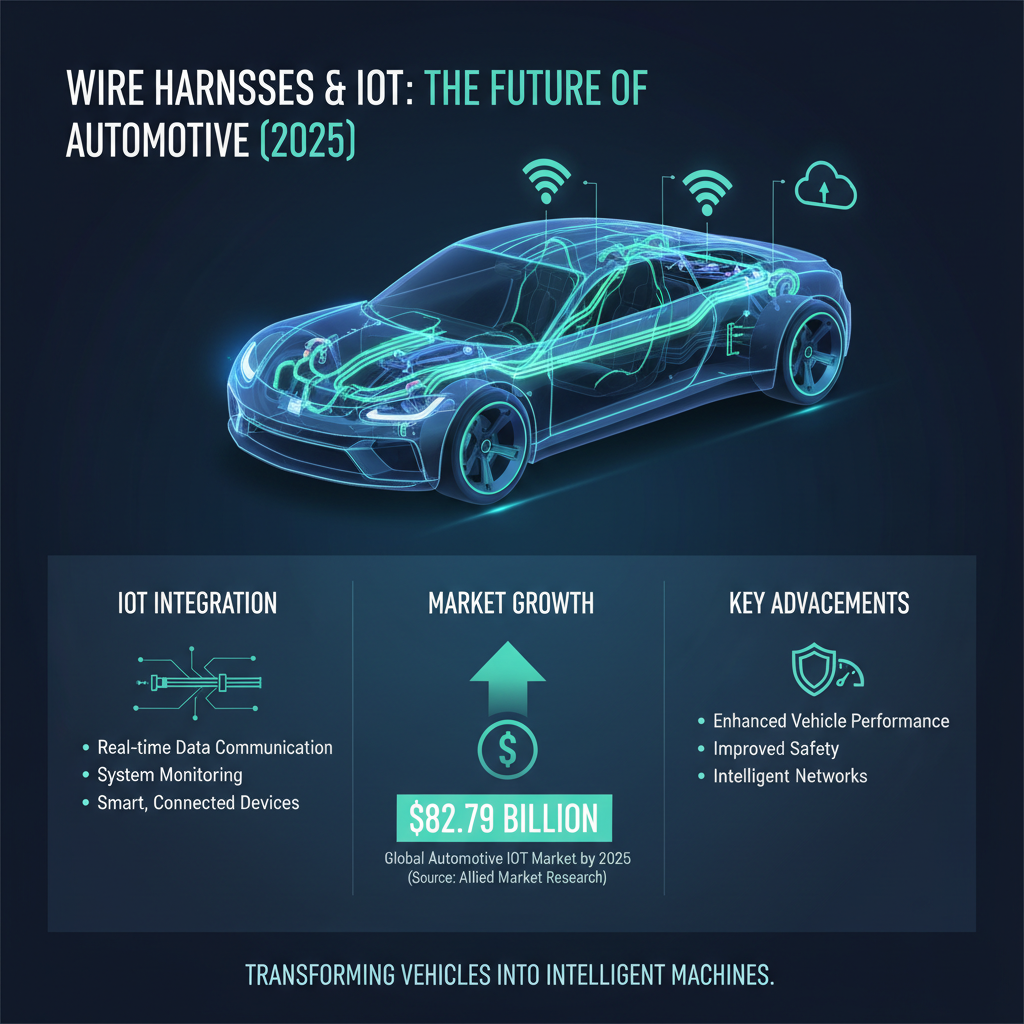
As we look towards the future of wire harness technologies in 2025, the integration of the Internet of Things (IoT) is poised to lead significant advancements in this sector. According to a recent report by Allied Market Research, the global IoT in the automotive market is expected to reach $82.79 billion by 2025, showcasing the increasing demand for smart, connected devices. This surge is driving wire harness manufacturers to innovate solutions that enable real-time data communication and system monitoring, transforming traditional wire harnesses into intelligent networks that enhance vehicle performance and safety.
Moreover, the incorporation of IoT in wire harness applications facilitates predictive maintenance and operational efficiency. For instance, a study from MarketsandMarkets projects that the market for IoT-enabled wiring harnesses will experience a compound annual growth rate (CAGR) of 14.2% from 2020 to 2025. By embedding sensors within wire harnesses, manufacturers can gather valuable insights on wear and tear, monitor system anomalies, and streamline the overall maintenance process. This proactive approach not only reduces downtime but also extends the lifespan of critical components, marking a substantial shift in how industries manage their wiring systems in an increasingly interconnected landscape.
Sustainability Trends Driving Eco-Friendly Wire Harness Solutions
Sustainability is becoming a pivotal factor in the wire harness industry, driving innovations that prioritize eco-friendliness. As manufacturers look for ways to reduce their carbon footprint, the adoption of recyclable materials and energy-efficient production processes is on the rise. These sustainable practices not only appeal to environmentally conscious consumers but also help companies comply with increasingly strict regulations aimed at minimizing environmental impact.
Tips for implementing sustainable practices in wire harness production include integrating biodegradable insulation materials and utilizing modular designs that reduce waste. Companies should also consider partnerships with suppliers committed to sustainability to ensure their entire supply chain reflects these values. By adopting these strategies, businesses can enhance their reputation and contribute to a healthier planet while still meeting customer demands.
Another trend in eco-friendly wire harness solutions is the development of smart manufacturing technologies that optimize resource usage. Automation and IoT-enabled systems can help monitor energy consumption and waste generation in real-time, allowing for swift adjustments to minimize environmental impact. Implementing these technologies not only supports sustainability but also boosts operational efficiency, making it a win-win for manufacturers aiming to thrive in the competitive landscape of wire harness production.
Market Forecast: Growth Projections for Wire Harness Industry Through 2025
The wire harness industry is set to experience significant growth through 2025, driven by advancements in technology and increasing demand across various sectors. As industries such as automotive, aerospace, and renewable energy expand, the need for efficient wiring solutions becomes more crucial. Market analysts project a robust annual growth rate, highlighting innovations like lightweight materials, streamlined manufacturing processes, and enhanced connectivity options that are reshaping the landscape.
Tips: To stay competitive in the evolving wire harness market, companies should invest in research and development to explore new materials and techniques. Keeping abreast of industry trends can aid businesses in identifying potential opportunities and threats. Additionally, fostering partnerships with technology providers can enhance innovation and improve product offerings.
The increasing push for electrification, especially in the automotive sector with electric vehicles (EVs), is a key driver of this growth. As manufacturers prioritize sustainability and efficiency, wire harnesses will play a vital role in meeting these objectives. Focusing on smart wiring solutions that not only reduce weight but also enhance performance will be essential for companies looking to lead in this dynamic market.